
Exam code:8291
Trophic Levels
What are trophic levels?
-
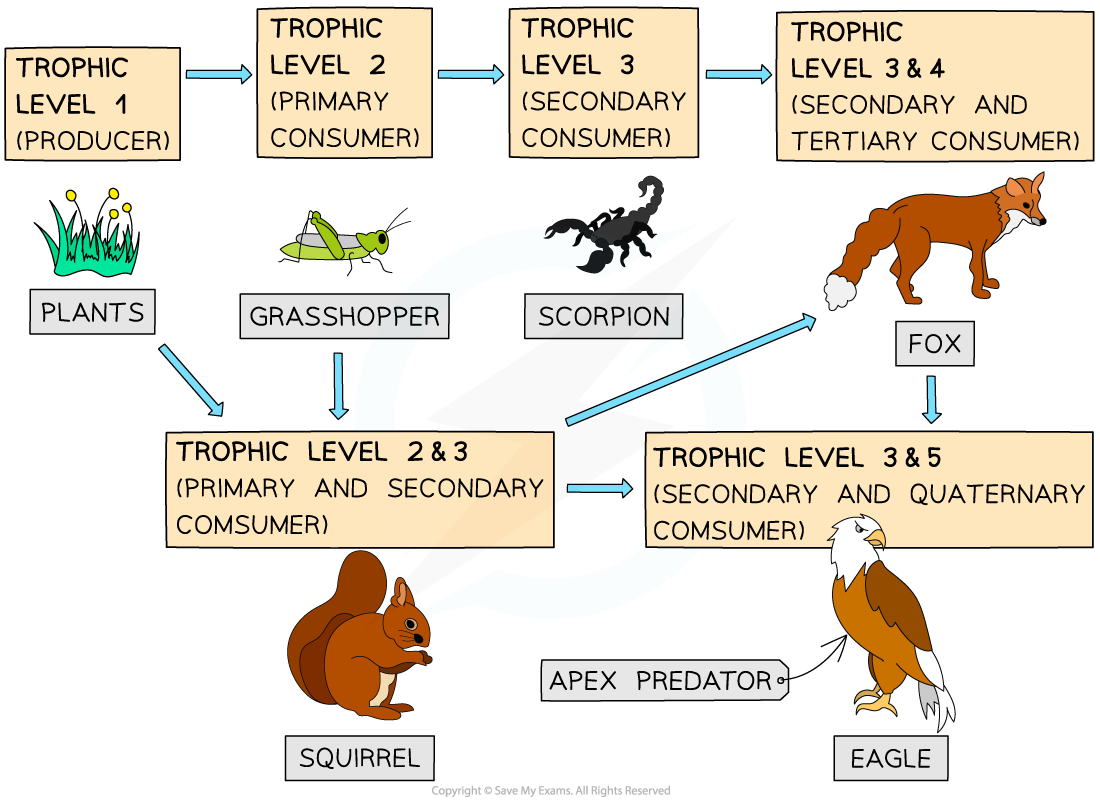
The trophic level is the position that an organism occupies in a food chain (or food web)
-
A group of organisms in a community that occupy the same position in a food chain are in the same trophic level
-
Trophic Levels
|
Trophic Level |
Name of Trophic Level |
Description of Organisms in Trophic Level |
|---|---|---|
|
1 |
Producers |
Plants and algae – produce their own biomass using energy from sunlight |
|
2 |
Primary consumers |
Herbivores – feed on producers |
|
3 |
Secondary consumers |
Predators – feed on primary consumers |
|
4 |
Tertiary consumers |
Predators – feed on secondary consumers |
-
Producers are typically plants or algae and produce their own food using photosynthesis
-
They form the first trophic level in a food chain
-
-
The chemical energy stored in producers is then transferred to primary consumers as they consume (eat) producers
-
The chemical energy is then transferred from one consumer to the next as they eat one another
-
Apex predators are at the very top of the food chain – they are carnivores or omnivores with no predators
-
The chemical energy stored within apex predators can be passed on to decomposers when apex predators die and are decomposed
-
Decomposers
-
The chemical energy stored in producers and consumers is also available to another group of organisms known as decomposers
-
The two main groups of decomposers are bacteria and fungi
-
-
Decomposers carry out a very important function in ecosystems – they break down dead plant and animal material (in the process gaining the chemical energy still stored in the dead matter)
-
They do this by:
-
Secreting digestive enzymes onto the surface of the dead organism
-
These enzymes break down the dead matter into small soluble food molecules
-
These molecules are then absorbed by the decomposers
-
-
This process of decomposition also helps to release organic nutrients back into the environment (e.g. the soil), which are essential for the growth of plants and other producers
Food Chains & Food Webs
Feeding Relationships
-
Feeding relationships involve producers, consumers and decomposers
-
These can be modelled using food chains and food webs

Energy Transfer & Energy Loss in Food Chains
-
The transfer of energy in a food chain is not 100 % efficient
-
Energy is lost to the environment at every trophic level
-
-
Firstly, a large proportion of the sun’s energy is not available to producers for building biomass
-
Light passes through leaves or is reflected away
-
Light hits non-photosynthetic parts of the plant e.g. bark or flowers
-
Light is a mixture of wavelengths and only certain wavelengths are absorbed in photosynthesis
-
Plants release energy during respiration, some of which is lost to the environment in the form of heat
-
-
Secondly, when a consumer ingests another organism, not all the chemical energy in the consumer’s food is transferred to the consumer’s biomass
-
Only around 10 % of the energy is available to the consumer to store in their tissues
-
This is because around 90 % of the energy is lost to the environment
-
-
So much energy is lost to the environment because:
-
Not every part of the food organism is eaten, e.g. the roots and woody parts of plants or the bones of animals, meaning that the stored energy in these uneaten tissues is lost to the environment
-
Consumers are not able to digest all of the food they ingest, e.g. cellulose in plants or the fur of animals, so some is egested as faeces; the chemical energy in this undigested food is then lost to the environment
-
Energy is lost to the environment in the form of heat when consumers respire
-
Energy is lost to the environment when organisms excrete the waste products of metabolism e.g. urea in urine
-
-
The energy that is left after these losses is available to the consumer to fuel their life functions, including being stored in biomass during growth

Examiner Tips and Tricks
Don’t forget – animals (known as consumers) can occupy different levels within the same food web as they could be omnivores (animals that can eat both plants and animals) or could be predators that eat both primary, secondary and/or tertiary consumers!
Responses