
Environmental Management AS CIE
-
1-1-continents-and-oceans as1 主题
-
1-2-country-classification-by-income-level as1 主题
-
1-3-sustainability as1 主题
-
1-4-the-water-cycle as1 主题
-
1-5-the-structure-and-composition-of-the-atmosphere as2 主题
-
1-6-ecosystems as5 主题
-
2-1-the-scientific-method as2 主题
-
2-2-environmental-research-in-the-context-of-climate-change as2 主题
-
2-3-collection-of-environmental-data as1 主题
-
2-4-data-collection-techniques-and-data-analysis as2 主题
-
2-5-the-use-of-technology-in-data-collection-and-analysis as1 主题
-
3-1-human-population-dynamics-and-structure as2 主题
-
3-2-impacts-of-human-population-change as1 主题
-
3-3-managing-human-population-change as1 主题
-
4-1-ecosystems as4 主题
-
4-2-managing-the-conservation-of-biodiversity as4 主题
-
4-3-impacts-of-human-activity-on-ecosystems as2 主题
-
5-1-food-security as2 主题
-
5-2-energy-resources as3 主题
-
5-3-waste-management as2 主题
-
6-1-global-water-distribution as3 主题
-
7-1-acid-deposition as1 主题
-
7-2-photochemical-smog as1 主题
-
7-3-managing-air-pollution as1 主题
-
7-4-ozone-depletion as2 主题
-
8-1-climate-change as2 主题
-
8-2-the-impacts-of-climate-change as1 主题
-
8-3-managing-climate-change as1 主题
1-6-1-ecosystems as
Exam code:8291
Introduction to Ecosystems
-
The biosphere is the life-sustaining zone where the air (atmosphere), water (hydrosphere) and land (lithosphere) meet
-
Many different biomes and ecosystems exist within the biosphere
-
The type of biomes and ecosystems present depends on which area of the planet they are located in
-
These biomes and ecosystems are mainly determined by the levels of water availability and the amount of insolation (the amount of sunlight they receive)
-
Biomes
-
Biomes are large-scale ecological communities or ecosystem types that are characterised by their dominant vegetation, climate, and other abiotic factors that shape their biotic communities
-
Biomes cover large geographic areas (different ecosystems can be found within a single biome)
-
Biomes are classified into five major classes:
-
Aquatic
-
Forest
-
Grassland
-
Desert
-
Tundra
-
Ecosystems
-
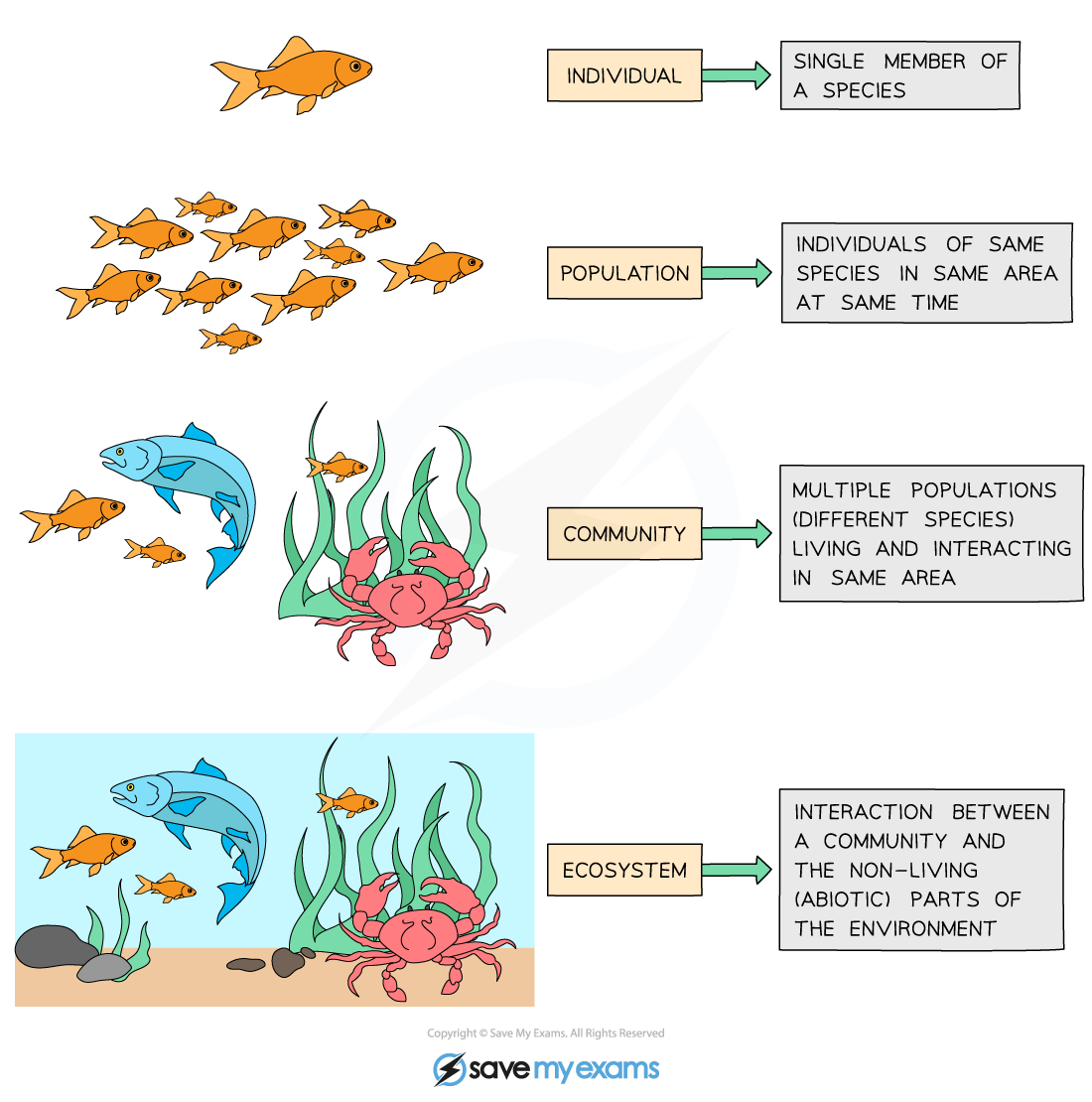
Ecosystems cover smaller geographic areas compared to biomes
-
An ecosystem includes living, biotic components (such as plants, animals and other species present) and the physical environment (the non-living, abiotic components) they interact with
-
These physical, abiotic components include factors such as temperature, light availability, humidity, water availability, oxygen levels, salinity, and pH
-
Population
-
A population is defined as a group of organisms of the same species living in the same area at the same time
Community
-
A community includes all of the populations living in the same area at the same time
-
Within a community, each species depends on other species for food, shelter, pollination, seed dispersal etc
-
If one species is removed it can affect the whole community
-
This is called interdependence
-
Habitat
-
A habitat is the local environment in which a species normally lives
-
E.g. badgers, deer, oak trees and ants are all species that would live in a woodland habitat
-
-
Organisms adapt to their habitat through natural selection, in order to survive and reproduce successfully
Niche
-
A niche describes the particular set of abiotic and biotic conditions and resources to which an organism or population responds
-
A niche can only be occupied by one species, meaning that every individual species has its own unique niche
-
If two species try to occupy the same niche, they will compete with each other for the same resources
-
One of the species will be more successful and out-compete the other species until only one species is left and the other is either forced to occupy a new, slightly different niche or to go extinct from the habitat or ecosystem altogether
-
-
For example, the three North American warbler species shown below all occupy the same habitat (spruces and other conifer trees) but occupy slightly different niches as each species feeds at a different height within the trees
-
This avoids competition between the three species, allowing them to co-exist closely with each other in the same habitat
-

Examiner Tips and Tricks
It can difficult to understand the concept of a niche. It can help to think of it as the specific role a species plays within its habitat, including its behaviours, the resources it consumes, and the specific places where it feeds and shelters.
Responses