
The Great Gatsby: Characters
The Great Gatsby by F. Scott Fitzgerald features a range of characters whose lives are entwined in the wealthy, glamorous and superficial world of 1920s America. The story is narrated by Nick Carraway, who becomes the neighbour and confidant of the wealthy and mysterious Jay Gatsby. Each character contributes to the novel’s exploration of themes such as the American Dream. Characters can also be symbolic, representing certain ideas or ideals, so it is essential that you consider:
-
how characters are established
-
how characters are presented via:
-
actions and motives
-
what they say and think
-
how they interact with others
-
what others say and think about them
-
their physical appearance or description
-
-
how far the characters conform to or subvert stereotypes
-
the relationships between characters
-
what they might represent
Below you will find detailed character profiles for the major characters in The Great Gatsby, along with a summary of the other significant characters.
Main characters
-
Nick Carraway
-
Jay Gatsby
-
Daisy Buchanan
-
Tom Buchanan
Other characters
-
Jordan Baker
-
Myrtle Wilson
-
George Wilson
-
Meyer Wolfsheim
Examiner Tips and Tricks
In the exam, the idea of character as a conscious construct should be evident throughout your response. There have been a few different adaptations of the Great Gatsby in film since its publication, but you should try to avoid seeing the original characters as “early versions” of characters that you are familiar with through popular culture.
Instead, focus solely on the text, and your analysis of characters should be literary rather than influenced by other versions or representations.
Nick Carraway
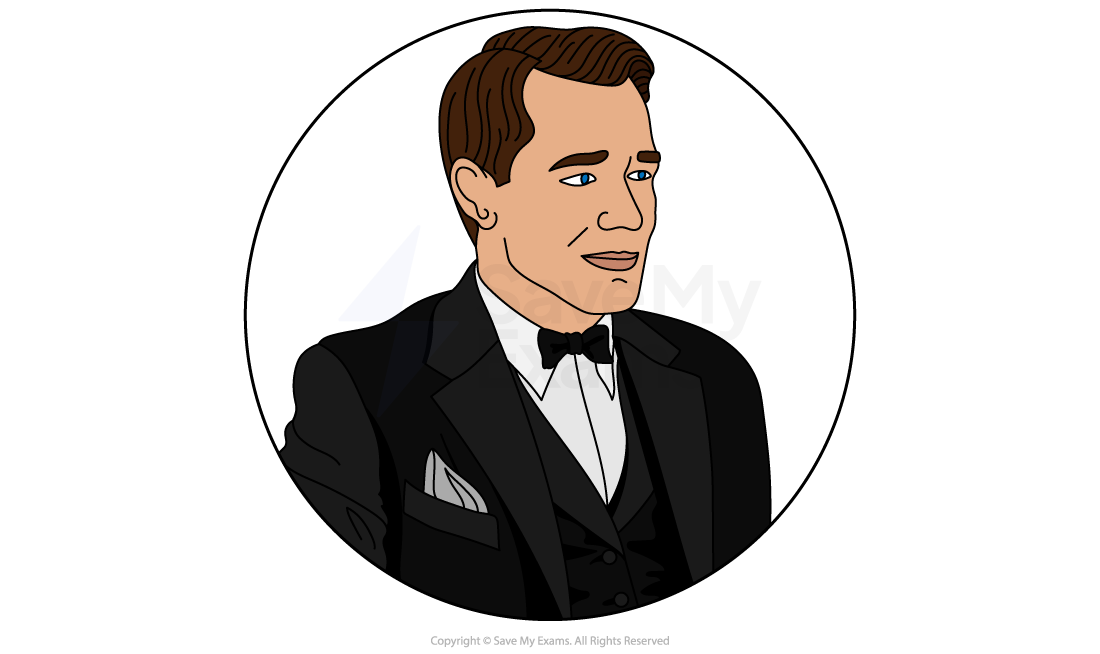
-
Carraway is the narrator of the novel and provides readers with insight into the lives of the other characters:
-
He is an observant character who often watches key moments unfold
-
-
He moves from the Midwest to New York after graduating from Yale University:
-
He wishes to pursue a career in finance
-
-
His involvement with Gatsby begins when he is invited to Gatsby’s party:
-
We soon realise that Gatsby has befriended him to get to his cousin, Daisy, whom Gatsby is in love with
-
-
Though not nearly as wealthy as the other characters, Carraway becomes Gatsby’s neighbour as he rents a cottage next to his mansion:
-
He represents the middle classes and serves as a lens through which readers can examine the excesses of the upper class
-
-
Carraway forms a unique bond with Gatsby:
-
While he is critical of Gatsby’s lifestyle and sceptical about the sources of his wealth, he also admires Gatsby’s idealism
-
Carraway becomes a sympathetic friend to Gatsby, as he begins to understand Gatsby’s longing for the past
-
-
While Carraway is the narrator, it is essential to recognise that he is not entirely objective:
-
His perceptions are influenced by his own biases and experiences, which means that he may not always present events accurately
-
His perspective gives us an insight into the average American grappling with the complexities of the upper classes in the 1920s
-
-
Carraway can be seen as a moral and ethical character in an environment where moral values are eroding:
-
He is critical of the excesses and moral decay of the wealthy, especially in East and West Egg
-
-
Despite his exposure to the extravagant lifestyle to which his acquaintances are accustomed, Carraway maintains a sense of moral integrity:
-
He becomes disillusioned with the people around him and recognises the emptiness and lack of morality beneath the facade of wealth and status
-
Jay Gatsby
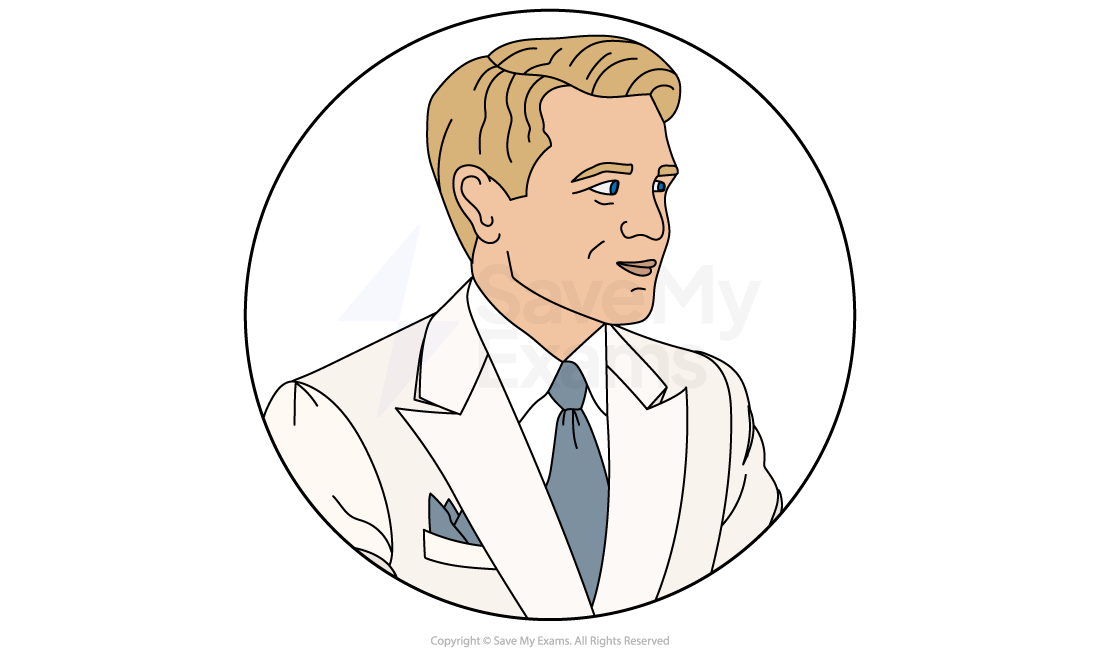
-
Gatsby’s character is central to the novel:
-
His past is shrouded in mystery for most of the novel
-
-
He is exceptionally wealthy and hosts extravagant parties at his mansion:
-
He throws these parties to catch the attention of his love, Daisy Buchanan
-
-
Gatsby is deeply in love with Daisy and his entire life revolves around his pursuit of the American Dream and the idealistic rekindling of his past romance with Daisy:
-
His idealism is evident in his belief that his wealth and success will win back Daisy and help him recreate and rewrite his past with her
-
-
Gatsby develops a close friendship with Nick Carraway, confiding in him and trusting him with his secrets:
-
Carraway becomes both a friend and a confidant, providing a lens through which readers gain insight into Gatsby’s character
-
-
Gatsby’s true identity is revealed later in the novel:
-
We are told that his name was James Gatz and he was born to poor farmers
-
-
Gatsby’s wealth is acquired through mysterious and possibly illegal means, with rumours linking him to organised crime:
-
His friendship with Meyer Wolfsheim is an example of how he may be linked to criminal activity
-
-
Despite his wealth and social standing, Gatsby is ultimately a lonely and isolated figure
-
It appears that his only true goal is to attract Daisy’s attention and win her back
-
This leaves him detached from everyone else and it is evident that he has no deep connection with anyone
-
-
Gatsby exudes confidence and charm:
-
He can appear composed and self-assured, particularly during his parties
-
However, his confidence masks his internal insecurities and vulnerabilities
-
-
Gatsby’s character follows the classic archetype of the tragic hero, with his fatal flaw being his unrelenting pursuit of an unattainable dream:
-
His tragic end results from a combination of his own illusions, such as his dream of being with Daisy, and the societal values of an era that is driven by money and extravagance
-
-
Gatsby embodies the pursuit of the American Dream, representing the belief that anyone can achieve success and happiness through hard work and determination:
-
However, through his character, Fitzgerald also critiques the materialism and superficiality associated with that time period
-
-
Gatsby is shot by George Wilson, who believes Gatsby was driving the car that killed his wife Myrtle
-
His death marks the tragic culmination of his unrequited love and failed pursuit of the American Dream
Daisy Buchanan
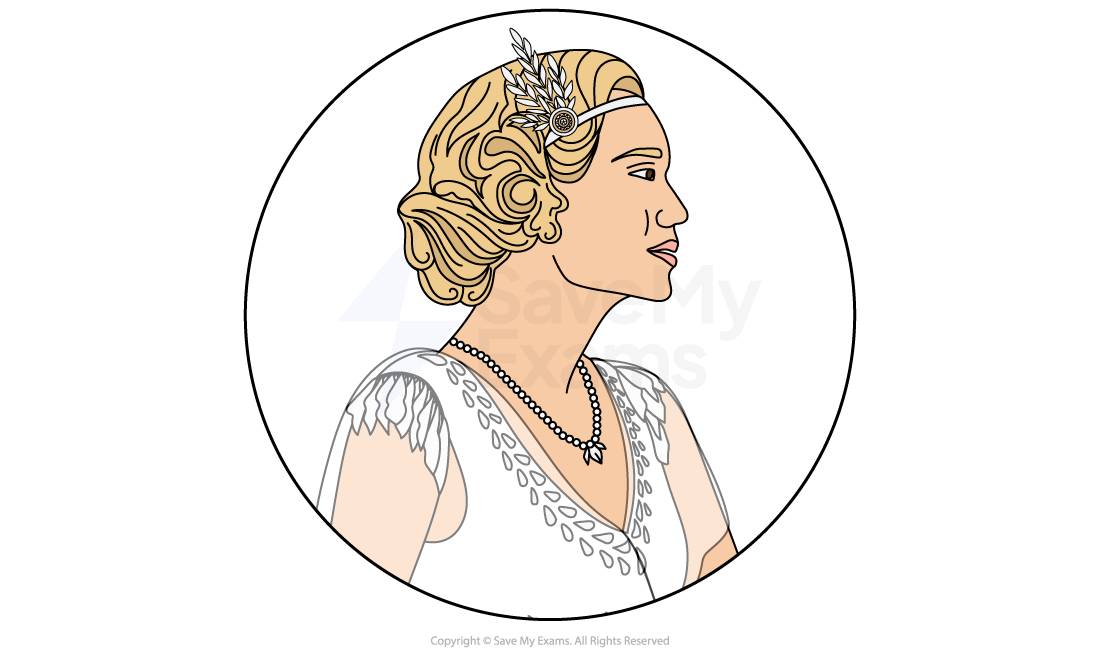
-
Daisy Buchanan is the narrator’s cousin and is married to Tom Buchanan, an extremely wealthy man of high social standing
-
She is described as exceptionally beautiful and charming, embodying the ideal of feminine allure during the Jazz Age:
-
Her attractiveness captivates both Gatsby and Tom Buchanan
-
-
Daisy and Gatsby had a romantic relationship before she married Tom:
-
Gatsby enlisted as a soldier and it was during this time that she agreed to marry Tom
-
-
Despite her clear love for Gatsby, Daisy is unable to break away from the security and social status that she has with Tom
-
She engages in an affair with Gatsby, but chooses to stay with Tom when confronted:
-
This emphasises her love for the wealth and security she has with Tom
-
-
Daisy is portrayed as shallow and superficial, prioritising wealth and social status over deeper values:
-
It is evident that her marriage to Tom is largely based on his wealth rather than her love for him
-
-
She could be seen as an unattainable character and she becomes a symbol of the unattainable American Dream for Gatsby
-
Daisy is a mother to a daughter named Pammy, but her role as a mother is portrayed as neglectful and indifferent:
-
She is more focused on her own desires and social status than on maternal responsibilities
-
-
Daisy is emotionally unstable as she is torn between her feelings for Gatsby and her commitment to Tom
-
Her indecisiveness contributes to the tragic events in the novel, as she cannot choose between Gatsby and Tom
-
Daisy’s actions, particularly her involvement in the hit-and-run accident that leads to Myrtle Wilson’s death, contribute to the tragic outcome of the novel:
-
Her lack of accountability and willingness to let Gatsby take the blame underscore her moral ambiguity
-
Tom Buchanan
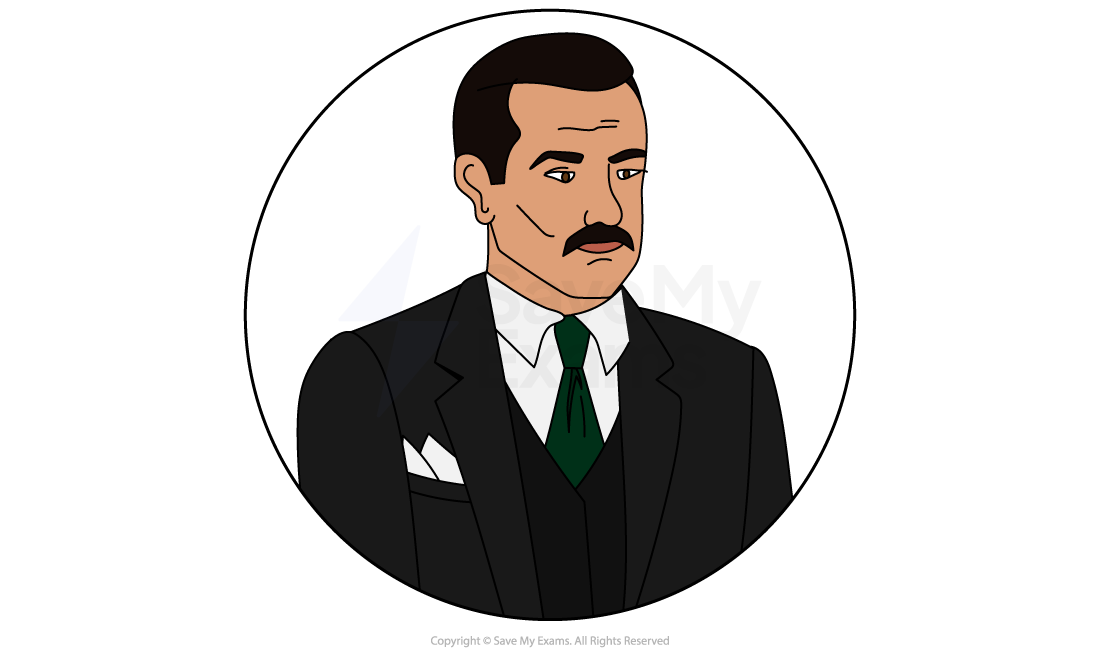
-
Tom Buchanan is born into a wealthy, aristocratic family and it is clear that his wealth and social status shape his worldview and sense of entitlement:
-
He believes in his inherent superiority due to his wealth and social standing
-
He looks down on those he considers socially inferior, including Gatsby and the residents of the Valley of Ash
-
Responses