
Strong and weak cultures
-
A strong company culture exists where factors such as attitudes, values and beliefs are easily recognised and embedded into the way that a business operates
-
Businesses with strong cultures are likely to possess a range of visual features and norms
Visual features and norms in a business with a strong culture
|
Visual features |
Norms |
|---|---|
|
|
-
In businesses with a strong culture, it is likely that employees:
-
Have a “can-do” attitude and are enthused by their work
-
Have a strong belief that the business is a force for good
-
-
In a business with a weak culture, these signs may be difficult to identify
-
A “them and us” attitude may exist between workers and management
-
Employees may doubt the sincerity of the corporate mission
-
High levels of staff turnover and low commitment amongst staff may exist
-
Classification of company cultures
-
Charles Handy identifies four types of organisational culture
Handy’s four types of organisational culture

-
In a power culture, decision-making is carried out by one or a small number of powerful individuals, usually at the top of the business hierarchy:
-
Few rules exist to determine the decision-making procedure
-
There’s a competitive atmosphere between workers vying for power
-
Most communication is by personal contact
-
It is argued that Alan Sugar’s Amstrad adopted a power culture with Sugar as its powerful decision-maker
-
-
In a role culture, key decisions are made by those with specific job roles:
-
Power lies with those with particular job titles rather than those with desirable skills
-
There is usually a very clear hierarchical structure
-
Employees are expected to adhere to rules and understand their place in the hierarchy
-
Businesses with role cultures may find it difficult to adapt to rapidly changing market conditions
-
Very large organisations in the public sector, such as the NHS, are usually considered to have highly structured role cultures
-
-
In a task culture, decisions are made by teams made up of employees with specific skills:
-
Power lies with those with task-related skills (e.g. a finance specialist may make decisions related to funding within the group)
-
Teams are created and dissolved as projects are started and completed
-
There is an emphasis on adaptability and teamwork
-
PepsiCo is an example of a business that has a task culture
-
-
In a person culture, individuals with extensive experience and skills are loosely brought together:
-
These individuals have significant levels of power to determine their own decision-making procedures and often work autonomously
-
Organisations with person cultures are very common in professional services such as accounting and law
-
How corporate culture is formed
-
Corporate culture generally forms over time, especially as a business grows
-
A range of factors contribute to the formation of a corporate culture
Forming corporate culture
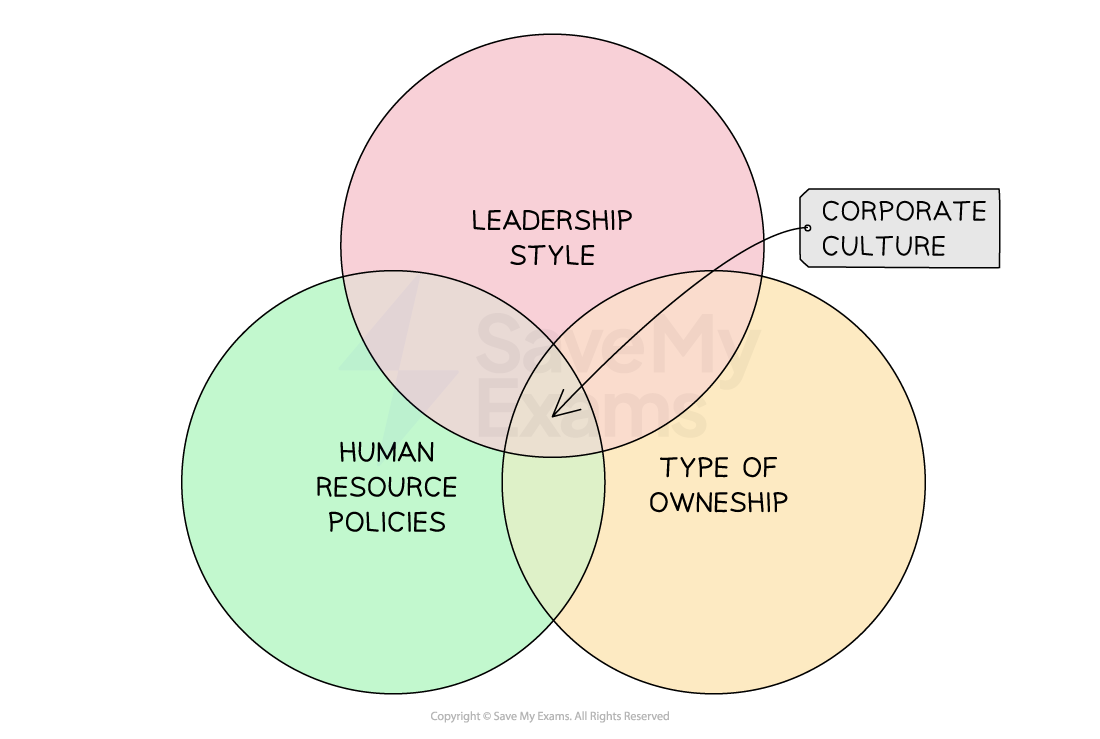
-
A leader’s attitude can have a significant impact on the culture that forms within an organisation
-
For example, the founder of SuperJam developed his business idea with his grandmother, and he has been determined to contribute to the wellbeing of senior citizens as his business has grown
-
-
Some businesses adopt particular human resources policies that shape the makeup of their workforce
-
For example, Timpson actively recruits prisoners approaching the end of their custodial sentences
-
They provide extensive training and support, and in return, there is a culture of loyalty amongst its staff, grateful at being given a “second chance”
-
-
-
The ownership type of a business can influence the business culture
-
Large public limited companies are likely to adopt a shareholder approach, focusing on meeting the short-term profit maximisation needs of shareholders
-
Family-owned businesses are more likely to take a longer-term approach focused on the longevity of the business and perhaps a wider range of stakeholder needs
-
-
Factors such as the type of product, the environmental factors the business faced when it was created and the market in which it operates can all influence the corporate culture that develops
Difficulties in changing an established culture
-
From time to time, it may be appropriate and desirable for a business to make changes to its culture to:
-
Increase productivity
-
Improve innovation and creativity
-
Face a particular challenge
-
Follow the direction of a new leader
-
-
Changing an established culture is a very difficult task for a number of reasons
Difficulties in changing established organisational cultures
|
Difficulty |
Explanation |
Example |
|---|---|---|
|
Identifying contributing factors |
|
|
|
The existence of subcultures |
|
|
|
Overcoming resistance to change |
|
|
Examiner Tips and Tricks
Case studies contain lots of clues about a firm’s culture.
Look for signs of a strong or weak culture, for example:
-
Does the business have a clear figurehead?
-
Is there a particular way that the business carries out its activities?
-
Are there obvious guiding principles?
-
Are there visible signs of a culture, e.g. branding or uniforms?
The more clues you can identify, the more likely it is that the business has a strong culture, but:
-
Do negative subcultures exist?
-
Is communication effective?
-
Is everyone “on board“?
Responses