
Business_A-level_Edexcel
-
1-marketing-and-people
1-1-meeting-customer-needs3 主题 -
1-2-market5 主题
-
1-3-marketing-mix-and-strategy5 主题
-
1-4-managing-people5 主题
-
1-5-entrepreneurs-and-leaders6 主题
-
2-managing-business-activities2-1-raising-finance4 主题
-
2-2-financial-planning4 主题
-
2-3-managing-finance3 主题
-
2-4-resource-management4 主题
-
2-5-external-influences3 主题
-
3-business-decisions-and-strategy3-1-business-objectives-and-strategy4 主题
-
3-2-business-growth4 主题
-
3-3-decision-making-techniques4 主题
-
3-4-influences-on-business-decisions4 主题
-
3-5-assessing-competitiveness3 主题
-
3-6-managing-change3 主题
-
4-global-business4-1-globalisation5 主题
-
4-2-global-markets-and-business-expansion5 主题
-
4-3-global-marketing3 主题
-
4-4-global-industries-and-multinational-corporations3 主题
-
5-exam-technique5-1-the-exam-papers4 主题
-
5-2-business-studies-skills1 主题
-
5-3-structuring-your-responses5 主题
-
6-pre-release-preparation2025-pre-release-music-industry9 主题
3-4-1-corporate-influences
Corporate timescales: short-termism versus long-termism
-
Business decisions can have long-term and short-term implications
-
Long-term decisions are likely to affect the long-term mission and vision of the business over a period of anything up to ten years
-
Short-term decisions are more likely to impact objectives and tactics over the next few years at most
-
-
Many businesses focus on decision-making for the short term
-
This is especially influenced by pay structures, e.g. when executives’ pay is linked to short-term success, such as an increase in the share price
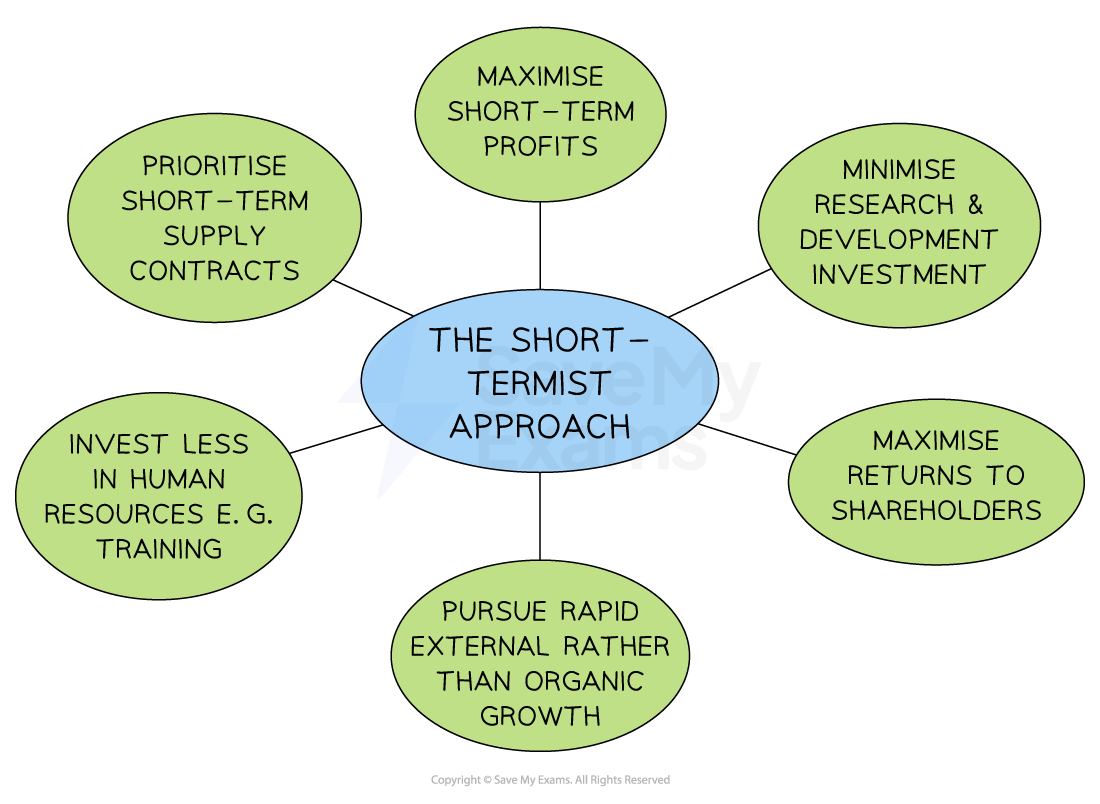
The short-termist approach
-
Businesses that adopt a short-termist approach may face a range of problems:
-
Loss of profitability and competitive edge as lucrative long-term opportunities are ignored in favour of short-term priorities
-
The need to produce and analyse very regular financial reports means that managers lack time to consider longer-term corporate strategic direction
-
Reliance on short-term contracts with suppliers and workers is likely to lead to higher than necessary costs, as benefits such as bulk buying discounts cannot be achieved
-
-
It is argued that short-termism is an entrenched feature in British businesses, and some commentators consider that it is a key reason for sluggish productivity and a lack of willingness to invest in research, training and skills
-
Some businesses are more likely to engage in those activities that will allow them to take advantage of opportunities that improve productivity and provide a competitive edge in the future
-
This long-term approach may include a business:
-
Conducting ongoing investment in research and development, innovation and new product development
-
Adopting a long-term outlook with less emphasis on frequent financial reporting
-
Valuing and investing significant resources into the recruitment, training and retention of staff
-
Establishing and nurturing meaningful and lasting relationships with suppliers
-
Evidence-based versus subjective decision-making
-
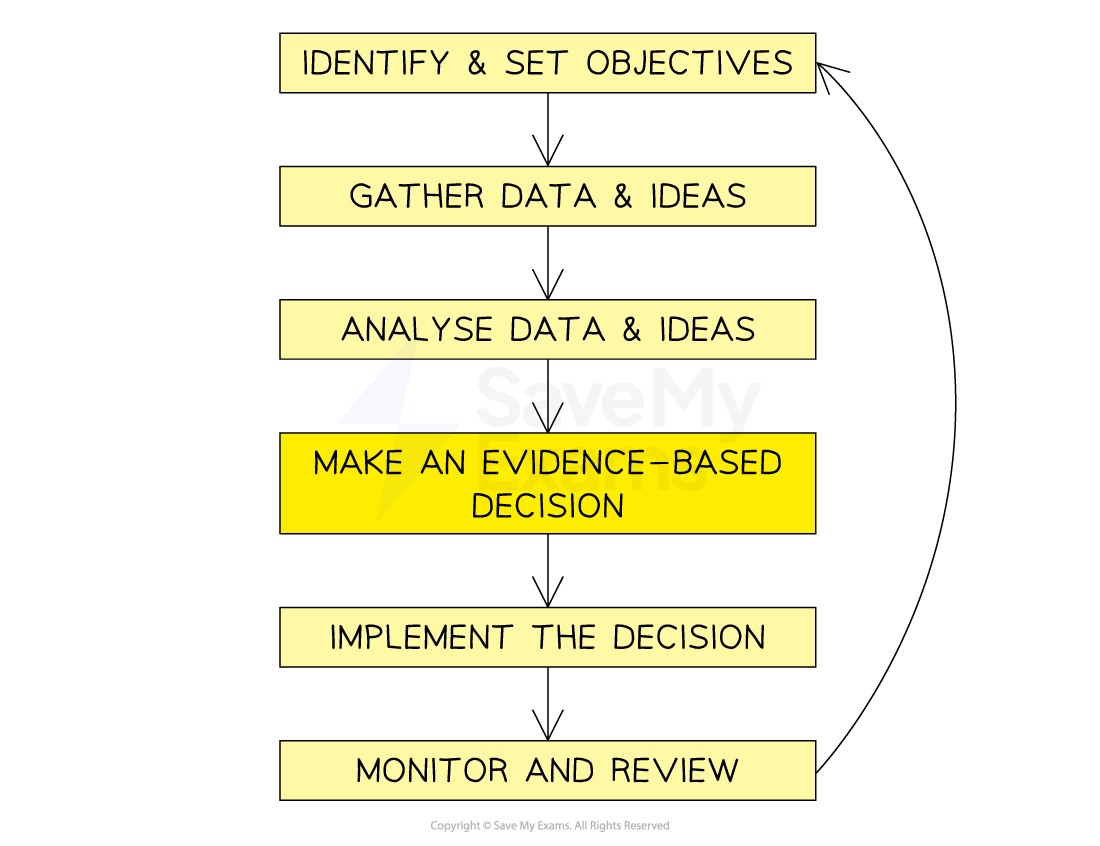
Evidence-based decision-making involves taking a systematic and fact-based approach when determining objectives, strategy and tactics
The evidence-based approach
-
First, a business identifies the measurable objective it wants to achieve and determines the criteria against which success will be measured
-
Data is then gathered and analysed to consider the range of available decisions
-
Internal data may be gathered from sales records and market research
-
External market data and economic forecasts are also often used
-
-
The appropriate evidence-based strategic and tactical decision is made and communicated to those required to carry out the range of tasks involved
-
The decision is implemented, carefully monitored and reviewed
-
The outcome of the decision can be used to inform future decision-making
-
Subjective decision-making is guided principally by the personal opinions and experiences of key decision-makers
-
Subjective decision-making is often more risky than an evidence-based approach, but there are some circumstances in which it may be more appropriate
-
Situations in which subjective decision-making may be appropriate
|
Situation |
Explanation |
|---|---|
|
|
|
|
|
|
|
|
Examiner Tips and Tricks
A business’s approach to decision-making can provide an excellent basis for analysis and evaluation.
Look out for clues in the case study that identify whether the business takes an evidence-based or subjective approach and weigh up how this may affect both the quality of the decision and the likelihood of the business achieving its objective.
Explore the skills, experience and characteristics of the key decision-makers and state your concerns.
Consider whether their approach is appropriate, given the timescales available and the level of risk involved in the decision.
Evaluate the sources of information used to make decisions and make a judgement about whether it is sufficient.
Responses