
An introduction to staffing
-
Effective human resource management (staffing) is important to business as it ensures that the organisation has:
-
The right people, in the right roles, with the right support, with opportunities to succeed
-
-
This leads to higher productivity, more profits and a positive work environment
-
Human resource management focuses on how employees can be effectively
-
Recruited
-
Deployed (used)
-
Developed and trained
-
Motivated
-
Managed and led
-
Staff as an asset and as a cost
-
Staff represent both an asset and a cost to a business
-
Staff are an asset to a business, as they bring knowledge, skills and expertise to the business
-
Staff can increase productivity, drive innovation and enhance customer service — all of which contribute to the success and profitability of the business
-
Staff can help to build a positive reputation for the business through their interactions with customers, suppliers and other stakeholders
-
-
Staff also generate costs to a business — and, for many businesses, staffing is one of the largest costs they have
-
There are costs associated with:
-
Hiring and training workers
-
Managing workers, as managers have to be hired
-
Paying salaries of full-time workers
-
Paying wages of hourly staff
-
Additional benefits, such as company cars, pensions, healthcare, etc.
-
Letting workers go (redundancy payments)
-
-
The impact of national minimum wages on staffing costs
-
The introduction or increase of a national minimum wage is relevant to employees who receive a wage rather than a salary
-
Businesses that employ workers on a wage basis may face higher labour costs
-
Businesses that employ workers on a salary basis are less affected by the introduction of a minimum wage
-
They already pay a fixed amount regardless of the number of hours worked
-
-
Developing a flexible workforce
-
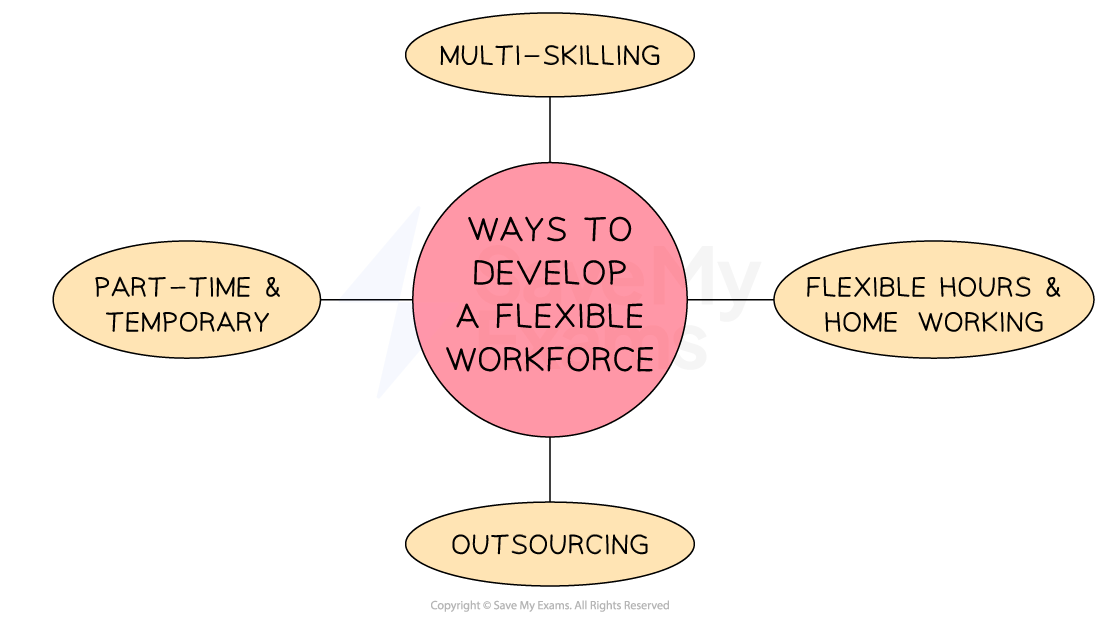
Flexible working is the development of a culture where workers are equipped to do different roles or where they work in a range of employment patterns (full-time, part-time, zero hours contracts, work from home, etc.)
-
Developing a flexible workforce can bring many benefits to a business
-
Each specific approach should be assessed, as there are potential disadvantages to each
-
Ways to develop a flexible workforce
Multi-skilling
-
Multi-skilling is the process of training workers to fulfil multiple job roles within a business
-
E.g. Southwest Airlines trains staff to handle multiple roles, including check-in, baggage handling and customer service
-
Advantages and disadvantages of multi-skilling
|
Advantages |
Disadvantages |
|---|---|
|
|
Part-time and temporary working
-
Someone who works part-time may only work two or three days a week
-
Someone who works temporarily shows up for work whenever the business needs them
-
E.g. Amazon employs temporary workers to handle seasonal spikes in demand, such as Christmas
-
Advantages and disadvantages of part-time and temporary working
|
Advantages |
Disadvantages |
|---|---|
|
|
Outsourcing
-
Apple outsources much of its manufacturing to Foxconn in China
-
This allows Apple to produce products at a lower cost and maintain competitive pricing
-
Advantages and disadvantages of outsourcing
|
Advantages |
Disadvantages |
|---|---|
|
|
Flexible hours
-
Flexible hours allow employees to schedule working hours around their individual needs and accommodate their commitments outside of work
-
A flexible-hours schedule usually involves working some set hours, with the remainder of hours organised according to the employees’ needs
-
E.g. An employee may be expected to be at work between the hours of 10 am and 2 pm, but they can choose when they complete the rest of their working hours
-
Home working
-
Advances in communication technology have enabled a larger proportion of workers than ever before to work from home
-
Employees use tools such as email, instant messaging, collaborative software, scheduling apps and videoconferencing to carry out work remotely
-
-
Home working has a range of advantages and disadvantages for both the business and its employees
Advantages and disadvantages of homeworking
|
Advantages |
Disadvantages |
|
|---|---|---|
|
For the Business |
|
|
|
For the Employee |
|
|
The distinction between dismissal and redundancy
Dismissal
-
Dismissal (firing or sacking) is the termination of employment by an employer against the will of the employee
-
Employees are usually terminated due to their misconduct (e.g. violating company policy) or poor performance
-
The employer may choose to dismiss them immediately (without notice or compensation) or provide a notice period, which the employee can work out
-
Redundancy
-
Employees are made redundant when their job is no longer available and the business reduces the size of its workforce
-
The termination is not due to any fault of the employee
-
The employer must follow certain legal procedures, including providing notice and paying redundancy compensation
-
Different approaches to employer/employee relationships
-
The nature of the employer/employee relationship is influenced by whether there is an individual approach or a collective agreement
Individual and collective bargaining approaches
|
Individual Approach |
Collective Bargaining |
|---|---|
|
|
Responses