
Types of promotion
-
Promotion is an important element of the marketing mix, as it plays a crucial role in generating customer awareness, interest and desire for a product/service
-
A business can communicate its value proposition to potential customers and differentiate itself from competitors
-
Promotion helps to build brand awareness and loyalty, which can lead to repeat purchases and referrals
-
-
The promotion element of the marketing mix includes a variety of promotional methods
Types of promotion
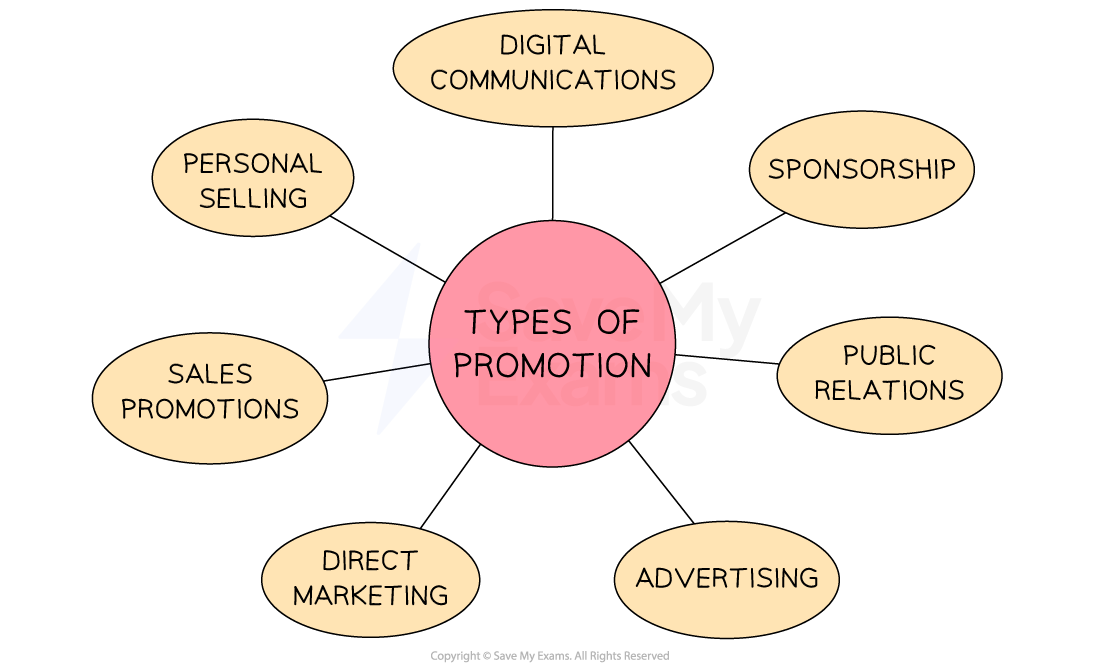
-
Each method has advantages and disadvantages associated with its use
-
Businesses must select the most appropriate methods for their product/service, target audience and budget
An assessment of promotional strategies
|
Method |
Advantages |
Disadvantages |
|---|---|---|
|
Advertising
|
|
|
|
Direct marketing
|
|
|
|
Sales promotions
|
|
|
|
Personal selling
|
|
|
|
Sponsorship
|
|
|
|
Public relations (PR)
|
|
|
|
Digital communications
|
|
|
Types of branding
-
Branding is the process of creating a unique and identifiable name, design, symbol or other feature that differentiates a product or company from its competitors
-
Branding is important to a business for a variety of reasons:
-
Branding establishes recognition and identity
-
Branding builds trust and credibility
-
Branding differentiates a business from its competitors
-
Branding creates an emotional connection with customers that helps to generate repeat purchases
-
Branding supports marketing and advertising efforts
-
Types of branding
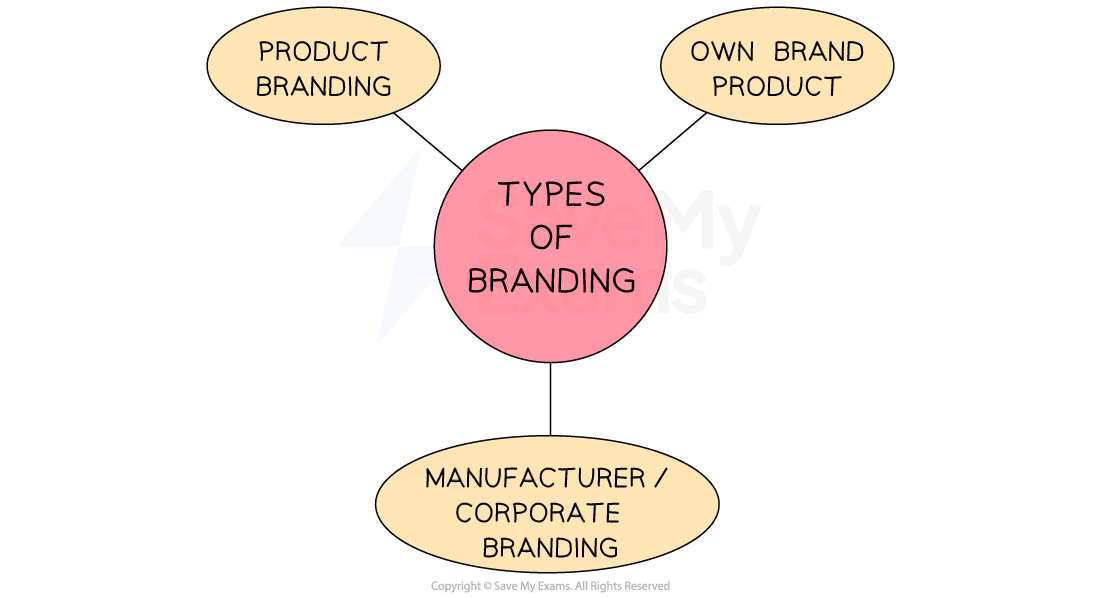
Manufacturer/corporate branding
-
This refers to the use of a company name or logo to promote all the products or services offered by the company
-
This type of branding is used by companies such as Nestlé, Nike and Apple
Advantages and disadvantages of corporate branding
|
Advantages |
Disadvantages |
|---|---|
|
|
Product branding
-
This refers to the use of a unique name, design or symbol to promote a specific product
-
For example, KitKat, Coca-Cola and the McDonald’s Big Mac
Advantages and disadvantages of product branding
|
Advantages |
Disadvantages |
|---|---|
|
|
Own branding
-
Own-brand or private-label branding refers to the use of a retailer’s name to promote a specific product or service
-
Own branding is often used by supermarkets, such as Asda chocolate, Tesco’s “Finest” range and Sainsbury’s “Basics” range
-
Advantages and disadvantages of own-brand products
|
Advantages |
Disadvantages |
|---|---|
|
|
The benefits of branding
-
Strong branding can provide several benefits to a business, including:
Added value
-
Strong branding can add value to a product by creating a perception of quality, reliability and trust
Ability to charge premium prices
-
Customers may be willing to pay more for a product that is associated with a well-es
Responses