
Business_A-level_Cie
-
business-and-its-environment
enterprise6 主题 -
business-structure6 主题
-
size-of-business3 主题
-
business-objectives3 主题
-
stakeholders-in-a-business2 主题
-
external-influences-on-business12 主题
-
political-influences
-
legal-influences
-
economic-influences
-
economic-government-macroeconomic-objectives
-
economic-government-policies
-
social-influences
-
the-impact-of-corporate-social-responsibility
-
demographic-influences
-
technology-competitors-and-suppliers
-
international-trade
-
the-impact-of-multinationals
-
environmental-influences
-
political-influences
-
business-strategy10 主题
-
human-resource-managementhuman-resource-management-hrm8 主题
-
motivation4 主题
-
management2 主题
-
organisational-structure5 主题
-
business-communication5 主题
-
leadership2 主题
-
human-resource-strategy3 主题
-
marketingthe-nature-of-marketing7 主题
-
market-research3 主题
-
the-marketing-mix6 主题
-
marketing-analysis5 主题
-
marketing-strategy3 主题
-
operations-managementthe-nature-of-operations3 主题
-
inventory-management2 主题
-
capacity-utilisation-and-outsourcing1 主题
-
location-and-scale2 主题
-
quality-management1 主题
-
operations-strategy4 主题
-
finance-and-accountingbusiness-finance2 主题
-
sources-of-finance3 主题
-
forecasting-and-managing-cash-flows1 主题
-
costs4 主题
-
budgets1 主题
-
financial-statements4 主题
-
analysing-published-accounts6 主题
-
investment-appraisal2 主题
customer-relationship-marketing
The aims of CRM
-
Customer relationship marketing (CRM) involves a business focusing their marketing efforts around building a deep understanding of customers, consistently meeting customer needs and developing long-term customer loyalty
-
Marketing strategies and tactics are focused on four key areas
CRM strategies and tactics
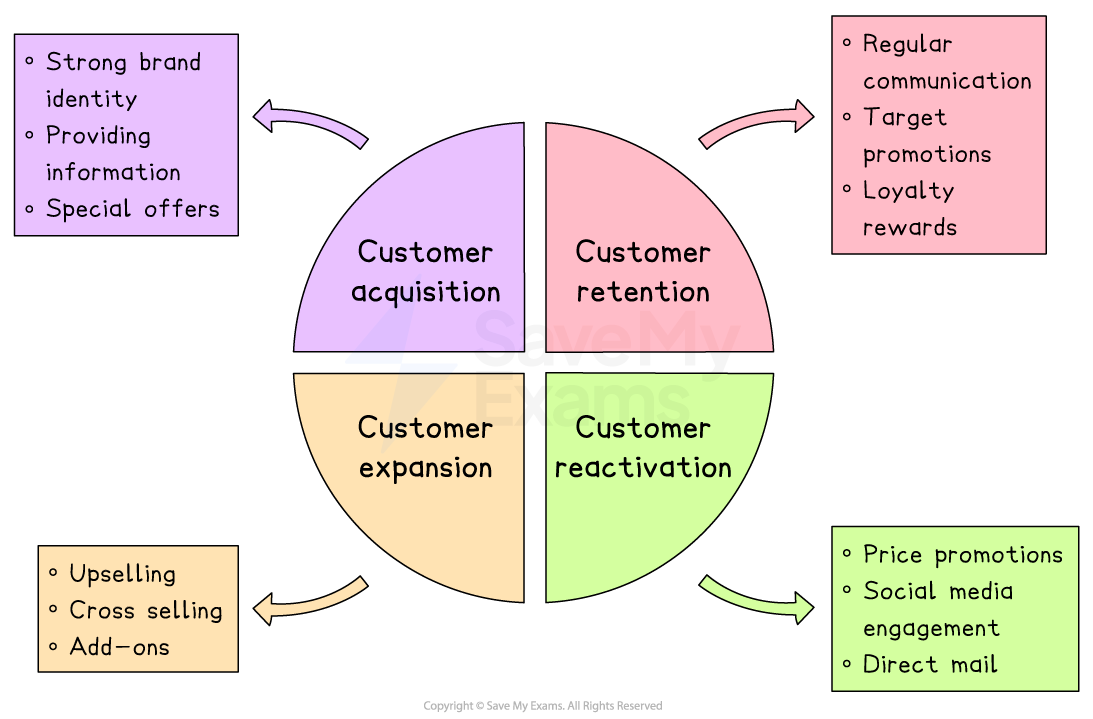
Customer acquisition
-
Attracting interested consumers and converting them into customers to achieve growth, make money and improve chances of business survival
-
Businesses can acquire customers in many different ways, including
-
Building a strong brand identity
-
Delivering excellent customer experiences
-
Providing clear information
-
Offering special rewards, such as price promotions
-
Customer retention
-
Customer retention involves encouraging customers to remain loyal to a business and its brands over time
-
Encouraging loyalty is important for several reasons
-
Attracting new customers often costs more than retaining current customers
-
Loyal customers tend to be valuable repeat customers
-
Retained customers can refer new customers to a business
-
Word-of-mouth marketing is a form of free marketing for a brand
-
Happy customers talking about a business or brand in positive ways can help persuade people they know to become loyal customers as well
-
-
-
Businesses can retain customers in many different ways, including
-
Customer loyalty schemes
-
Regular communication about new products or promotional offers
-
Targeted price promotions or other perks for existing customers
-
Customer expansion
-
Customer expansion is the process of encouraging existing customers to increase the value and frequency of their spending on products and services over time
-
Businesses can achieve customer expansion in several different ways, including
-
Upselling by encouraging customers to upgrade to premium products
-
Cross-selling by offering customers a related product or service
-
Providing add-ons such as insurance policies, extra features or extended warranties
-
Customer reactivation
-
Customer reactivation involves reaching out to customers who have previously expressed interest in or purchased a product but have since become disengaged
-
Businesses can adopt a range of techniques to reactivate customers, including
-
Social media engagement
-
Targeted price promotions for returning customers
-
Direct mailings via post or email
-
Costs and benefits of CRM
Benefits of CRM
-
CRM allows a business to build a detailed understanding of its customers’ needs and preferences
-
This helps the business to tailor its products, services and promotional activity more precisely, increasing the chances of customer satisfaction and repeat sales
-
E.g. A clothing retailer might use CRM data to send personalised offers based on a customer’s past purchases
-
-
-
Retaining loyal customers is usually more cost-effective than attracting new ones
-
CRM focuses on building long-term relationships with existing customers, which reduces marketing costs
-
E.g. A mobile phone company offering exclusive upgrades to loyal users instead of spending heavily on advertising to new customers
-
-
Costs of CRM
-
CRM requires significant investment in staff training and development
-
To deliver consistently good customer service, employees need to understand the CRM system and be committed to meeting customer expectations at every stage of the buying process
-
E.g. Hotel staff may need to learn how to use CRM software to remember guest preferences and deliver a personalised experience.
-
-
-
CRM is unlikely to succeed without ongoing, expensive customer research
-
For CRM to be effective, the business must constantly collect, update and analyse customer data, which can be time-consuming and costly
-
E.g. An airline may need to invest heavily in customer surveys, feedback tools, and data analytics to truly understand traveller needs.
-
-