
Globalisation, economic collaboration and marketing
-
Globalisation is the increasing connection and interdependence of countries through trade, communication, transport and technology
-
It allows businesses to operate and compete in international markets more than ever before
-
-
Economic collaboration is when countries or regions work together to support trade and economic growth
-
This includes trade agreements, shared markets, such as the EU, and international organisations, like the World Trade Organisation
-
Implications for marketing
|
Implication |
Explanation |
|---|---|
|
Access to larger markets |
|
|
Increased competition |
|
|
Need for local adaptation |
|
|
Joint marketing opportunities |
|
The importance of international marketing
-
International marketing is when a business promotes and sells its products in more than one country
-
It plays a key role in helping businesses grow, increase profits and compete globally
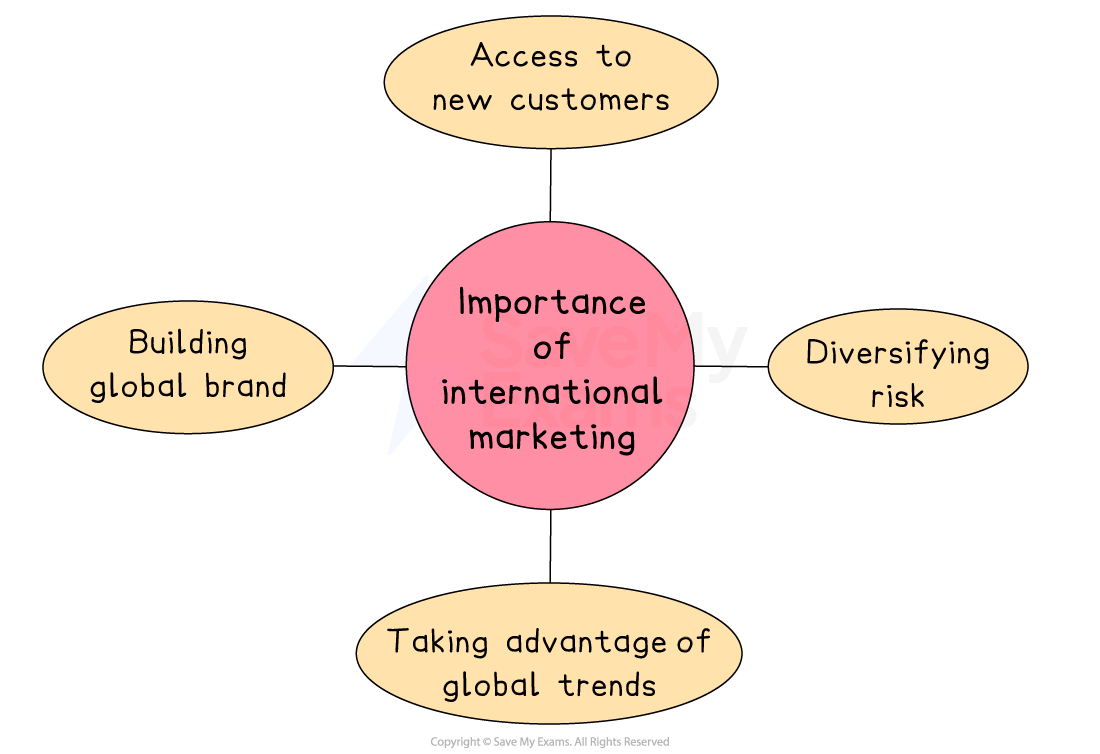
Why international marketing is important
-
Access to new customers
-
By marketing products in other countries, businesses can reach millions of new potential customers
-
E.g. Netflix expanded from the US to over 190 countries, gaining millions of new subscribers through localised marketing and content
-
-
-
Spreading risk
-
Selling in different countries helps reduce risk
-
If sales fall in one country, sales in other regions may still grow
-
E.g. Toyota sells vehicles across Asia, North America and Europe, which helps balance profits even if one region performs poorly
-
-
-
Taking advantage of global trends
-
International marketing allows businesses to respond quickly to global fashion, technology or lifestyle trends
-
E.g. Zara uses fast-fashion marketing strategies across global cities to catch and promote trends in real time
-
-
-
Building a global brand
-
International marketing helps businesses build strong global brands that are recognised and trusted around the world
-
E.g. Samsung has become one of the world’s leading technology brands by using consistent marketing messages and high-quality advertising across Asia, Europe, and the Americas
-
-
Identifying and selecting suitable international markets
-
Before entering a new country, a business must carefully research and choose the right market
-
Picking the wrong market can lead to wasted investment, while choosing wisely can bring growth and long-term success
Key factors in choosing an international market
|
Factor |
Explanation |
Example |
|---|---|---|
|
Market size and growth |
|
|
|
Customer needs and preferences |
|
|
|
Level of competition |
|
|
|
Legal and political environment |
|
|
|
Costs and infrastructure |
|
|
Case Study
GreenSip Ltd makes stylish, eco-friendly water bottles aimed at environmentally conscious consumers

The business already sells successfully across the UK and now wants to grow by entering a new international market, either in Brazil or in Sweden
Market comparison of Brazil and Sweden
|
Factor |
Brazil |
Sweden |
|---|---|---|
|
Market size and growth |
|
|
|
Customer preferences |
|
|
|
Competition |
|
|
|
Challenges and ease of entry |
|
|
-
GreenSip Ltd. chose to enter Sweden as its first international expansion market
-
Although Brazil offered more long-term growth potential, the management team decided that Sweden was a safer first step
-
The strong match between Swedish consumer values and GreenSip’s eco-friendly brand made it easier to launch with minimal changes to product design or marketing
-
Additionally, as part of the EU, Sweden allowed for lower costs, faster delivery and fewer legal barriers
-
Entering international markets
-
When expanding into a new country, businesses must decide how to enter and how to market their products
Strategies for entering international markets
Pan-global strategy
-
A pan-global strategy is where a business uses the same product and marketing approach in all countries
-
Branding, packaging and promotion stay the same
-
This approach is best used when customer preferences are similar worldwide, such as in technology or fashion where global trends dominate
-
-
Advantages
-
Saves money through economies of scale
-
Using the same adverts, packaging and branding worldwide reduces costs
-
-
Strong, consistent global brand image
-
Customers recognise and trust the brand across all markets
-
-
-
Disadvantages
-
May not suit local tastes or culture
-
What appeals in one country may not work in another
-
-
Risk of marketing failure
-
The message might not connect with customers in certain regions
-
-
Local strategy
-
A local strategy is where a business changes parts of its product or marketing to suit local tastes, culture, language or laws
-
This approach is best used when markets are culturally, legally or economically different, such as in food, healthcare or personal care industries
-
Advantages
-
Matches local customer needs better
-
Products and marketing can reflect local tastes, language and culture
-
-
More likely to connect with target market
-
Customers feel the business understands them, which can increase loyalty
-
-
-
Disadvantages
-
Higher costs due to adaptation
-
Creating different versions of adverts, packaging or products for each country can be expensive
-
-
More complex to manage
-
Coordinating different strategies across markets requires more time, staff and control
-
-
Strategies to develop a global market
-
When expanding globally, businesses must choose strategies that match their goals, resources, and the markets they are entering
-
Key factors businesses consider include
-
Target market analysis
-
Businesses study customer needs, cultural values, income levels and demand
-
Helps decide whether to use a pan-global or localised marketing approach
-
-
Product type
-
Some products (e.g. technology, luxury goods) may work globally with little change
-
Others (e.g. food, personal care) often need local adaptation to suit customer preferences or laws
-
-
Resources and budget
-
Larger businesses may invest in FDI or<span class=”popovers” data-content=”Where a business works with a local partner to enter the market, sharing risks, costs and local knowledge” data-title=”joint ventures” data-toggle=”popove
-
-