
Business_A-level_Cie
-
business-and-its-environment
enterprise6 主题 -
business-structure6 主题
-
size-of-business3 主题
-
business-objectives3 主题
-
stakeholders-in-a-business2 主题
-
external-influences-on-business12 主题
-
political-influences
-
legal-influences
-
economic-influences
-
economic-government-macroeconomic-objectives
-
economic-government-policies
-
social-influences
-
the-impact-of-corporate-social-responsibility
-
demographic-influences
-
technology-competitors-and-suppliers
-
international-trade
-
the-impact-of-multinationals
-
environmental-influences
-
political-influences
-
business-strategy10 主题
-
human-resource-managementhuman-resource-management-hrm8 主题
-
motivation4 主题
-
management2 主题
-
organisational-structure5 主题
-
business-communication5 主题
-
leadership2 主题
-
human-resource-strategy3 主题
-
marketingthe-nature-of-marketing7 主题
-
market-research3 主题
-
the-marketing-mix6 主题
-
marketing-analysis5 主题
-
marketing-strategy3 主题
-
operations-managementthe-nature-of-operations3 主题
-
inventory-management2 主题
-
capacity-utilisation-and-outsourcing1 主题
-
location-and-scale2 主题
-
quality-management1 主题
-
operations-strategy4 主题
-
finance-and-accountingbusiness-finance2 主题
-
sources-of-finance3 主题
-
forecasting-and-managing-cash-flows1 主题
-
costs4 主题
-
budgets1 主题
-
financial-statements4 主题
-
analysing-published-accounts6 主题
-
investment-appraisal2 主题
product-development
The process of product development
-
One way to stay ahead of the competition is by developing new products and innovating existing ones
-
New product development can be valuable for a number of reasons
-
A successful launch opens up a new income stream
-
Nintendo‘s launch of its Switch console in 2017 turned falling sales into record profits
-
-
Tastes change, so fresh products keep a business in fashion
-
Skechers Slip Ins are easy to put on, making them a comfortable alternative to lace-up shoes that align well with less formal working lives
-
-
Novel features create a competitive advantage over rivals
-
The Samsung Galaxy Z Fold offers a folding screen that mainstream phones lack
-
-
Extra product lines spread risk across different segments
-
The LEGO Botanical Collection targets adult hobbyists, not just children, diversifying sales
-
-
Regular innovation can improve brand image
-
Unilever’s Dove refillable deodorant pods underline its sustainability credentials
-
-
Key factors that influence new product development
|
Factor |
Why it shapes the new product plan |
Example |
|---|---|---|
|
Market demand and insight |
|
|
|
Technology advances |
|
|
|
Competitor activity |
|
|
|
Resources and R&D budget |
|
|
The product development process
-
There are several steps in the product development process

-
Generate ideas
-
Product concepts are discussed and brainstormed using customer suggestions, ideas from competitors’ products, employees’ ideas and information collected through market and technical research
-
-
Select the best idea
-
Ideas are compared, with some being dropped and others chosen for further research
-
This decision relates closely to costs and likely demand
-
Research includes looking into forecast sales, size of market share and cost-benefit analysis for each product idea
-
-
Develop a prototype
-
This allows the operations department to see how the product can be manufactured, any problems or difficulties arising from its production and how to fix them
-
Computer simulations are often used to produce 3D prototypes on screen
-
-
Test launch
-
The developed product is sold on a small scale to a limited market to see how well it sells before its full launch
-
Changes may be needed prior to an expensive, large-scale launch
-
Digital products such as apps and software run beta versions, which is a method of test-launching
-
-
Full launch of the product
-
The finalised version of the product is launched to the entire target market
-
Sources of ideas for product development
-
Product development is important for helping a business stay competitive, grow and meet changing customer needs
-
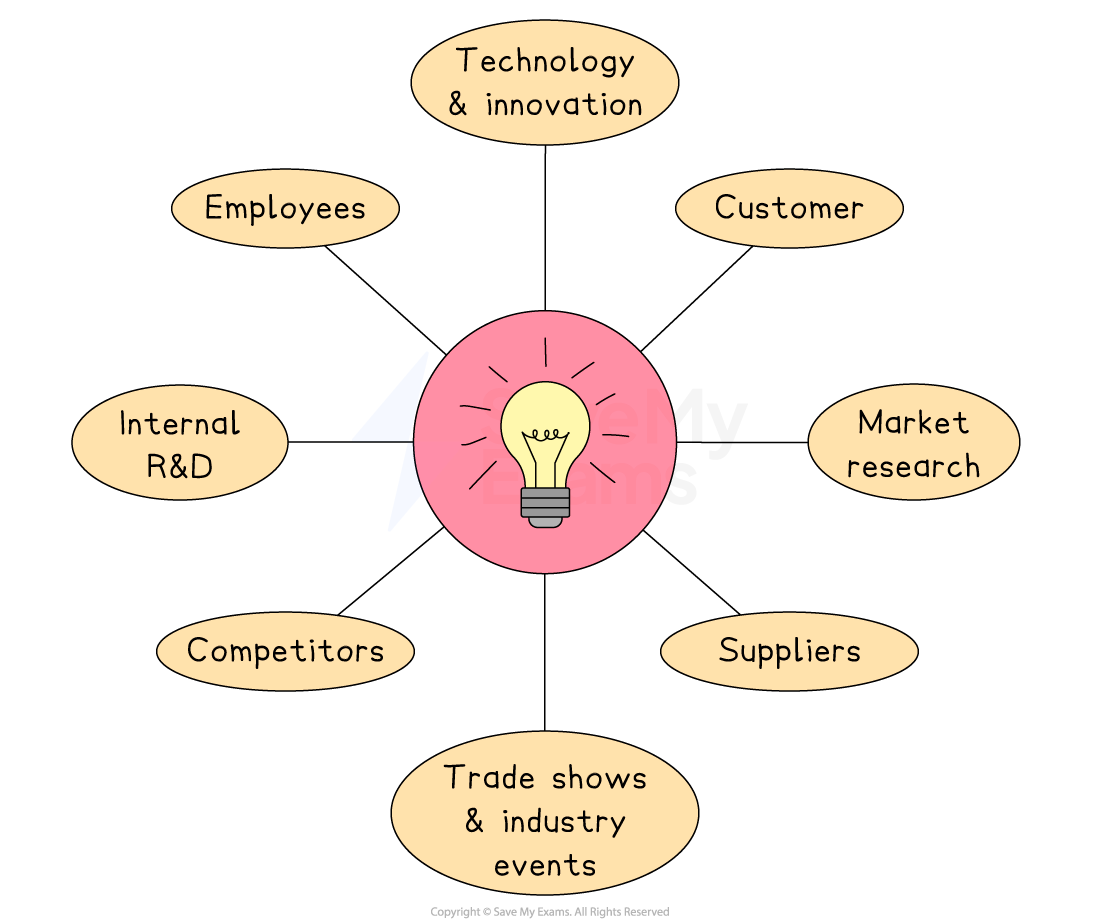
Before creating a new product, a business will explore different sources to get ideas and understand what customers might want
-
Customers
-
Feedback, complaints, reviews or suggestions can highlight what people want or need
-
-
Employees
-
Staff working in sales, customer service or production often notice problems or spot opportunities for new ideas
-
-
Competitors
-
Looking at what rivals are offering can inspire new ideas or show gaps in the market
-
-
Market research
-
Surveys, focus groups and trends analysis help businesses understand customer needs and spot new opportunities
-
-
Technology and innovation
-
New inventions or improvements in technology can lead to better or completely new products
-
-
Suppliers
-
A supplier might offer new materials or production methods that help create a new product
-
-
Trade shows and industry events
-
These can show off the latest trends and generate ideas for new products
-
-
Internal research and development (R&D)
-
Some businesses invest in their own R&D teams to create new products or improve existing ones
-
The importance of research and development
-
Product development is a key part of business success, as it supports growth and helps a business compete and meet customer needs
Key benefits of product development
-
It helps a business stay competitive
-
Developing new products allows a business to keep up with changes in customer preferences and technology
-
E.g. Apple regularly updates its iPhone models to stay ahead of rival smartphone brands
-
-
-
It supports business growth
-
New products can open up new markets or increase sales, helping the business grow in size and profits
-
E.g. Greggs launched vegan options to attract new customers and grow its market share
-
-
-
It builds customer loyalty and strengthens the brand
-
Offering fresh and useful products shows customers that the business listens and adapts to their needs
-
E.g. Coca-Cola released zero-sugar versions of its drinks to meet health concerns and keep loyal customers
-
-