
Business_A-level_Cie
-
business-and-its-environment
enterprise6 主题 -
business-structure6 主题
-
size-of-business3 主题
-
business-objectives3 主题
-
stakeholders-in-a-business2 主题
-
external-influences-on-business12 主题
-
political-influences
-
legal-influences
-
economic-influences
-
economic-government-macroeconomic-objectives
-
economic-government-policies
-
social-influences
-
the-impact-of-corporate-social-responsibility
-
demographic-influences
-
technology-competitors-and-suppliers
-
international-trade
-
the-impact-of-multinationals
-
environmental-influences
-
political-influences
-
business-strategy10 主题
-
human-resource-managementhuman-resource-management-hrm8 主题
-
motivation4 主题
-
management2 主题
-
organisational-structure5 主题
-
business-communication5 主题
-
leadership2 主题
-
human-resource-strategy3 主题
-
marketingthe-nature-of-marketing7 主题
-
market-research3 主题
-
the-marketing-mix6 主题
-
marketing-analysis5 主题
-
marketing-strategy3 主题
-
operations-managementthe-nature-of-operations3 主题
-
inventory-management2 主题
-
capacity-utilisation-and-outsourcing1 主题
-
location-and-scale2 主题
-
quality-management1 主题
-
operations-strategy4 主题
-
finance-and-accountingbusiness-finance2 主题
-
sources-of-finance3 主题
-
forecasting-and-managing-cash-flows1 主题
-
costs4 主题
-
budgets1 主题
-
financial-statements4 主题
-
analysing-published-accounts6 主题
-
investment-appraisal2 主题
the-importance-of-leadership
The purpose of leadership
-
Leadership is about having a vision, sharing that vision with others and providing direction
-
Leaders inspire and motivate others to work towards a common goal
-
This contributes to the meeting of aims and objectives and supports the development of a motivated workforce
-
-
-
Leaders must also be prepared to pursue a new direction or even step aside when circumstances change
-
While some managers may be good leaders, not all leaders have a management role
-
Employees will follow a manager’s direction but may not be truly inspired to support the manager in achieving ambitious business goals
-
-
Leadership is necessary in many different contexts
-
A leader in sport could be the captain of a national football or basketball team
-
A political leader could be a president, leader of a political group or trade union
-
Leadership roles in business
-
Leaders in a business are often, though not exclusively, employed in management roles
-
Directors are senior managers, elected to their posts by shareholders at the annual general meeting
-
Managers are employed to organise resources and make decisions relating to people and operations within their area of responsibility
-
Supervisors are directed by managers and lead the day-to-day performance of a team to achieve its goals
-
Employee representatives are chosen by their peers to act on their behalf when holding discussions or raising concerns with managers
-
-
Informal leaders with significant influence often emerge in businesses
-
Informal leaders could be popular, trusted colleagues, experienced or long-standing members of staff or individuals with strong, persuasive personalities
-
In some cases, informal leaders are appointed to management positions to capture and utilise their influence
-
Otherwise, taking steps to involve and reassure informal leaders can persuade them to support business objectives
-
This can be a powerful way to gain trust and buy-in of employees
-
-
The qualities of a good leader
-
Good leaders commonly have a range of talents
-
They are likely to have context-specific skills and a broad understanding of business issues
-
They will have suitable experience and expertise
-
They will possess personal characteristics such as honesty, ethical standards and patience when dealing with others
-
They will be excellent communicators, able to inform, persuade and inspire others
-
-
Leaders aren’t born with these capabilities
-
Leadership qualities cannot be taught; rather, they are learned from experiences and facing adversity
-
They tend to have intentionally put themselves in situations where they have to learn, adapt and grow a range of important qualities
-
Qualities of good leaders
|
Authenticity |
Curiosity |
Ability to analyse |
Adaptability |
|---|---|---|---|
|
|
|
|
|
Creativity |
Comfort with ambiguity |
Resilience |
Empathy |
|
|
|
|
Goleman’s Four Competencies of Emotional Intelligence
-
Emotional intelligence (EI) is an individual’s ability to understand and manage their own emotions and feelings, as well as those of others
-
Goleman‘s framework of four components that make up emotional intelligence includes skills that can be developed and improved to make managers more effective leaders
The Four Competencies of Emotional Intelligence
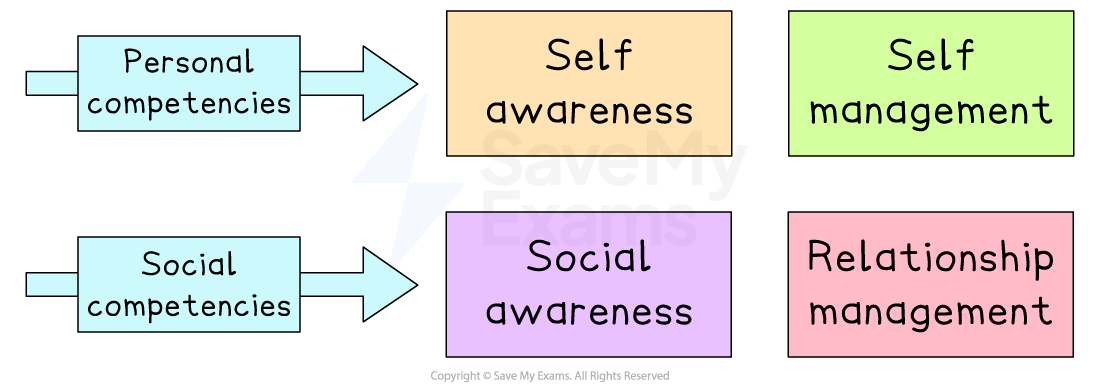
Self awareness
-
Self awareness is the ability of an individual to read and understand their emotions and recognise their impact on others
-
Skills that can be developed include emotional self-awareness, self-assessment and self-confidence
-
The more leaders are aware of their feelings, the easier they are to manage when responding to others
-
Emotions can be unintentionally shared with others, through facial expressions and other nonverbal behaviour
-
Positive emotions towards others can influence them to cooperate and work towards shared goals
-
Social awareness
-
Social awareness is the ability to accurately notice the emotions of others and read situations appropriately
-
Skills that can be developed include empathy, organisational awareness and service
-
It involves leaders sensing what other people are thinking and feeling, taking into account their perspectives and being empathetic
-
Leaders should be able to identify others’ frustration with the task at hand and respond in a way that can prevent further negative emotions
-
Strong empathy skills also help leaders get along better with others who see things differently from them to avoid misunderstandings and conflict
-
Self management
-
Self management is the ability of a leader to manage their actions, thoughts, and feelings in flexible ways to achieve goals
-
Skills that can be developed include self-control, transparency and optimism
-
It contributes to a sense of well-being, confidence and a sense of connectedness to others
-
Effective leaders can cope effectively even in the most challenging of working relationships
-
They can concentrate on the task at hand rather than being distracted by negative thoughts or emotions
-
Relationship management
-
Relationship management is the ability of a leader to take their own emotions, the emotions of others and the context to manage interactions with others successfully
-
Skills that can be developed include bond building, conflict management and teamwork
-
Leaders sense other’s reactions to the situation and fine-tune their response to move in a positive direction
-
In this way, leaders influence those around them to make a good decision that is accepted by all
-
Examiner Tips and Tricks
Strong analysis can be developed by using relevant theories to support your points. Management and leadership theories provide an excellent theoretical basis, which, alongside the use of relevant points from the case study, can help you to make a strong argument.