
Business_A-level_Cie
-
business-and-its-environment
enterprise6 主题 -
business-structure6 主题
-
size-of-business3 主题
-
business-objectives3 主题
-
stakeholders-in-a-business2 主题
-
external-influences-on-business12 主题
-
political-influences
-
legal-influences
-
economic-influences
-
economic-government-macroeconomic-objectives
-
economic-government-policies
-
social-influences
-
the-impact-of-corporate-social-responsibility
-
demographic-influences
-
technology-competitors-and-suppliers
-
international-trade
-
the-impact-of-multinationals
-
environmental-influences
-
political-influences
-
business-strategy10 主题
-
human-resource-managementhuman-resource-management-hrm8 主题
-
motivation4 主题
-
management2 主题
-
organisational-structure5 主题
-
business-communication5 主题
-
leadership2 主题
-
human-resource-strategy3 主题
-
marketingthe-nature-of-marketing7 主题
-
market-research3 主题
-
the-marketing-mix6 主题
-
marketing-analysis5 主题
-
marketing-strategy3 主题
-
operations-managementthe-nature-of-operations3 主题
-
inventory-management2 主题
-
capacity-utilisation-and-outsourcing1 主题
-
location-and-scale2 主题
-
quality-management1 主题
-
operations-strategy4 主题
-
finance-and-accountingbusiness-finance2 主题
-
sources-of-finance3 主题
-
forecasting-and-managing-cash-flows1 主题
-
costs4 主题
-
budgets1 主题
-
financial-statements4 主题
-
analysing-published-accounts6 主题
-
investment-appraisal2 主题
leadership-theories
An introduction to leadership theory
-
Leadership theories explain how some people become great leaders and why some leadership styles are effective
-
They focus on shared traits, characteristics and behaviours of successful leaders and the circumstances that have produced them
-
Key leadership theories
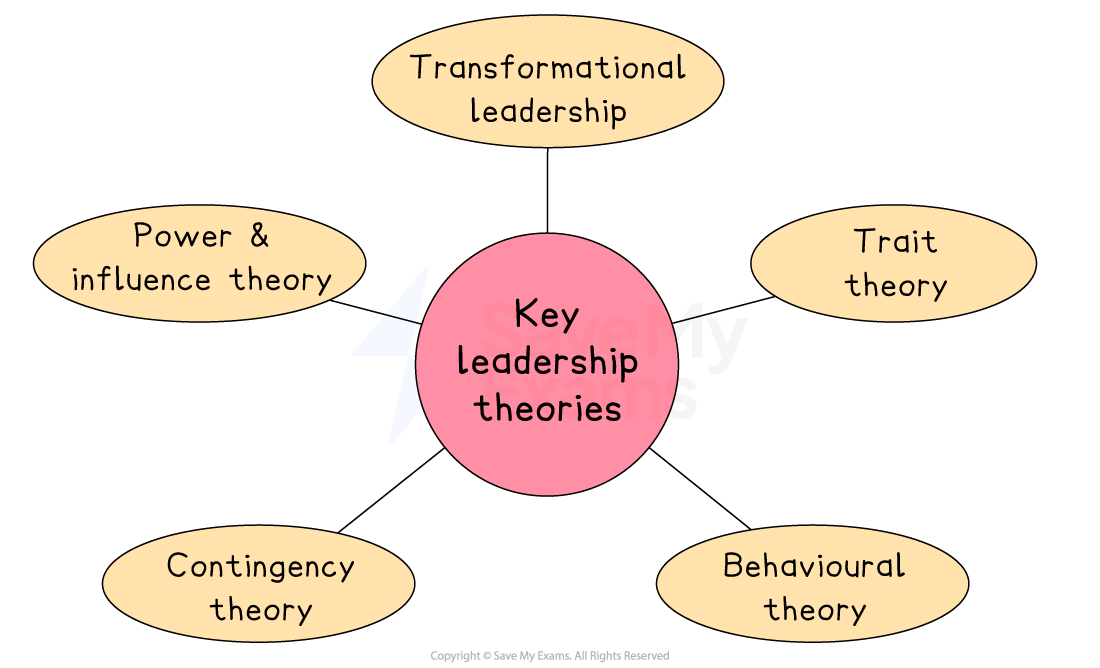
Trait theory
-
Trait theory suggests that great leaders are born, not made
-
Studies of great historical leaders investigated both their personality and physical traits
-
Certain traits were observed in leaders across time, in different cultures and in diverse locations
-
-
-
Studies found that some people are simply born with the personality traits and physical attributes that set them apart from others and give them the potential to demonstrate great leadership skills
-
Despite being present at birth, these natural talents must be developed and the individual must learn to apply leadership techniques to be successful
-
In business, leaders including Microsoft’s Bill Gates, Sony’s Akio Morita and Italy’s Enzo Ferrari possess these traits
-
-
Some of the natural qualities of a successful leader identified include
-
Charisma
-
A drive to achieve
-
The desire to lead
-
Integrity
-
Confidence
-
Intellect
-
Effective political skills
-
Business knowledge
-
Emotional maturity
-
-
Trait theory also emphasises typically masculine characteristics, such as height and appearance and, as a result, is now seen as dated
Behavioural theory
-
Behavioural theory suggests that individuals can learn behaviours that make them effective leaders
-
Research focused on studies of CEOs, project managers and other leaders across diverse industries as they responded to situations
-
Successful leaders pursued actions in a consistent way and had developed behaviours that were key to business success
-
-
These behaviours don’t come naturally to everyone, but can be learned and strengthened with effort, observation and experience
-
-
Three particular types of skills, all of which can be developed over time, are important for effective leadership
-
Human skills such as communication and empathy
-
Conceptual skills such as problem-solving or spotting opportunities
-
Technical skills such as budgeting or people management
-
-
The best leaders use these skills and adapt their behaviour according to the context in which they find themselves
Contingency theory
-
Contingency theory suggests that effective leadership depends on the specific situation
-
A leader can be effective in one situation and ineffective in another, depending on whether their leadership style fits the given situation
-
Factors determining leader effectiveness
|
Factor |
Explanation |
|---|---|
|
The task or project |
|
|
The leader’s personality |
|
|
The size and composition of the team |
|
|
Resources available and deadlines |
|
-
Contingency theory emphasises the importance of finding the right leader for the given circumstances
-
Leaders who are willing and able to adapt their leadership style to the situation are highly valued
-
New Zealand’s former prime minister, Jacinda Ardern, was praised for her ability to adapt her leadership style during her term of office
-
-
Power and influence theories
-
Power and influence theories suggest that leaders hold personal power over subordinates as a result of their
-
Expert knowledge
-
Personal charm
-
Formal hierarchical position
-
-
If leaders have one or more of these sources of power, they are in a position to influence subordinates to follow them and act on their directions
-
Transactional leaders use a system of rewards and punishments as motivators to maximise team performance
-
The personality and capabilities of the leader are less important than the strength of the system and how well employees adhere to it
-
The leader’s main focus is likely to involve assessing employees’ performance, distributing rewards or implementing punishments
-
Transformational leadership
-
Transformational leadership is most appropriate when businesses are undergoing periods of change
-
These leaders focus on cultural change and the ‘bigger picture’ rather than day-to-day management of workers, including
-
Influencing and encouraging subordinates
-
Being an inspiration to others and ‘selling’ the business vision
-
Providing new challenges and developing employees’ ambitions
-
-
Recent examples of transformation leaders include
-
Virgin’s Richard Branson, whose transformative leadership style focuses on keeping employees happy so they perform better as a group
-
Branson has learned to take risks and, importantly, to treat all workers with respect
-
-
Target’s Gregg Stienhafel took over at a company that had failed to change in the face of challenges from online rivals
-
He made rapid changes to build a strong online presence, alongside a renewed network of physical stores across the US.
-
-
-
Examiner Tips and Tricks
When evaluating different approaches to leadership, you should avoid suggesting that there is one single correct way to lead. The best leaders can adapt their leadership style depending on the context, the people they are leading and the circumstances in which they are operating.