
Business_A-level_Cie
-
business-and-its-environment
enterprise6 主题 -
business-structure6 主题
-
size-of-business3 主题
-
business-objectives3 主题
-
stakeholders-in-a-business2 主题
-
external-influences-on-business12 主题
-
political-influences
-
legal-influences
-
economic-influences
-
economic-government-macroeconomic-objectives
-
economic-government-policies
-
social-influences
-
the-impact-of-corporate-social-responsibility
-
demographic-influences
-
technology-competitors-and-suppliers
-
international-trade
-
the-impact-of-multinationals
-
environmental-influences
-
political-influences
-
business-strategy10 主题
-
human-resource-managementhuman-resource-management-hrm8 主题
-
motivation4 主题
-
management2 主题
-
organisational-structure5 主题
-
business-communication5 主题
-
leadership2 主题
-
human-resource-strategy3 主题
-
marketingthe-nature-of-marketing7 主题
-
market-research3 主题
-
the-marketing-mix6 主题
-
marketing-analysis5 主题
-
marketing-strategy3 主题
-
operations-managementthe-nature-of-operations3 主题
-
inventory-management2 主题
-
capacity-utilisation-and-outsourcing1 主题
-
location-and-scale2 主题
-
quality-management1 主题
-
operations-strategy4 主题
-
finance-and-accountingbusiness-finance2 主题
-
sources-of-finance3 主题
-
forecasting-and-managing-cash-flows1 主题
-
costs4 主题
-
budgets1 主题
-
financial-statements4 主题
-
analysing-published-accounts6 主题
-
investment-appraisal2 主题
technology-competitors-and-suppliers
The impact of technological change on business
Why digital technology matters
-
Keeps firms competitive
-
Rivals that adopt new technology can cut prices, deliver faster and win customers
-
-
Widens markets
-
An online store is open 24/7 and can reach buyers worldwide
-
-
Turns data into decisions
-
Software spots patterns humans miss, guiding price decisions and determining stock levels
-
Key ways technology is used
|
Area |
Use |
Example |
|---|---|---|
|
Automation (robots, AI, CAD/CAM) |
|
|
|
E-commerce platforms |
|
|
|
Big data and data mining |
|
|
|
Internet of Things (IoT) |
|
|
|
Digital platforms and apps |
|
|
Opportunities created for businesses
-
Lower costs
-
Automated warehouses and AI scheduling reduce waste and staffing bills
-
-
Faster service
-
Next-day (or same-day) delivery builds customer loyalty
-
-
New revenue streams
-
Subscription apps, online adverts or selling data licences can increase business income
-
-
Global reach for small firms
-
Even a start-up can sell on marketplaces such as Amazon or Etsy, or its own website
-
-
Flexible, data-driven pricing
-
Software raises or lowers prices in minutes to match demand
-
Challenges for businesses
-
High set-up costs
-
Robots, servers, recruiting specialist staff or training need large upfront spending
-
-
Technical failures
-
System breakdowns halt production or crash websites, affecting customer service
-
-
Cybersecurity risks
-
Hackers may steal customer data or stop operations
-
-
Job losses and morale issues
-
Staff may fear redundancy
-
Training is essential but may be resented if jobs change significantly
-
-
Legal and ethical concerns
-
Using personal data without clear consent can breach privacy laws and damage reputation
-
The impact of competitors on business decisions
-
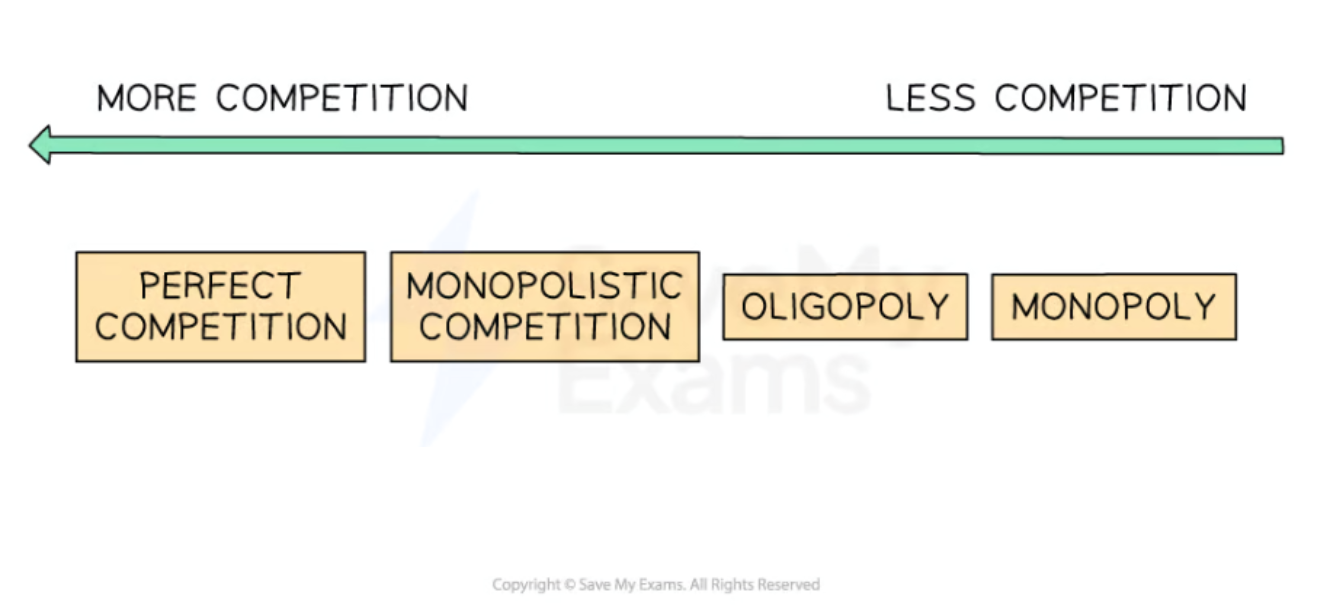
Competition describes how many rival businesses operate in a market and how strong they are
-
In a monopoly market, there is one dominant seller (e.g. a local water company)
-
In an oligopoly market, there are usually four to seven large rivals (e.g. UK supermarkets)
-
In a perfectly competitive market, there are many small firms, none of which have significant power (e.g. bubble tea outlets)
-
The level of competition
How competitors affect business costs
-
Price wars force cost-cutting
-
Carrefour’s rivalry with E.Leclerc in France involves frequent price-matching campaigns
-
Both grocers squeeze suppliers for lower prices and continuously look for ways to reduce overheads
-
-
Higher marketing spend
-
An increase in rivals usually requires more promotional activities such as advertising and loyalty schemes
-
E.g. US mobile network Verizon offers “unlimited calls/data” deals to attract customers from rivals AT&T and T-Mobile
-
-
Need for product innovation
-
Chinese smartphone brand Xiaomi pours billions into R&D each year to stay ahead of rivals like Huawei in the oligopoly smartphone market
-
-
Bulk-buy savings for big players
-
Size gives dominant businesses bargaining power, lowering their costs
-
E.g. Walmart’s global scale helps it negotiate lower unit prices from manufacturers, keeping its own costs below those of smaller supermarket chains
-
-
Regulatory costs
-
Monopolies often face price caps that restrict their ability to maximise profits
-
E.g. the UK government imposes a maximum amount that suppliers such as British Gas can charge households for each unit of energy they use
-
How competitors affect demand
-
Price elasticity of demand
-
When customers can choose substitutes, a small price rise often sends them to rival businesses (read more on PED here)
-
-
Customer choice
-
With many rival businesses to choose from, buyers can switch for convenience, features or ethics
-
In a monopoly, there is little consumer choice
-
-
Brand loyalty matters in crowded markets
-
E.g. Nike retains demand despite many trainers in the market by investing in image and sponsorships
-
The impact of suppliers on business decisions
-
In most industries a business is only as strong as the suppliers that feed its production line
-
The price, quality and punctual delivery of raw materials all influence how the business sets its own prices, designs its products and organises day-to-day operations
How suppliers influence business decisions
|
Supplier factor |
Example |
|---|---|
|
Price of inputs |
|
|
Quality of materials |
|
|
Supplier reliability |
|
|
Availability and scarcity |
|
|
Lead times |
|
|
Supplier bargaining power |
|