
An introduction to political influences
-
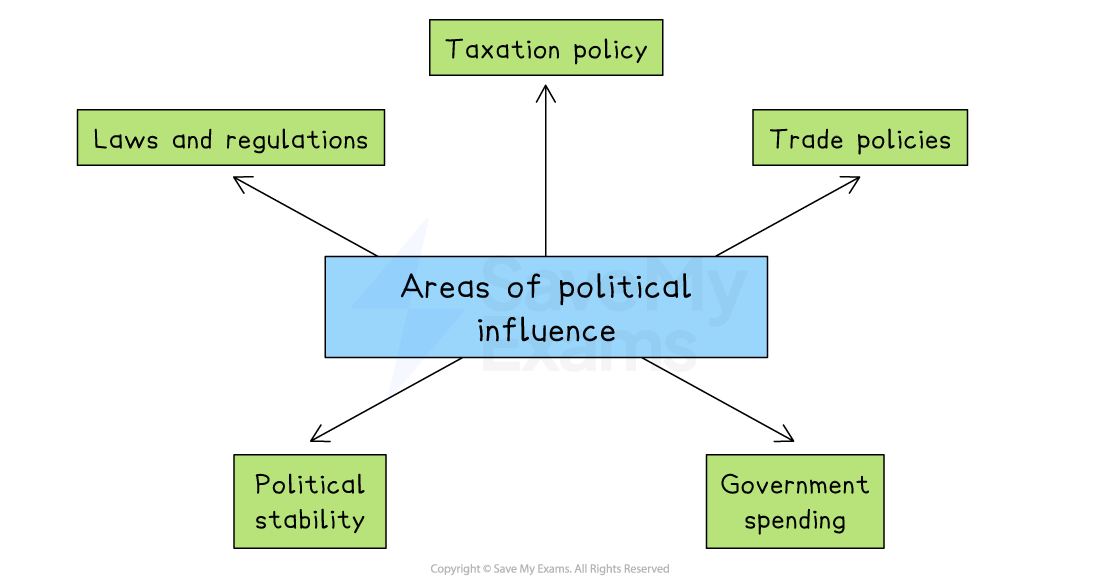
Political influences refer to the ways in which government actions, decisions, and policies can affect how a business operates
-
These can come from local, national or international governments
-
-
Laws and regulations
-
Businesses must follow rules related to health and safety, employment, consumer protection, and the environment
-
Breaking laws can lead to fines, damage to reputation or even being shut down
-
-
Taxation policy
-
Governments decide how much tax businesses must pay
-
Higher taxes can reduce profits
-
Lower taxes may encourage investment or expansion
-
-
Trade policies
-
Includes tariffs, quotas, and free trade agreements
-
These influence how easily businesses can buy and sell goods internationally
-
-
Government spending
-
When governments invest in infrastructure, such as roads, hospitals and schools, certain businesses benefit
-
During economic downturns, governments may also support industries through subsidies or grants
-
-
Political stability
-
Businesses prefer to operate in stable countries where laws and policies are predictable
-
In countries with unrest or frequent policy changes, there is more risk
-
Case Study
Nestlé India and changing environmental regulations
-
In 2019, the Indian government introduced strict environmental regulations to reduce plastic waste
-
This included phasing out single-use plastics, such as plastic straws and wrappers, used in food and beverage packaging
Responses
-
Nestlé India responded to the changing political environment by
-
Re-designing packaging for products, including Maggi noodles and chocolate bars
-
Investing in research to develop recyclable and biodegradable materials
-
Working with suppliers to source new eco-friendly packaging materials
-
Launching campaigns to inform customers of its new sustainability efforts
-
Impacts
-
Costs increased in the short term due to changes in materials and production
-
However, Nestlé improved its brand image, especially among environmentally aware consumers
-
The company avoided legal penalties and reputational damage by acting early
Privatisation
-
Privatisation occurs when government-owned firms are sold to the private sector
-
Examples of industries that are often privatised include transport, energy, telecommunications and healthcare services
-
-
Many government-owned firms have been partially privatised
-
The government retains a share in them so they can influence decision-making and receive a share of the profits
-
e.g. Shares in Singapore Airlines are 55% government-owned and 45% privately owned
-
Advantages of privatisation
1. Raises government revenue
-
Governments earn money from selling state-owned businesses
-
Funds can be used to reduce debt or invest in public services
2. Improves efficiency
-
Private firms aim to cut waste, boost productivity and earn profits
-
Often more innovative and customer-focused than public organisations
3. Reduces government spending
-
Running businesses is costly for governments
-
Selling them reduces long-term financial pressure
4. Encourages investment
-
Private ownership attracts both domestic and foreign investors
-
Can lead to more jobs and economic growth
-
E.g., Nigeria’s sale of NITEL helped expand mobile coverage
-
5. Increases competition and choice
-
Opens markets to new firms, giving consumers more options
-
Can lead to better services and lower prices
-
E.g. Privatising parts of Australia’s rail and electricity sectors led to lower prices for customers
-
Disadvantages of privatisation
|
Disadvantage |
Explanation |
Example |
|---|---|---|
|
Focus on profit over service |
|
|
|
Loss of public control |
|
|
|
Job losses |
|
|
|
Unequal access |
|
|
|
Risk of private monopoly |
|
|
|
Short-term thinking |
|
|
Nationalisation
-
Nationalisation is when a government takes ownership and control of a business or industry from the private sector
-
This means the service or company is now owned by the state and run on behalf of the public
-
-
Nationalisation usually happens in sectors that are considered essential or where private ownership has failed to meet the needs of society
Advantages of nationalisation
-
Nationalisation allows the government to directly manage industries that are vital to the economy or national security, such as transport, healthcare, or energy
-
This means it can set policies in the public interest, such as keeping prices affordable, ensuring services reach rural areas or responding quickly in times of crisis
-
-
Unlike private firms, state-owned businesses don’t need to maximise profit for shareholders
-
This means services can be designed to benefit citizens, workers and consumers more fairly
-
Prices may be lower, access more equal and working conditions more secure
-
-
When a business is nationalised, it may gain financial stability and access to long-term government investment
-
This can be especially helpful if the business was struggling under private ownership
-
Government backing also allows the company to focus on long-term goals, such as infrastructure development or environmental sustainability, without worrying about short-term profit pressures or investor demands
-
Disadvantages of nationalisation
-
Running a nationalised business can be very expensive
-
The government must fund day-to-day operations, invest in maintenance and improvements, and cover losses if the business isn’t profitable
-
This can place a strain on public finances, especially during economic downturns
-
-
Without the pressure to make a profit or compete with rivals, nationalised businesses may become less efficient
-
They might have more bureaucracy, slower customer service, or fewer incentives to innovate
-
Customers and workers may experience delays, outdated technology, or inconsistent quality
-
-
Nationalised businesses can be affected by political pressure, where decisions are made for short-term popularity rather than long-term success
-
Politicians may interfere in areas like pricing, recruitment or expansion, even if it goes against what’s best for the business
-
This can make planning and management difficult, especially as different governments often have diverse priorities
-
Case Study
Nationalisation of YPF – Argentina’s Oil Giant
Scenario
In 2012, the Argentine government made headlines when it nationalised 51% of YPF, the country’s largest oil company, which was majority-owned at the time by the Spanish firm Repsol. This dramatic shift brought a key energy asset back under state control

Reasons for nationalisation
-
Strategic industry control: Oil and gas are essential to Argentina’s economy and energy independence. The government argued that letting a foreign company control such a vital sector was risky
-
Falling investment: Repsol was accused of failing to reinvest enough in Argentina’s oil infrastructure. As a result, domestic production was declining, forcing the country to import more energy, worsening its trade balance
-
Public interest and economic stability: The government believed nationalisation would allow Argentina to boost production, lower fuel import bills, and make energy more affordable and accessible, especially in rural and underserved regions
Outcome
-
Short-term benefits: Nationalisation helped stabilise energy supplies. The state could now steer investment toward long-term infrastructure goals and reduce reliance on imports
-
Increased government control: The move gave Argentina more control over pricing and supply, enabling subsidised fuel prices for domestic consumers
-
Legal and financial fallout: However, the nationalisation sparked international lawsuits. Argentina had to eventually compensate Repsol nearly $5 billion, which strained public finances
-
Efficiency concerns: Critics noted that YPF’s productivity improved slowly, and the firm faced issues with bureaucracy, political interference, and a lack of innovation—typical drawbacks associated with state-run enterprises