
Environmental issues and business decisions
-
Businesses can have a range of negative impacts on the environment
Business impacts on the environment

-
Pollution is caused by industrial processes that release harmful gases into the air or harmful substances into the ground
-
Land and buildings may become unusable when businesses process dirty or toxic materials, leading to dereliction
-
Traffic congestion is caused by vehicles delivering materials to and from businesses, as well as by commuting employees
-
Visual pollution is caused by unattractive buildings or business works that worsen inhabitants’ views of their surroundings
Ways businesses reduce their environmental impact
|
Method |
Example |
|---|---|
|
Increasing the amount of waste they recycle or reuse |
|
|
Encouraging employees to use public transport or walk/cycle to work, |
|
|
Switching to electric vehicles for staff |
|
|
Becoming carbon-neutral |
|
|
Improving the appearance of their surroundings |
|
|
Responding to climate change |
|
|
Responding to water scarcity |
|
-
Governments encourage businesses to reduce their environmental impact
-
Strict regulations dictate the way businesses dispose of waste to avoid pollution
-
Higher charges for disposal, as well as limits on the volume of permitted waste, increase business costs
-
Fines for businesses that break environmental regulations and order them to clean up environmental damage
-
Banning of hazardous materials in manufacturing processes means alternatives must be sourced or developed
-
-
Some governments are focused on the switch from fossil fuels to green energy production, such as solar and wind power
-
In the long term, this should mean that businesses are likely to enjoy lower and more consistent energy costs
-
-
Many governments have introduced curbs on business activities that cause environmental damage
-
E.g. Pollution permits allow businesses to pollute up to a certain limit
-
-
Examiner Tips and Tricks
Chains of analysis should link an issue to a business decision, leading to an outcome
For example, ‘As water is scarce (issue), the brewery invests in water recycling equipment (decision), cutting both costs and environmental risk (outcome)’
Environmental audits
-
An environmental audit is a systematic check of how a business affects the environment
-
Independent reviewers compare what the firm actually does with laws, company policies, and best-practice standards, then report the findings
-
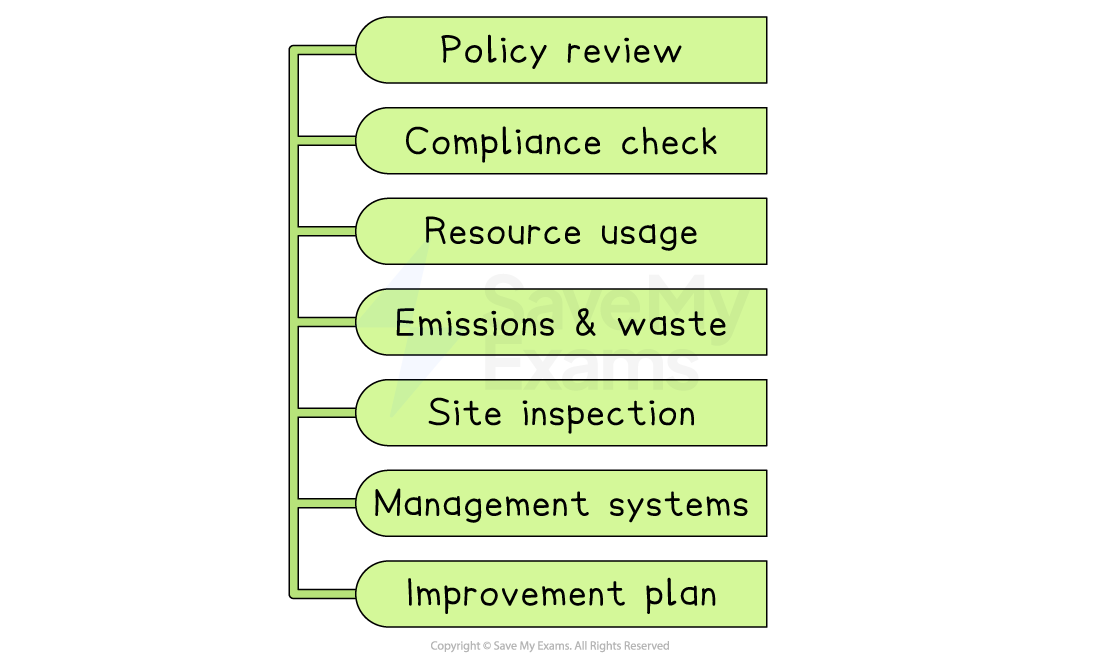
What an environmental audit includes
-
Policy review
-
Does the firm have clear environmental goals and responsibilities?
-
-
Legal compliance check
-
Is it meeting all relevant regulations on air, water, waste and chemicals?
-
-
Resource use assessment
-
Measurement of energy, water, and raw-material consumption
-
-
Emissions and waste analysis
-
Quantities of greenhouse gases, effluent, waste, and recycling rates
-
-
Site inspection
-
Examination of equipment, storage areas and emergency procedures
-
-
Management-system evaluation
-
How well staff training, record-keeping, and monitoring systems work
-
-
Improvement plan
-
Recommendations, targets, and deadlines for reducing the business’s environmental impact
-
How businesses and stakeholders use environmental audits
|
Business use |
Stakeholder use |
|---|---|
|
|
|
|
|
|
The importance of sustainability
-
Sustainability means meeting our current needs without compromising the ability of future generations to meet their own needs
-
Businesses can contribute to sustainability by changing their operations in a variety of ways
Improving sustainability

Using renewables in production
-
More than 99% of the wood used in IKEA‘s furniture products is either sourced from sustainable sources or recycled
Reducing water use in industrial processes
-
Introduced in 2011, Levi’s Water<Less programme reduces the use of water in the manufacture of the company’s denim products, so far saving over 4.2 billion litres of water in shortage areas
Using green transportation, such as electric vans
-
Almost 40% of delivery company Evri’s London vehicles are zero-emission and the company operates e-cargo bikes across four UK cities
Avoiding the use of toxic substances
-
Home accessories brand Parachute uses organically-grown textiles, with no harmful chemicals used at any stage of production
Using renewable energy, such as solar
-
Unilever uses 100% renewable electricity across all its factories, offices, R&D facilities, data centres, warehouses and distribution centres. They also generate their own solar power at production facilities in 23 countries.
Implementing recycling
-
Revive Innovations Ltd recycles compact discs, turning them into beautiful items of furniture and home accessories
Trade-offs between sustainability and profits
-
Adopting sustainable practices can involve significant upfront costs and operational expenses
-
Sustainable raw materials and components may be more expensive
-
Adapting production processes and machinery may require significant capital investment
-
-
These additional costs can potentially reduce profitability, at least in the short term
-
On the other hand, prioritising short-term profits over sustainability can lead to long-term consequences, such as resource depletion and environmental damage
-
This can create legal issues or cause damage to a business’s reputation
-
-
These factors undermine a company’s long-term viability and profitability