
The importance of corporate planning
-
Corporate planning is the process taken by senior managers to decide on long-term goals, such as growth targets, new products or entry into new markets
-
They then draw up broad plans for how the entire organisation will achieve them
Why corporate planning is important
-
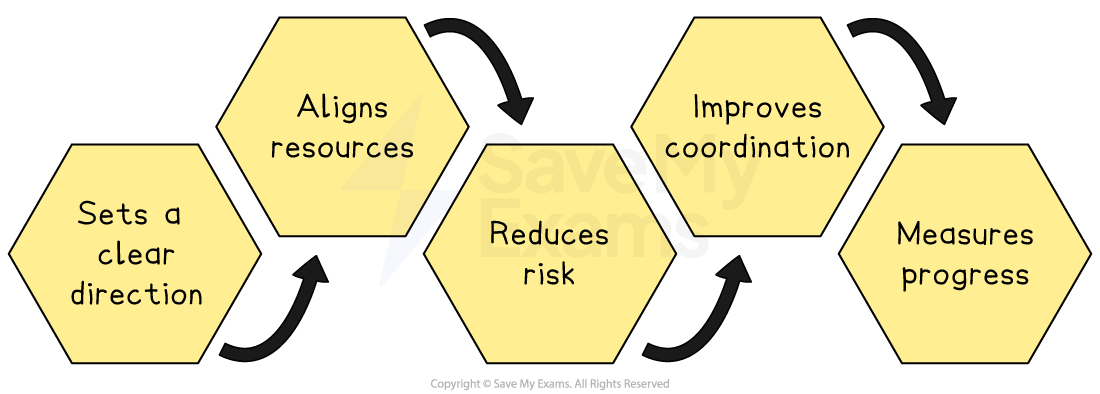
Sets a clear direction
-
It tells every department what the company aims to do over the next few years, so everyone works toward the same goals
-
-
Aligns resources
-
By knowing its main priorities, the firm can decide how to use its money, staff and equipment most effectively
-
-
Reduces risk
-
Thinking ahead helps managers spot potential problems, such as a rival launching a similar product
-
They can then build in safeguards, such as securing supply contracts early
-
-
Improves coordination
-
When marketing, production, finance and other areas all follow the same long-term plan, there are fewer conflicts and overlaps as each team understands its role
-
-
Measures progress
-
With defined long-term targets in place, the business can track whether it is on course, spotting issues early and adjusting the plan if needed
-
The management and control of strategic change
-
Strategic change is a major shift in a company’s long‐term direction
-
It involves altering the firm’s goals, core policies or scope, such as entering new markets, adopting new technology or changing how the business competes
Benefits of strategic change
|
Change |
Explanation |
|---|---|
|
Adapting to market change |
|
|
Continuous improvement |
|
|
Driving innovation and growth |
|
|
Managing risks |
|
|
Engaging employees |
|
Types of strategic change
1. Incremental change
-
A series of small, gradual improvements to processes, products or structures rather than a single large overhaul
-
Incremental change is valuable for several reasons
-
Lower risk
-
Small steps are easier to test and reverse if they don’t work
-
-
Staff acceptance
-
Gradual change gives employees time to adapt, so there is likely to be less resistance
-
-
Cost-effective
-
Small tweaks usually use existing resources, avoiding the need for significant capital expenditure
-
-
Cultivates improvement
-
The habit of regular review helps catch minor issues before they grow
-
-
2. Disruptive change
-
A radical shift that transforms an industry or market by introducing a new business model, technology or way of operating
-
Disruptive change is valuable for several reasons
-
First mover advantage
-
Being the first with a major innovation can secure market leadership and build strong brand recognition
-
-
Rapid growth potential
-
Making a new market or completely changing an existing one can earn a business significantly more revenue
-
-
Outpacing rivals
-
Disruption can leave slower competitors struggling to catch up, increasing a business’s market power
-
-
Long-term resilience
-
A bold reinvention can protect against future changes
-
-
Case Study
Disruptive change at Netflix

-
In 2007, Netflix shifted from mailing DVD rentals to offering on-demand streaming online
-
Subscriber numbers surged, Netflix overtook traditional rental firms, and it built a platform for producing original shows, securing its long-term position
Causes of change
1. Internal causes of change
-
Leadership change
-
New leaders often reshuffle teams and priorities to match their own ideas and goals
-
-
Technology upgrade
-
Installing new software or machines to speed up tasks and meet customers’ digital needs
-
-
Poor performance
-
Closing or overhauling parts of the business that keep losing money to protect overall profits
-
-
Employee-driven improvement
-
Collecting staff suggestions for small, ongoing changes that boost quality and efficiency
-
2. External causes of change
-
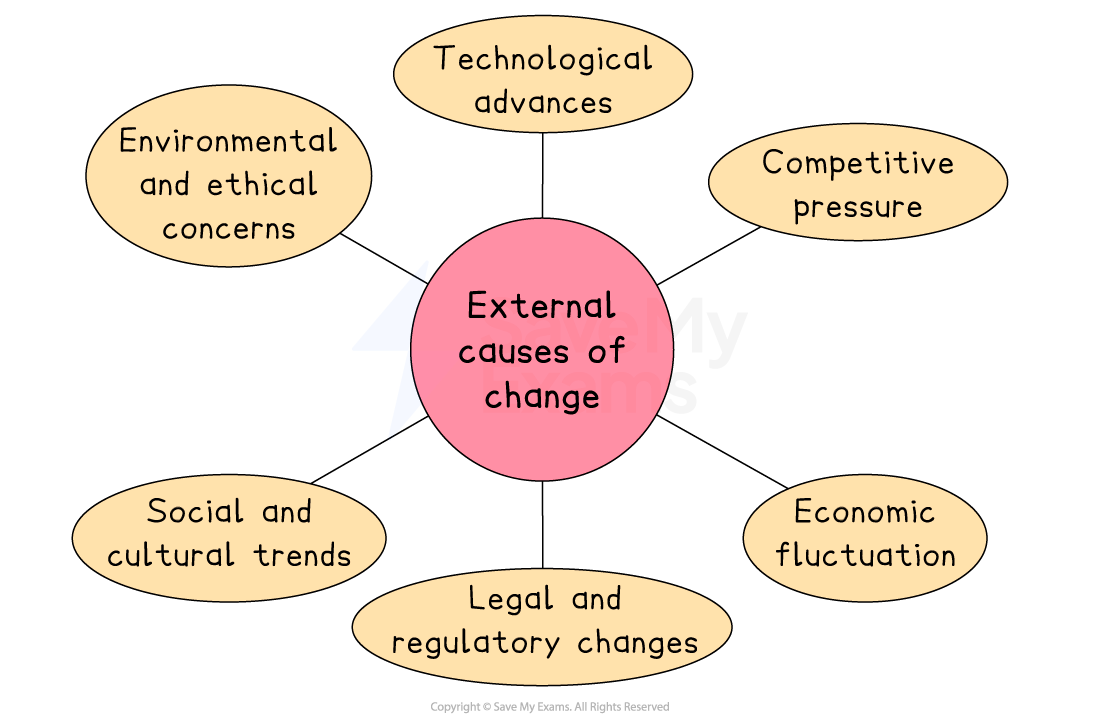
Technological advances
-
New technologies, such as smartphones or cloud computing, create opportunities for new services and improved processes
-
-
Competitive pressure
-
Actions by rival firms force a business to change its product range or operations to stay competitive
-
-
Economic fluctuations
-
Shifts in the economy, like recessions or booms, require businesses to cut costs or increase capacity
-
-
Legal and regulatory changes
-
New laws or regulations may require businesses to alter their processes, products or policies
-
-
Social and cultural trends
-
Changes in consumer values and lifestyles prompt firms to adapt products or marketing to new expectations
-
-
Environmental and ethical concerns
-
Pressure to reduce environmental impact or act responsibly leads to changes in materials, processes or products
-
Resistance to change
-
Resistance to change is the unwillingness to adapt to new circumstances or ways of doing things as a result of
-
Self-interest
-
People worry that change could threaten their job, status or pay.
-
It’s natural to protect what you value most.
-
If staff feel little loyalty, they’ll put their own needs first
-
-
Fear and misunderstanding
-
Employees may not know why change is needed or have the wrong facts.
-
Without a clear reason, it’s easy to believe that everything’s fine as it is
-
Sometimes people convince themselves the old way works better than it actually does
-
-
Different assessments
-
Not everyone agrees on what the problem is or how to fix it
-
Some may back a completely different solution
-
This isn’t just self-interest; it’s genuine debate over what’s best for the business
-
-
Prefer things as they are
-
Many prefer routine and feel uneasy about new ways of working
-
Past bad experiences can make people extra wary
-
If it feels risky, staff tend to resist even small changes
-
-
Overcoming resistance to change
-
Managers can take a range of steps to overcome workers’ resistance to change
|
Steps |
Explanation |
|---|---|
|
Meet one-on-one with concerned employees |
|
|
Listen to and address fears |
|
|
Show how change benefits individuals |
|
|
Offer incentives for early adopters |
|
The importance of corporate culture
-
Culture refers to the personality of an organisation
-
This includes shared values, beliefs, attitudes and practices that shape the way people work together within an organisation
-
-
In businesses with a strong culture, it is likely that employees
-
Are united and support the mission of the business
-
Have a ‘can do’ attitude and are enthused by their work
-
Have a strong belief that the business is a force for good
-
-
In a business with a weak culture, these signs may be difficult to identify
-
A ‘them and us’ attitude may exist between workers and management
-
Employees may doubt the sincerity of the corporate mission
-
High levels of staff turnover and low commitment amongst staff may exist
-
How culture affects decisions
-
Corporate culture acts like a set of unwritten rules
-
It can speed up or slow down decisions, shape how bold managers are, and determine whether ethics and staff views matter
|
Effect of culture |
Explanation |
|---|---|
|
Risk appetite and innovation |
|