
Business_A-level_Cie
-
business-and-its-environment
enterprise6 主题 -
business-structure6 主题
-
size-of-business3 主题
-
business-objectives3 主题
-
stakeholders-in-a-business2 主题
-
external-influences-on-business12 主题
-
political-influences
-
legal-influences
-
economic-influences
-
economic-government-macroeconomic-objectives
-
economic-government-policies
-
social-influences
-
the-impact-of-corporate-social-responsibility
-
demographic-influences
-
technology-competitors-and-suppliers
-
international-trade
-
the-impact-of-multinationals
-
environmental-influences
-
political-influences
-
business-strategy10 主题
-
human-resource-managementhuman-resource-management-hrm8 主题
-
motivation4 主题
-
management2 主题
-
organisational-structure5 主题
-
business-communication5 主题
-
leadership2 主题
-
human-resource-strategy3 主题
-
marketingthe-nature-of-marketing7 主题
-
market-research3 主题
-
the-marketing-mix6 主题
-
marketing-analysis5 主题
-
marketing-strategy3 主题
-
operations-managementthe-nature-of-operations3 主题
-
inventory-management2 主题
-
capacity-utilisation-and-outsourcing1 主题
-
location-and-scale2 主题
-
quality-management1 主题
-
operations-strategy4 主题
-
finance-and-accountingbusiness-finance2 主题
-
sources-of-finance3 主题
-
forecasting-and-managing-cash-flows1 主题
-
costs4 主题
-
budgets1 主题
-
financial-statements4 主题
-
analysing-published-accounts6 主题
-
investment-appraisal2 主题
the-role-of-management-in-facilitating-communication
The role of informal communications
-
Informal communication is the casual, unofficial way that people in a business share information
-
It is not planned or written down in official records
-
The style is friendly and conversational, often using everyday language
-
Messages travel outside the formal chain of command, so they can move quickly across levels and departments
-
-
Informal communication can occur in a range of situations, including
-
Water-cooler chats
-
Quick conversations in the corridor, kitchen or staff room
-
-
Instant-messaging or group apps
-
Short texts or emoji exchanges on WhatsApp, WeChat, Slack, etc
-
-
Social gatherings
-
Talking during lunch breaks, team socials or company sports events
-
-
Benefits and risks of informal communication
|
Benefits |
Risks |
|---|---|
|
|
|
|
|
|
|
|
Communication and business efficiency
-
Clear, timely and two-way communication is vital for an efficient business
-
It can can save time, cut costs or raise output when managed well
-
How communication affects business efficiency
|
Aspect |
Impact on efficiency |
Example |
|---|---|---|
|
Clarity and accuracy |
|
|
|
Speed of information flow |
|
|
|
Feedback channels |
|
|
|
Cross-department coordination |
|
|
|
Employee engagement |
|
|
|
Customer and supplier links |
|
|
Ways of improving communication
-
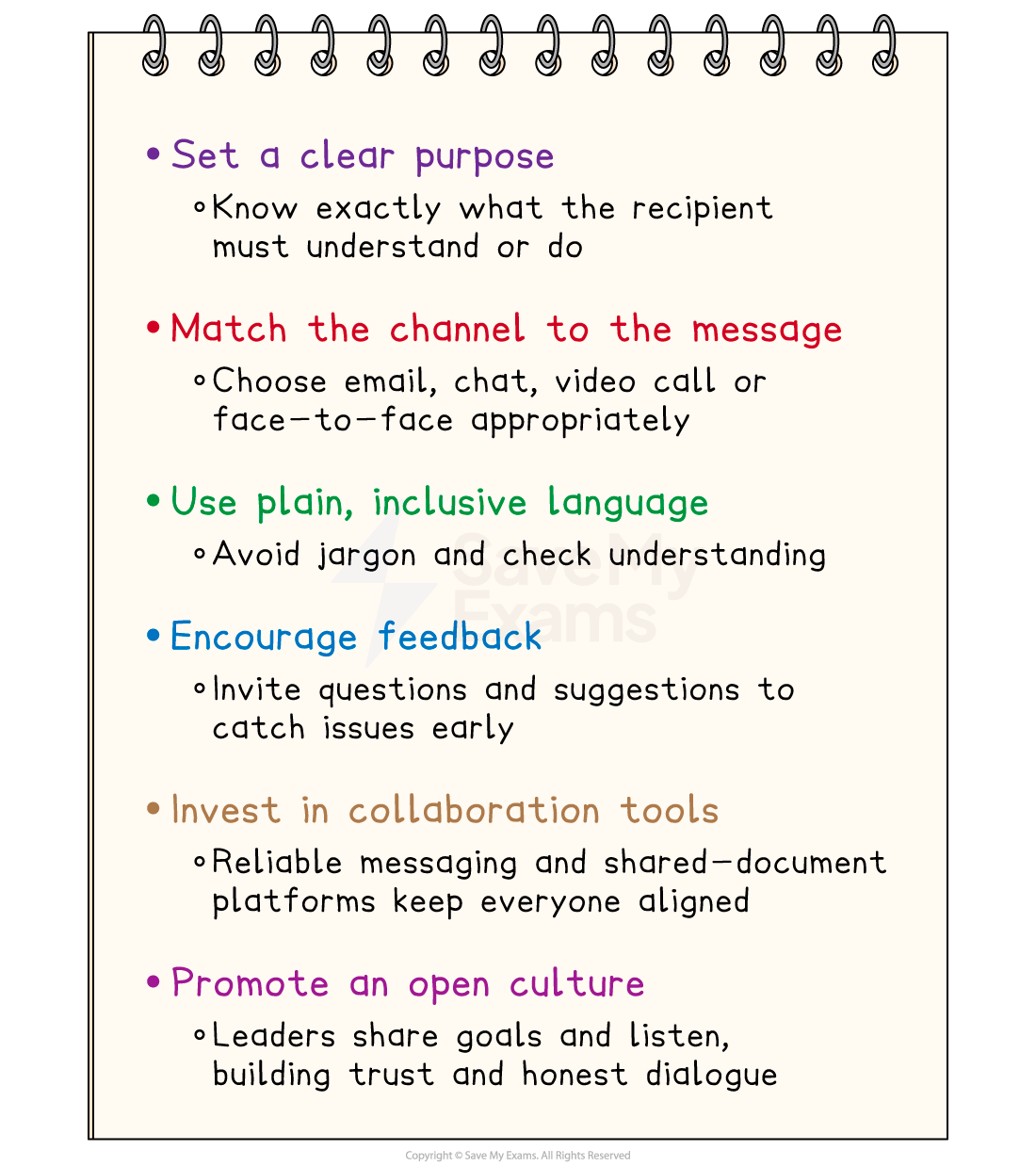
As communication is crucial to improving efficiency, managers should take steps to improve the way information moves around and outside of a business
Steps managers can take to improve communication
-
Sending a clear message through the most suitable channel, whether email, chat, video or face-to-face, reduces errors and speeds up decisions
-
This saves a business time and money
-
-
Encouraging two-way, inclusive dialogue by using plain language and inviting feedback brings problems to light early
-
It can also encourage new ideas and keep employees motivated.
-
-
Equipping teams with modern digital tools for chat, video calls and shared files keeps everyone coordinated, wherever they work
-
This improves customer service and helps achieve faster growth
-