
Business_A-level_Cie
-
business-and-its-environment
enterprise6 主题 -
business-structure6 主题
-
size-of-business3 主题
-
business-objectives3 主题
-
stakeholders-in-a-business2 主题
-
external-influences-on-business12 主题
-
political-influences
-
legal-influences
-
economic-influences
-
economic-government-macroeconomic-objectives
-
economic-government-policies
-
social-influences
-
the-impact-of-corporate-social-responsibility
-
demographic-influences
-
technology-competitors-and-suppliers
-
international-trade
-
the-impact-of-multinationals
-
environmental-influences
-
political-influences
-
business-strategy10 主题
-
human-resource-managementhuman-resource-management-hrm8 主题
-
motivation4 主题
-
management2 主题
-
organisational-structure5 主题
-
business-communication5 主题
-
leadership2 主题
-
human-resource-strategy3 主题
-
marketingthe-nature-of-marketing7 主题
-
market-research3 主题
-
the-marketing-mix6 主题
-
marketing-analysis5 主题
-
marketing-strategy3 主题
-
operations-managementthe-nature-of-operations3 主题
-
inventory-management2 主题
-
capacity-utilisation-and-outsourcing1 主题
-
location-and-scale2 主题
-
quality-management1 主题
-
operations-strategy4 主题
-
finance-and-accountingbusiness-finance2 主题
-
sources-of-finance3 主题
-
forecasting-and-managing-cash-flows1 主题
-
costs4 主题
-
budgets1 主题
-
financial-statements4 主题
-
analysing-published-accounts6 主题
-
investment-appraisal2 主题
purposes-of-communication
The purpose of communication
-
Communication is the successful transfer of messages between sender(s) and receiver(s)
Internal communication
-
Internal communication is the exchange of messages between two or more members of the same organisation
-
It helps to ensure the business runs smoothly, as it allows departments, teams and individuals to share information, make decisions and work towards common goals
-
Situations where internal communication is needed
-
Coordination
-
Ensures departments, like marketing, operations and finance, are aligned and working together effectively
-
E.g. a team meeting to plan a product launch
-
-
-
Motivation and morale
-
Keeps employees informed about company plans and progress, which can increase engagement and job satisfaction
-
E.g. a training session introducing a new computer system
-
-
-
Decision-making
-
Allows managers and employees to exchange ideas, give feedback, and make well-informed choices
-
-
Delegation and instructions
-
Managers communicate tasks clearly to staff so that work is done efficiently and correctly
-
E.g. a manager emailing staff about new safety procedures.
-
-
-
Performance management
-
Used for appraisal, giving praise or constructive feedback, and setting targets
-
-
Problem-solving
-
Helps resolve issues quickly through open dialogue and collaboration
-
External communication
-
External communication is the exchange of message(s) between an organisation and external stakeholders such as customers, suppliers or investors
-
It helps a business build and maintain good relationships with people or groups outside the organisation who have an interest in the business.
-
Situations where external communication is needed
|
Purpose |
Explanation |
|---|---|
|
Customer relations |
|
|
Supplier coordination |
|
|
Investor confidence |
|
|
Legal and regulatory compliance |
|
|
Public image and PR |
|
The importance of communication
-
Effective communication ensures that clear messages are sent, received, understood and acted upon in the way intended
-
Effective communication should be
-
Clear and unambiguous
-
Appropriate to the context and to the sender
-
Sent to the correct receiver in an accessible format
-
Timely and contain only the required amount of detail
-
The benefits of effective communication
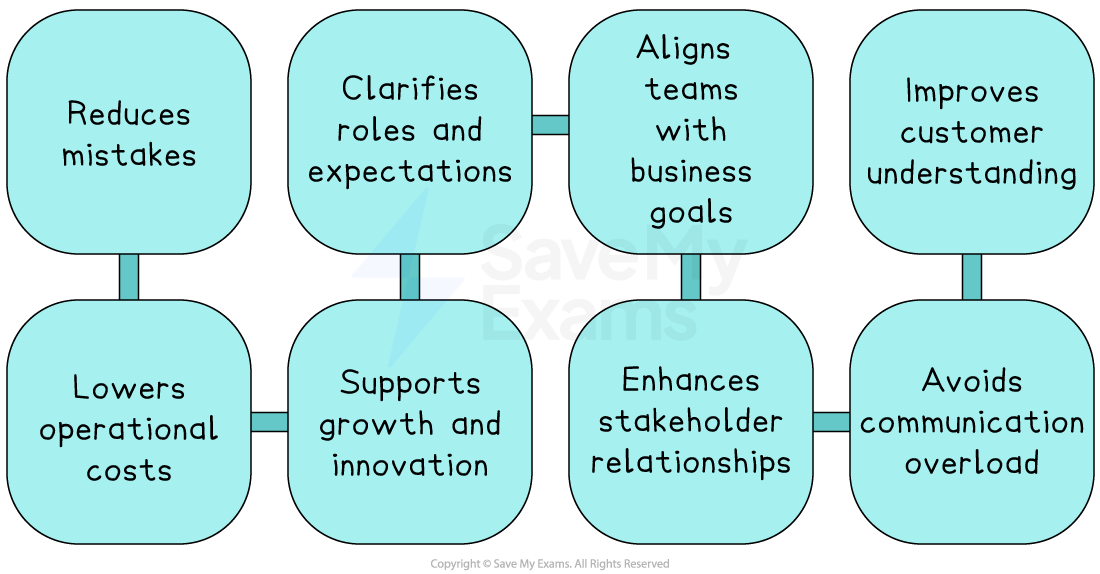
-
Reduces mistakes
-
Clear instructions and feedback between managers and staff help reduce errors, which saves time and improves efficiency
-
-
Clarifies roles and expectations
-
When communication is effective, everyone knows their responsibilities
-
This increases accountability and helps teams work more productively
-
-
Aligns the team with business goals
-
Communicating the company’s values and objectives ensures all employees are working towards the same targets
-
-
Improves customer understanding
-
By providing accurate and clear information about products or services, businesses can improve customer satisfaction and reduce complaints
-
-
Lowers operational costs
-
Good communication avoids misunderstandings and delays
-
This helps a business operate more efficiently and reduce unnecessary expenses
-
-
Supports growth and innovation
-
When communication flows well, businesses can spot and act on new opportunities quickly, such as launching new products or entering new markets
-
-
Improves stakeholder relationships
-
Managers must manage communication channels carefully to ensure the right people stay informed
-
This builds trust with key groups such as investors, employees and suppliers
-
-
Avoids communication overload
-
A 2021 survey of US workers found over one-third were overwhelmed by excessive emails, which made them consider leaving
-
Managing the volume of communication is vital to protect employee wellbeing and retention
-