
Business_A-level_Cie
-
business-and-its-environment
enterprise6 主题 -
business-structure6 主题
-
size-of-business3 主题
-
business-objectives3 主题
-
stakeholders-in-a-business2 主题
-
external-influences-on-business12 主题
-
political-influences
-
legal-influences
-
economic-influences
-
economic-government-macroeconomic-objectives
-
economic-government-policies
-
social-influences
-
the-impact-of-corporate-social-responsibility
-
demographic-influences
-
technology-competitors-and-suppliers
-
international-trade
-
the-impact-of-multinationals
-
environmental-influences
-
political-influences
-
business-strategy10 主题
-
human-resource-managementhuman-resource-management-hrm8 主题
-
motivation4 主题
-
management2 主题
-
organisational-structure5 主题
-
business-communication5 主题
-
leadership2 主题
-
human-resource-strategy3 主题
-
marketingthe-nature-of-marketing7 主题
-
market-research3 主题
-
the-marketing-mix6 主题
-
marketing-analysis5 主题
-
marketing-strategy3 主题
-
operations-managementthe-nature-of-operations3 主题
-
inventory-management2 主题
-
capacity-utilisation-and-outsourcing1 主题
-
location-and-scale2 主题
-
quality-management1 主题
-
operations-strategy4 主题
-
finance-and-accountingbusiness-finance2 主题
-
sources-of-finance3 主题
-
forecasting-and-managing-cash-flows1 主题
-
costs4 主题
-
budgets1 主题
-
financial-statements4 主题
-
analysing-published-accounts6 主题
-
investment-appraisal2 主题
channels-of-communication
Formal communication
-
Formal communication is the planned way a business shares information
-
It is written down or recorded, so there is proof of what was communicated
-
-
Formal communication happens differently depending on the type of communication network
-
A communication network refers to the patterns or structures through which information flows within an organisation — in other words, who communicates with whom and how
Communication networks
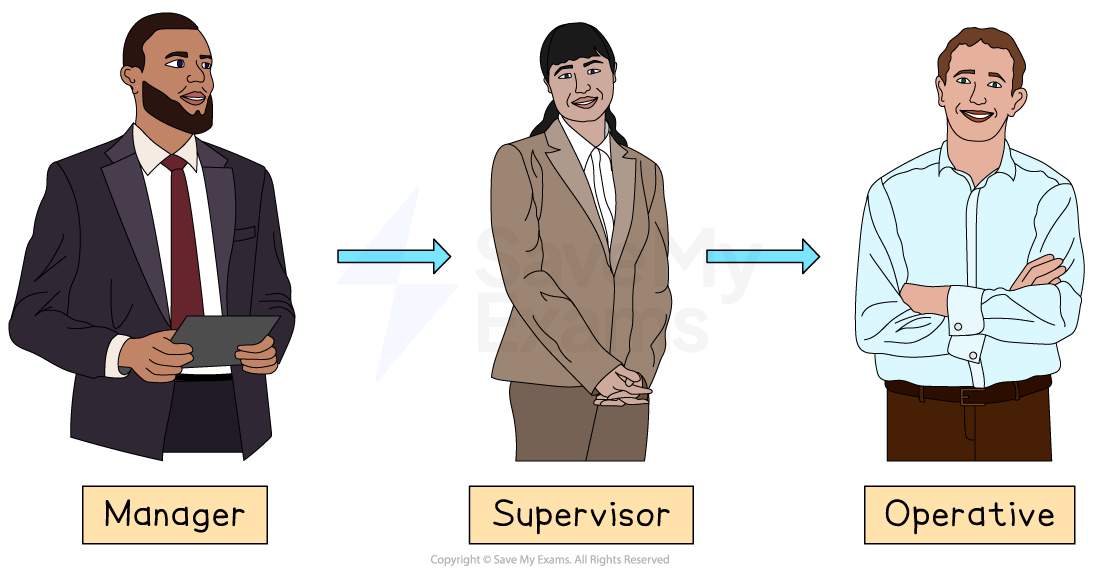
1. Chain communication
-
The message travels step-by-step up or down the hierarchy, following the chain of command
-
Chain communication suits tall, rule-bound organisations, such as the armed forces
-
There is clear authority and accountability
-
It is easy to trace who said what
-
-
However, it is slow, as passing the message through each layer adds time
-
Details can be distorted as they pass along
-
Lower levels may feel left out of decisions
-
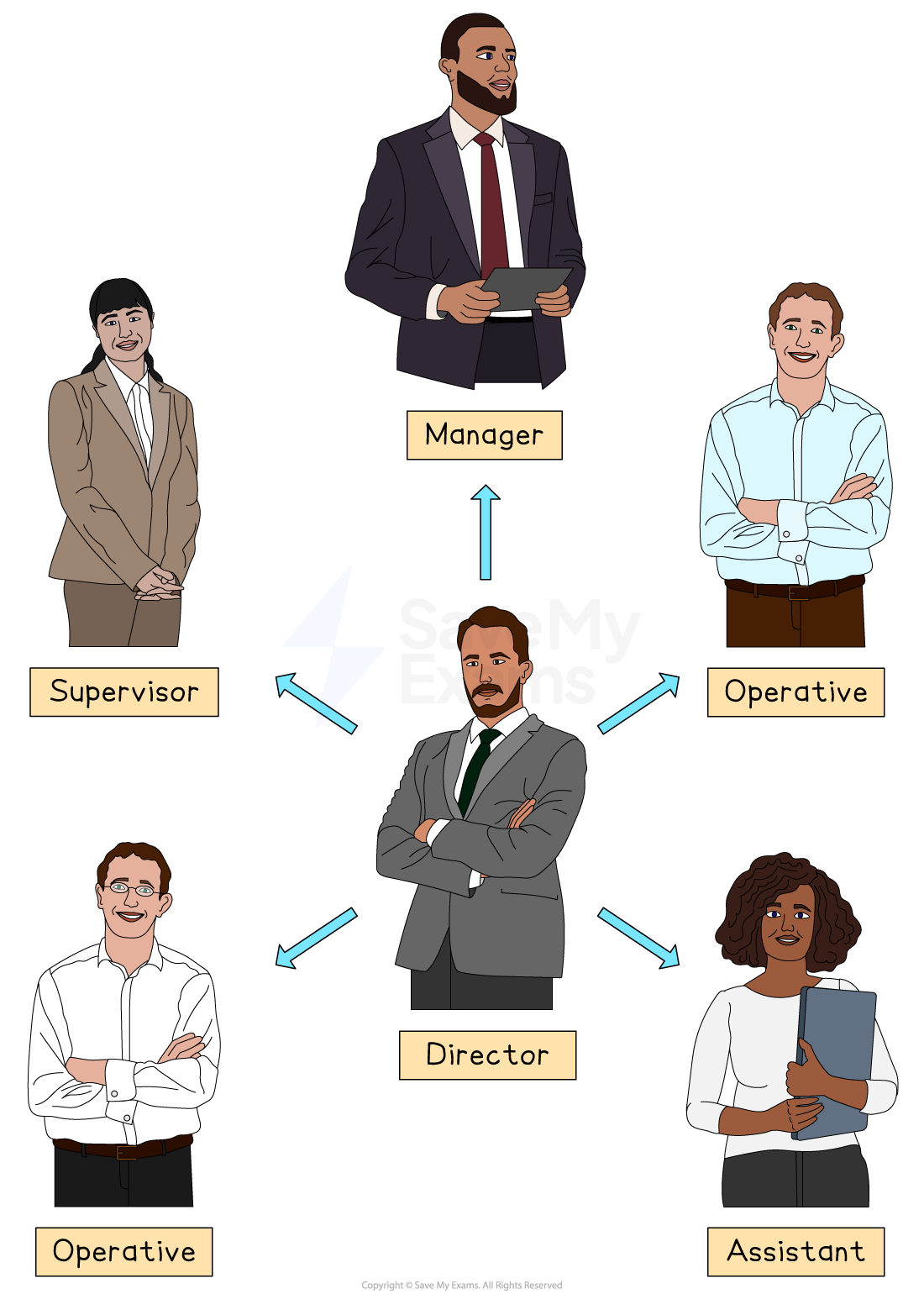
2. Wheel communication
-
One central leader receives information from, and sends instructions to, every other member
-
This approach is suitable when rapid decisions are needed, such as in emergencies
-
The leader has the full picture, so messages stay consistent
-
-
However, the message sender can suffer from information overload, as there is over-dependence on one person
-
As there is little sharing between outer members, important ideas may be missed
-
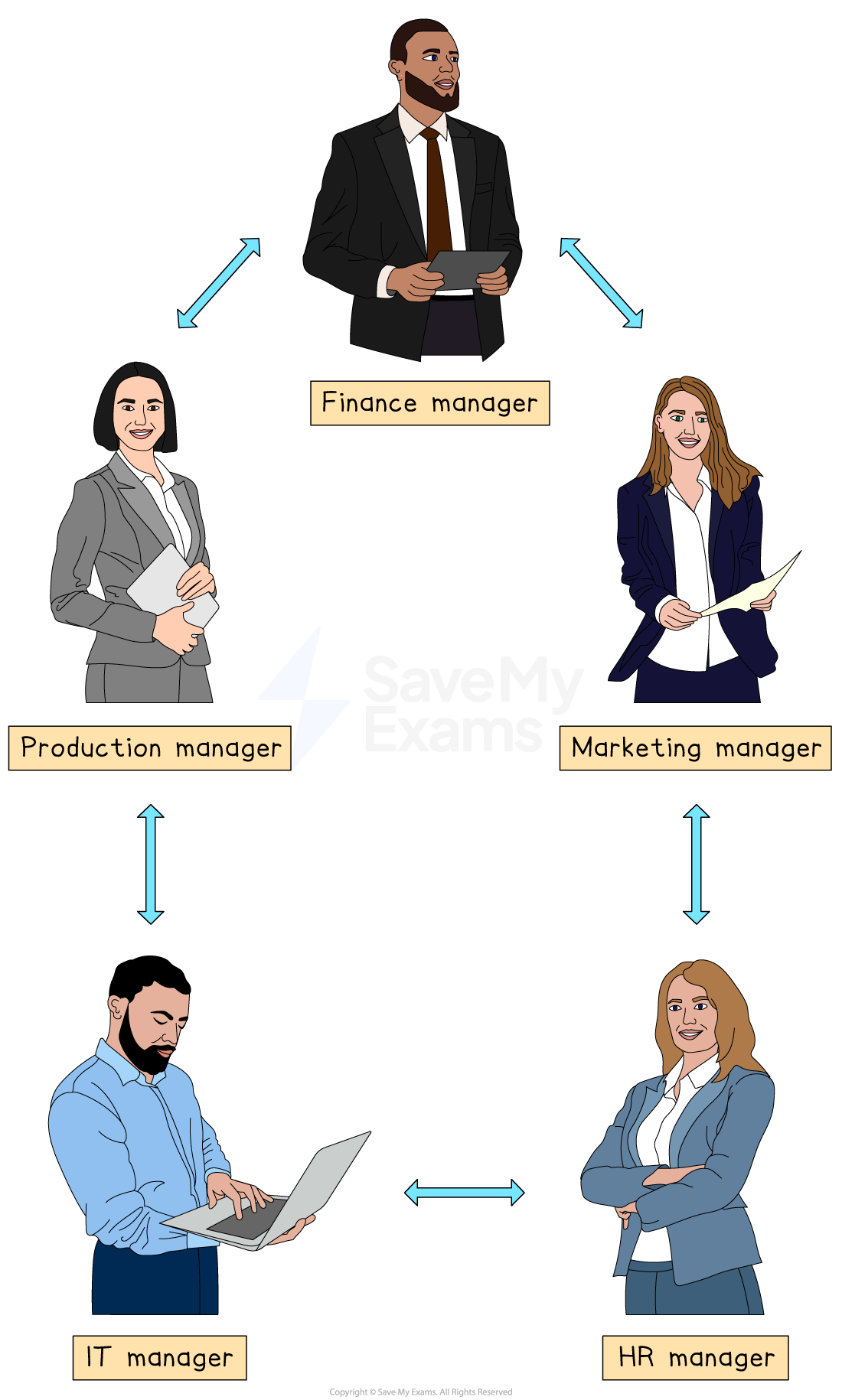
3. Circle communication
-
People of equal rank speak or pass the message in turn around the group
-
This approach builds team spirit and trust
-
Everyone is heard , so it is good for brainstorming and problem-solving
-
-
However, it may be slow to reach a decision and there is no single leader to break deadlocks
-
The message may have to travel a long way to reach the right person
-
Benefits of formal communication
|
Benefit |
Explanation |
Example |
|---|---|---|
|
Clear instructions |
|
|
|
A record is kept |
|
|
|
Fairness |
|
|
|
Legal protection |
|
|
One- and two-way communication
-
One-way communication is where information moves from sender to receiver only
-
The listener or reader does not reply
-
-
It is typically used for announcements and important instructions, e.g., fire alarms, where speed or clarity matters more than feedback
-
It delivers a single, consistent message to many people quickly, with no debate to slow it down
-
However, the receiver cannot ask questions, so misunderstandings can occur
-
-
Two-way communication is where a message is sent and then replied to
-
This creates a feedback loop between sender and receiver
-
-
It is typically used for team meetings, customer-service chats and appraisal interviews, and situations where understanding and agreement are vital
-
Feedback confirms the message has been understood and lets both sides share ideas, which can improve decisions and morale
-
However, it takes more time and, if poorly managed, may lead to arguments or information overload
-
Vertical and horizontal communication
-
Vertical communication involves information moving up and down the hierarchy, between managers and the levels above or below them
-
It is typically used to communicate targets from directors to supervisors (downward) or progress reports from the shop floor to management (upward)
-
It keeps the chain of command clear and ensures decisions and feedback reach the right level
-
However, it can be slow, and messages may get distorted or filtered as they pass through several layers
-
-
Horizontal communication is where messages are shared between people on the same organisational level, often across departments
-
E.g. the marketing manager may communicate with the finance manager about a promotional campaign budget
-
-
It can speed up problem-solving and teamwork by letting peers share information directly
-
However, if not copied upward, senior managers may be unaware of agreements, causing confusion later