
Business_A-level_Aqa
-
1-1-the-nature-and-purpose-of-business3 主题
-
1-2-forms-of-business5 主题
-
1-3-the-external-environment5 主题
-
2-1-management-and-leadership3 主题
-
2-2-management-decision-making4 主题
-
2-3-the-role-and-importance-of-stakeholders3 主题
-
3-1-marketing-objectives1 主题
-
3-2-understanding-markets-and-customers5 主题
-
3-3-making-marketing-decisions2 主题
-
3-4-the-marketing-mix7 主题
-
4-1-operational-objectives2 主题
-
4-2-operational-performance1 主题
-
4-3-efficiency-and-productivity3 主题
-
4-4-quality1 主题
-
4-5-inventory-and-supply-chain-management3 主题
-
5-1-financial-objectives2 主题
-
5-2-financial-performance6 主题
-
5-3-sources-of-finance3 主题
-
5-4-cash-flow-and-profit1 主题
-
6-1-human-resource-objectives1 主题
-
6-2-human-resource-performance1 主题
-
6-3-organisational-design3 主题
-
6-4-human-resource-planning4 主题
-
6-5-motivation4 主题
-
6-6-improving-employer-employee-relations2 主题
-
7-1-mission-objectives-and-strategy4 主题
-
7-2-assessing-the-internal-position-of-a-business10 主题
-
7-3-changes-in-the-external-environment7 主题
-
7-4-the-competitive-environment1 主题
-
7-5-investment-appraisal2 主题
-
8-1-strategic-direction1 主题
-
8-2-strategic-positioning2 主题
-
9-1-changes-in-scale4 主题
-
9-2-innovation2 主题
-
9-3-globalisation-and-internationalisation4 主题
-
9-4-digital-technology1 主题
-
10-1-managing-change3 主题
-
10-2-organisational-culture2 主题
-
10-3-implementing-strategy2 主题
-
10-4-strategic-failure2 主题
competition-and-market-conditions
Competition
-
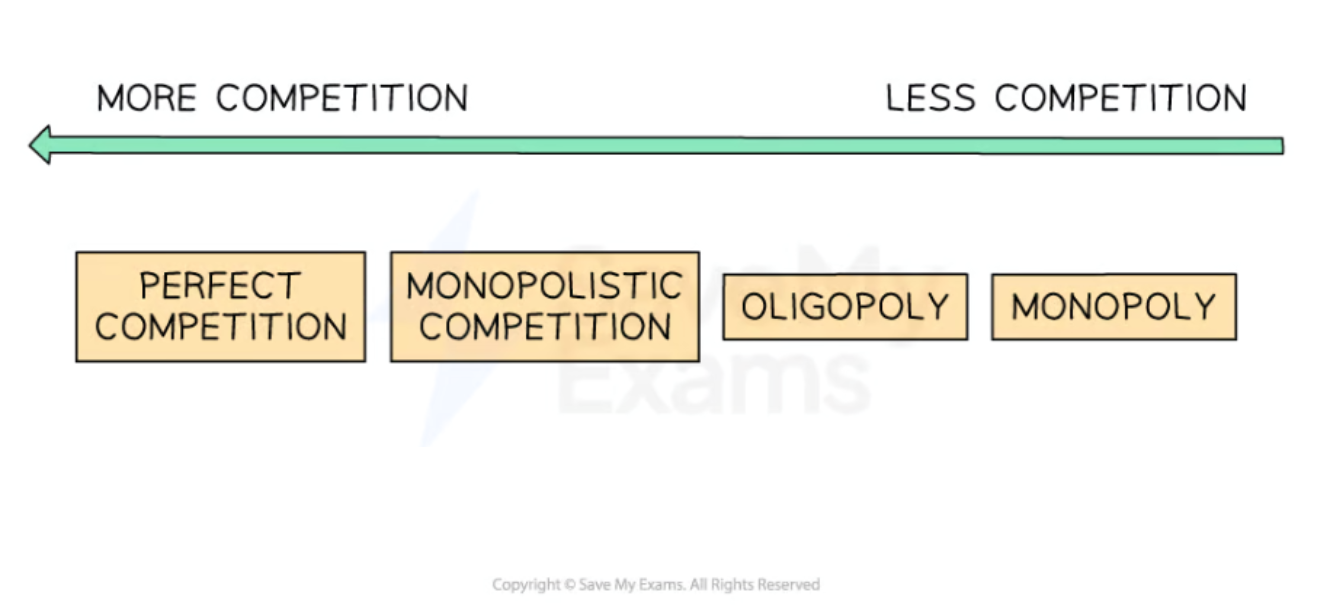
Competition describes how many rival businesses operate in a market and how strong they are
-
In a monopoly market, there is one dominant seller (e.g. a local water company)
-
In an oligopoly market, there are usually four to seven large rivals (e.g. UK supermarkets)
-
In a competitive market, there are many small firms, none of which have significant power (e.g. hairdressers)
-
The level of competition
How competition affects business costs
-
Price wars force cost-cutting
-
Tesco’s ongoing competition with Aldi/Lidl pushes all grocers to squeeze suppliers for lower costs and reduce their own overheads
-
-
Higher marketing spend
-
An increase in rivals usually requires more promotional activities such as advertising and loyalty schemes
-
E.g. mobile network EE offers “unlimited calls/data” deals to attract customers from rivals
-
-
Need for product innovation
-
In oligopoly markets such as smartphones, businesses such as Samsung spend large amounts on R&D to stay ahead
-
-
Bulk-buy savings for big players
-
Size gives dominant businesses bargaining power, lowering their costs
-
E.g. BT Openreach is able to buy telecommunications cable in large quantities, reducing its cost per unit
-
-
Regulatory costs
-
Monopolies often face price caps that restrict their ability to maximise profits
-
E.g. the UK government imposes a maximum amount that suppliers such as British Gas can charge households for each unit of energy they use
-
How competition affects demand
-
Price elasticity of demand
-
When customers can choose substitutes, a small price rise often sends them to rival businesses
-
E.g. as a result of rises in rail fares in the UK, budget airlines such as Ryanair sell more domestic flights
-
-
-
Customer choice
-
With many rival businesses to choose from, buyers can switch for convenience, features or ethics
-
In a monopoly, there is little consumer choice
-
E.g. with no competition, Thames Water faces little customer switching, so demand stays stable
-
-
-
Brand loyalty matters in crowded markets
-
E.g. Nike retains demand despite many trainers in the market by investing in image and sponsorships
-
Market conditions
-
Market conditions describe what the market looks like right now, including:
-
how fast the market is growing or shrinking
-
how many buyers and sellers there are
-
whether firms trade mainly in a local area, across the UK or worldwide
-
How market conditions affect costs
-
Fast-growing markets invite new entrants
-
More suppliers chasing the same raw materials can drive prices up
-
E.g. oat prices have increased dramatically since more UK oat-milk brands have entered the market
-
-
Shortage of supply raises production costs
-
E.g. the 2021–22 global chip shortage forced Jaguar Land Rover to halt production lines and pay more for semiconductors used in vehicles
-
-
Local markets keep distribution cheap
-
E.g. a village bakery’s van covers a few miles, whereas Greggs’ nationwide network pays for HGV fleets and fuel to deliver products to its outlets
-
-
National or international reach adds compliance costs
-
E.g. exporting cheese to the EU now requires health certificates, language-specific labels and possible tariffs
-
-
Economies of scale in large, growing markets
-
E.g. booming demand for heat pumps lets UK installers bulk-buy units, cutting their unit costs
-
How market conditions affect demand
-
High market growth lifts demand
-
E.g. plant-based food sales rose 18% a year between 2019 and 2023, so Quorn saw revenue jump even without aggressive price cuts
-
-
Oversupply intensifies price competition
-
E.g. too many ride-hail apps in London led to some Uber drivers offering discount codes, reducing their profit margins
-
-
National brands tap a wider customer pool
-
E.g. as JD Sports sells online across the UK, reductions in demand in any single town have little impact on its overall performance
-
-
Global markets broaden demand but add exchange-rate risk
-
E.g. BrewDog’s recent US expansion boosted sales, but a strong pound has made its UK-made beer seem expensive overseas
-