
Business GCSE AQA
-
The Purpose And Nature Of Businesses Aqa6 主题
-
Business Ownership Aqa4 主题
-
Setting Business Aims And Objectives Aqa3 主题
-
Stakeholders Aqa1 主题
-
Business Location Aqa1 主题
-
Business Planning Aqa1 主题
-
Expanding A Business Aqa2 主题
-
Technology Aqa1 主题
-
Ethical And Environmental Considerations Aqa3 主题
-
The Economic Climate Aqa1 主题
-
Globalisation Aqa2 主题
-
Legislation Aqa1 主题
-
Competitive Environment Aqa2 主题
-
Production Processes Aqa2 主题
-
The Role Of Procurement Aqa3 主题
-
The Concept Of Quality Aqa3 主题
-
Good Customer Service Aqa2 主题
-
Organisational Structures Aqa2 主题
-
Recruitment And Selection Of Employees Aqa4 主题
-
Motivating Employees Aqa1 主题
-
Training Aqa2 主题
-
Identifying And Understanding Customers Aqa1 主题
-
Segmentation Aqa1 主题
-
The Purpose And Methods Of Market Research Aqa3 主题
-
The Elements Of The Marketing Mix Aqa9 主题
-
Sources Of Finance Aqa2 主题
-
Cash Flow Aqa3 主题
-
Financial Terms And Calculations Aqa4 主题
-
Analysing The Financial Performance Of A Business Aqa5 主题
Using Cash Flow Forecasts aqa
Exam code:8132
Completing and interpreting cash flow forecasts
-
A business must first gather information about all cash inflows and cash outflows it expects to encounter over the period
-
The following steps should then be taken to construct the cash flow forecast
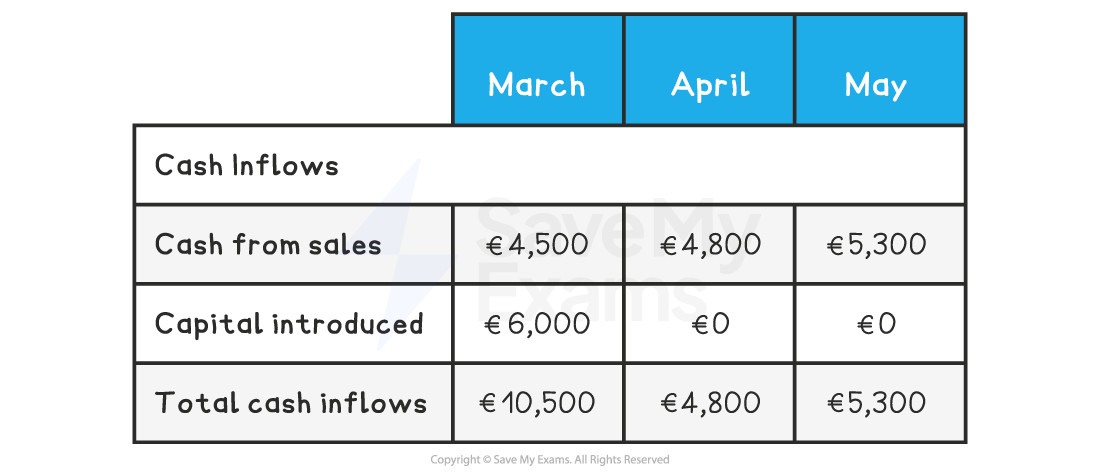
Step 1: Calculate total cash inflows
-
In this instance, the business expects to receive cash inflows from sales in March, April and May
-
Owners’ capital of €6,000 will be introduced in March
-
The total for each month is calculated by adding cash from sales to capital introduced
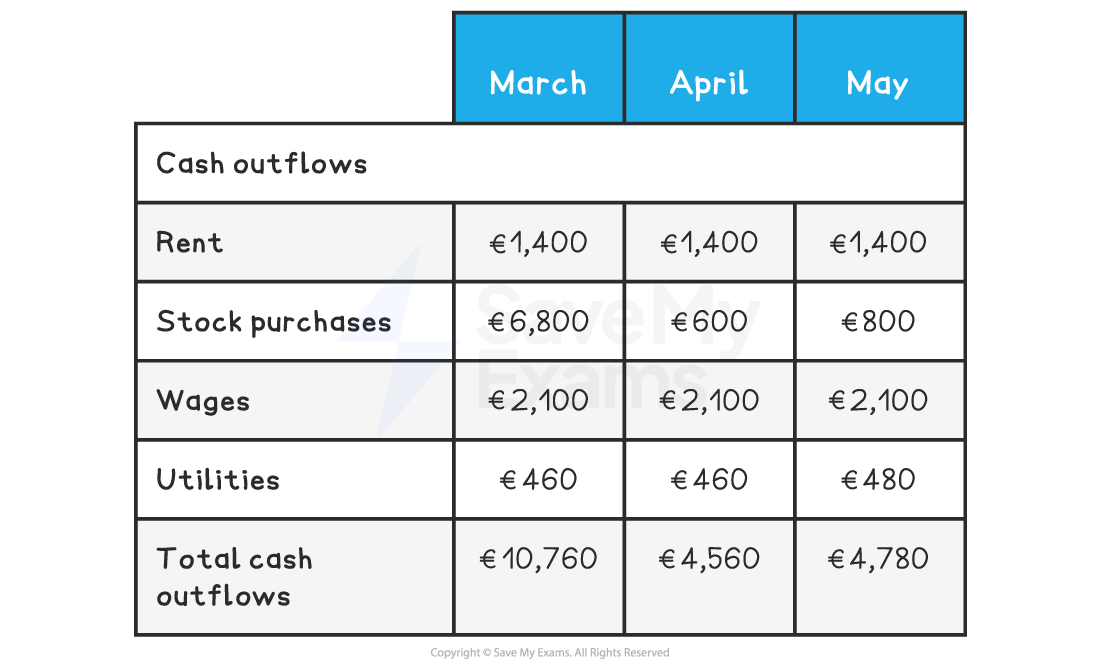
Step 2: Calculate total cash outflows
-
In this instance, the business expects to pay rent of €1,400 in March, April and May
-
It will purchase a significant amount of stock in March, with smaller amounts in April and May
-
Wages are expected to be €2,100 in each month
-
Utilities of €460 will be paid in March and April, increasing to €480 in May
-
Total cash outflows each month is calculated by adding these together
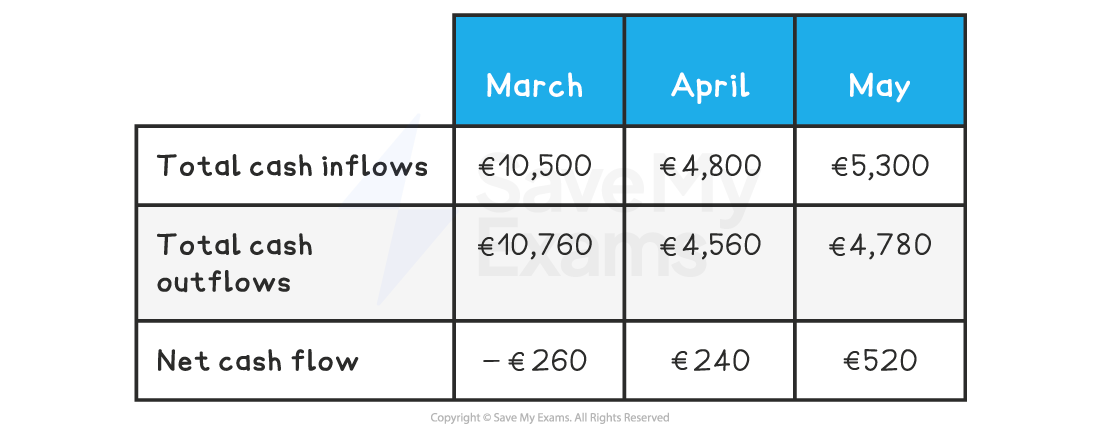
Step 3: Calculate net cash flows
-
The net cash flow is calculated by subtracting total cash outflows from total cash inflows
-
In March the net cash flow is €10,500 – €10,760 = €(260)
-
Net cash flow is negative as cash outflows are greater than cash inflows
-
-
In April the net cash flow is €4,800 – €4,560 = €240
-
In May the net cash flow is €5,300 – €4,780 = €520
-
In both months, net cash flow is positive as cash inflows are greater than cash outflows
-
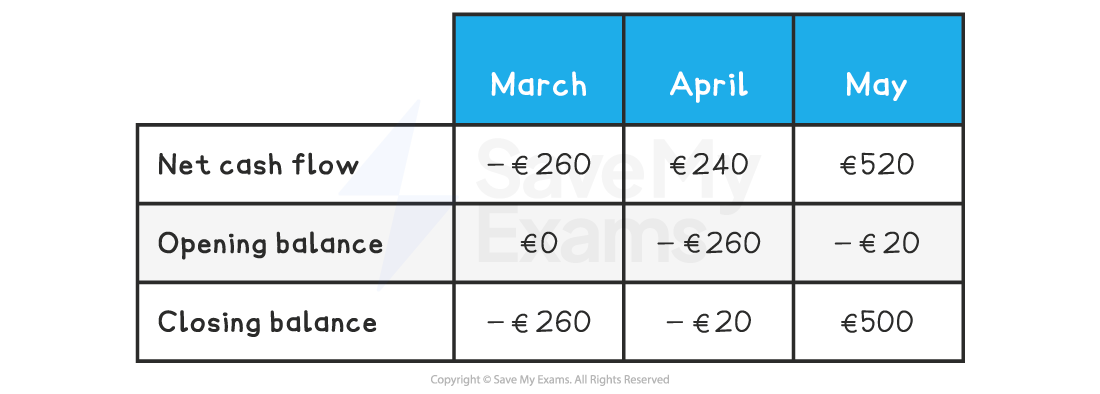
Step 4: Calculate opening and closing balances
-
The opening balance is the previous month’s closing balance carried forward
-
The closing balance is calculated by adding the net cash flow to the opening balance
-
In March the opening balance of €0 is added to the net cash flow of €(260) to leave a closing balance of €(260)
-
In April the closing balance from March is carried forward to become its opening balance of €(260)
-
This opening balance is added to April’s net cash flow of €240 to leave a closing balance of €(20)
-
In May the closing balance from April is carried forward to become its opening balance of €(20)
-
This opening balance is added to May’s net cash flow of €520 to leave a closing balance of €500
A complete cash flow forecast

Cash flow forecast analysis
-
Overall, this cash flow forecast shows low cash inflows and significant outflows initially, which lead to negative net cash flow in March and April
-
Healthy sales mean that from April, inflows are greater than outflows and the business has a positive net cash flow
Solutions to cash flow problems
-
The cash flow forecast example above identifies a cash flow problem in March and April where the closing balance is negative
-
It has a range of ways to solve this issue to prevent insolvency
-
The most suitable method may be to arrange a flexible, short-term overdraft facility with its bank
-
Ways to solve cash flow problems
|
Method |
Explanation |
|---|---|
|
Reduce the credit period offered to customers |
|
|
Ask suppliers for an extended repayment period, e.g an extension from 60 to 90 days |
|
|
Make use of overdraft facilities or short-term loans |
|
|
Sell off excess stock |
|
Responses