
Exam code:1BS0
Understanding organisational structure terminology
-
An organisational structure outlines the reporting relationships, roles, and responsibilities of employees in the organisation
-
Businesses must determine what the best structure is for them so as to effectively implement their ideas and achieve their objectives
-
They should consider how the structure may affect the management and effectiveness of operations and communications
-
A well-designed organisational structure helps to promote clarity, efficiency, and accountability
-
Terminology used in organisational design
|
Term |
Definition |
Explanation |
|---|---|---|
|
Hierarchy |
|
|
|
Chain of command |
|
|
|
Span of control |
|
|
|
Centralised structure |
|
|
|
Decentralised structure |
|
|
Different types of organisational structure
-
Businesses typically structure their organisation in one of two ways
-
Hierarchical (tall) organisational structures
-
Flat organisational structures
-
Different structures and their impact on business efficiency and motivation
|
Tall structure |
Flat structure |
|---|---|
|
|
 |
 |
|
Advantages |
Advantages |
|
|
|
Disadvantages |
Disadvantages |
|
|
The importance of effective communication
-
Effective communication between a business and its stakeholders is vital
-
It helps managers and employees to minimise mistakes
-
It supports everyone involved in a business to understand their role and what is expected of them
-
It ensures that the businesses values and objectives are clear
-
It provides customers with the information they need to understand goods and services
-
-
Managers should make sure that communication is controlled and organised to ensure that a suitable level of communication exists between key stakeholders
-
Effective communications need to be
-
accurate
-
clear and easily understood
-
complete
-
appropriate for the intended audience
-
via the right medium
-
provide a chance for feedback
-
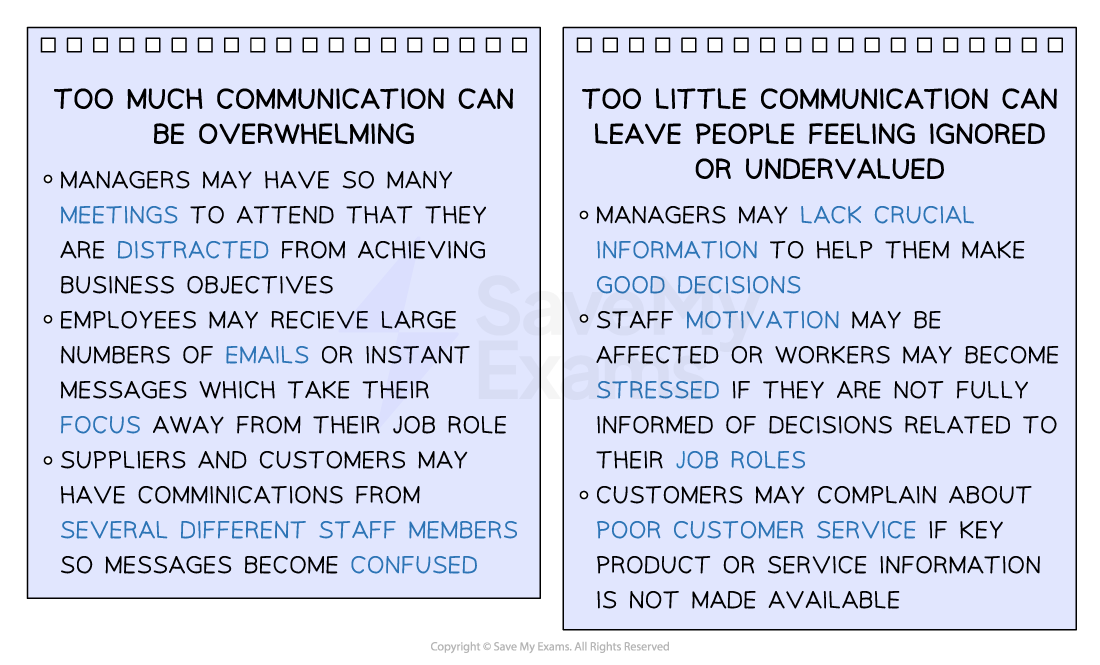
Over- and under-communication
Barriers to effective communication
-
Communication may not be effective for a range of reasons
-
Written communication can be affected by poor spelling and grammar, illegible handwriting or unclear presentation
-
Verbal communication can be affected by language difficulties, the speed of speaking, or strong accents
-
The use of jargon can also be a barrier
-
Jargon refers to technical language or acronyms that may not be understood by a non-expert
-
-
Different ways of working
-
Technological developments and flexible working arrangements mean that businesses now have several options for organising the way workers are employed
Ways of working

-
Full-time employees usually work for more than 35 hours per week whilst part-time employees work fewer hours but are entitled to the same benefits such as paid holidays
-
Flexible employees may be full-time or part-time and h
Responses