
Business AS CIE
-
enterprise as6 主题
-
business-structure as6 主题
-
business-structure the-different-business-and-economic-sectors
-
business-structure business-ownership-sole-traders-and-partnerships
-
business-structure business-ownership-companies
-
business-structure business-ownership-co-ops-and-social-enterprises
-
business-structure business-ownership-franchises-and-joint-ventures
-
business-structure choosing-the-right-business-ownership
-
business-structure the-different-business-and-economic-sectors
-
size-of-business as3 主题
-
business-objectives as3 主题
-
stakeholders-in-a-business as2 主题
-
human-resource-management as8 主题
-
human-resource-management the-role-of-hrm
-
human-resource-management workforce-planning
-
human-resource-management recruitment
-
human-resource-management selection-and-employment-contracts
-
human-resource-management redundancy-and-dismissal
-
human-resource-management employee-morale-and-welfare
-
human-resource-management training-and-development
-
human-resource-management management-and-workforce-relations
-
human-resource-management the-role-of-hrm
-
motivation as4 主题
-
management as2 主题
-
the-nature-of-marketing as7 主题
-
the-nature-of-marketing the-role-of-marketing
-
the-nature-of-marketing demand-and-supply
-
the-nature-of-marketing markets
-
the-nature-of-marketing consumer-and-industrial-marketing
-
the-nature-of-marketing mass-marketing-and-niche-marketing
-
the-nature-of-marketing market-segmentation
-
the-nature-of-marketing customer-relationship-marketing
-
the-nature-of-marketing the-role-of-marketing
-
market-research as3 主题
-
the-marketing-mix as6 主题
-
the-nature-of-operations as3 主题
-
inventory-management as2 主题
-
capacity-utilisation-and-outsourcing as1 主题
-
business-finance as2 主题
-
sources-of-finance as3 主题
-
forecasting-and-managing-cash-flows as1 主题
-
costs as4 主题
-
budgets as1 主题
the-nature-of-operations the-transformational-process
Exam code:9609
Using factors of production
-
Factors of production are the resources used to produce goods and services

-
The production of any good or service requires the use of a combination of all four factors of production
The four factors of production
1. Land
-
Non-man-made natural resources available for production
-
Some countries have a vast amount of a particular natural resource and are able to specialise in its production
-
E.g. Kuwait specialises in the product of oil, which accounts for 95% of its exports
-
2. Capital
-
Any man-made resource that is used to produce goods or services
-
Examples include tools, buildings, machines and computers
3. Labour
-
The human input into the production process, labour involves mental or physical effort
-
Not all labour is of the same quality
-
It can be skilled or unskilled
-
Some workers are more productive than others because of their education, training and experience
-
4. Enterprise
-
Enterprise involves taking risks in setting up or running a firm
-
An entrepreneur decides on the combination of the factors of production necessary to produce goods/services with the aim of generating profit
Stages of the transformational process
-
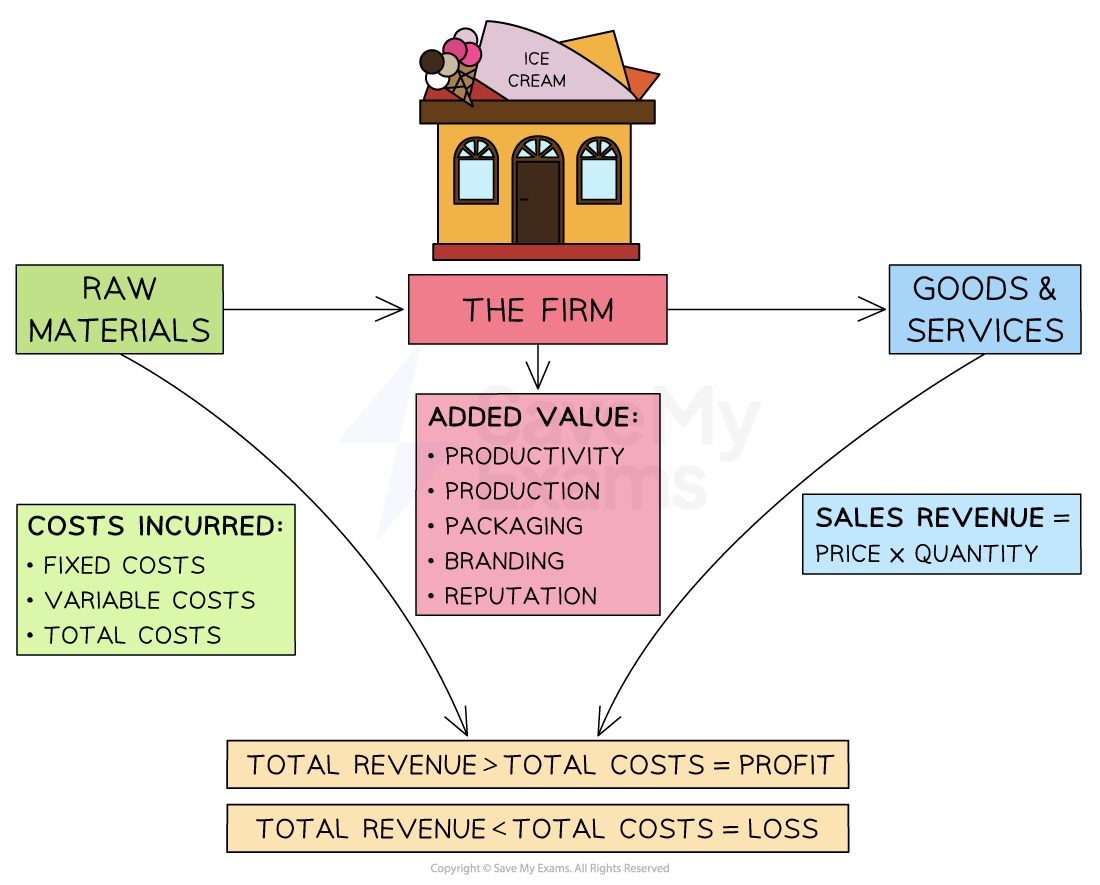
Businesses take inputs and transform them in order to produce outputs that customers will want to buy
The transformational process
-
Inputs used in the transformation process may be financial, human or physical resources, as well as enterprise
-
Outputs are goods and services, as well as by-products and waste
-
E.g. Rothaus brewery takes inputs including malts, hops and barley and uses the staff on the brewery premises in Freiburg, as well as equipment, such as mash tuns, to transform them by brewing these inputs into its main output — its range of beers — as well as by-products, such as compost
-
Operations and added value
-
Adding value is the process of taking raw materials and using them in such a way that the end product created is worth more than the cost of the raw materials used to create it – value has been added
-
E.g., customers pay more for potatoes when they are packaged as oven chips than they would be willing to pay for a bag of potatoes
-
If value is not added to the materials and components that a business buys, fixed costs cannot be paid and no profit will be made
-

|
Method |
Example |
|---|---|
|
Branding |
|
|
Convenience |
|
|
Quality |
|
|
Unique selling points (USPs) |
|
|
Design |
|
Responses