
Exam code:9609
Methods of market segmentation
-
Market segmentation is the process in which a single market is divided into submarkets or “segments”
-
Each segment represents a slightly different set of consumer characteristics
-
Firms often segment their markets according to factors such as income, geographical location, religion, gender or lifestyle
-
-
A market for a good such as crisps is not simply seen as one market
-
For example, the crisp market is divided into many market segments
-
Dinner party snacks (Walkers Sensations, Pringles, Burts) are targeted at those with higher discretionary income with a premium price
-
Health-conscious crisps (Walker’s Lite, Walkers Baked, Ryvita Lite) are targeted at the health-conscious market
-
Lunch box value snacks (multipacks, Hula Hoops, etc.) are targeted at families and the mass market
-
-
Segmentation methods
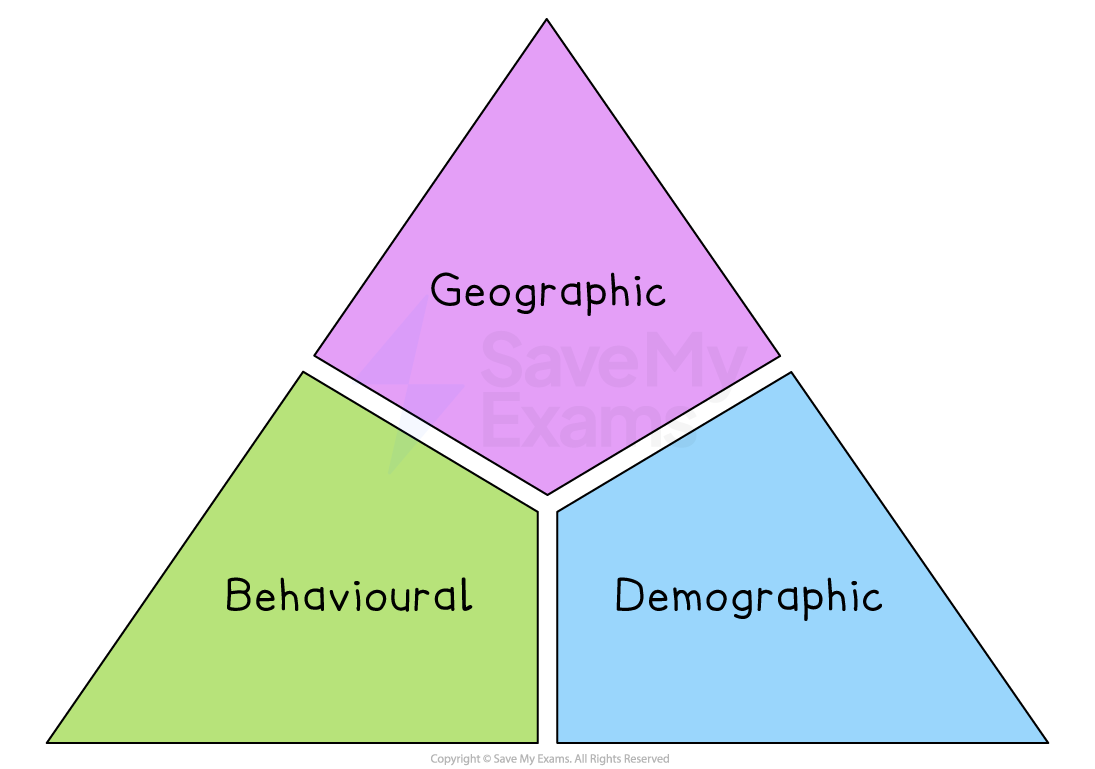
Geographic segmentation
-
Geographic segmentation involves breaking up a market into groups of customers who live, work or spend their leisure time in defined locations
-
Urban and rural customers’ needs relate to their surroundings
-
E.g. city-dwellers are likely to purchase small, electric vehicles, while those who live in the countryside tend to prefer larger, all-terrain vehicles
-
-
Customers in warmer countries make different purchasing decisions to those living in cooler climates
-
E.g. sales of air-conditioning units in Italy and Turkey are significantly higher than in Germany and the UK
-
-
Within a country, customers living in different regions have varied preferences
-
E.g. France is well-known for its regional food specialties, with residents of southern départements generally preferring a Mediterranean diet, whilst those in more northern regions consume more dairy products and red meat
-
-
Behavioural segmentation
-
Customers make different lifestyle, health or dietary choices that can provide opportunities for businesses
-
E.g. travel companies target different packages at families, thrill-seekers and those looking to pursue a specialist interest such as cuisine or art
-
Beyond Meat‘s entire product range is aimed at vegans, vegetarians and flexitarians cutting down on animal protein
-
Its plant‑based burgers and sausages are sold in supermarket meat aisles
-
-
-
Some purchasing decisions are based on thorough research, whilst others tend to be impulse buys
-
E.g. home store Dunelm places low-priced household essentials such as dusters and scented candles close to the checkout area
-
-
Other behavioural factors include
-
the frequency of purchase
-
E.g. whether customers buy a product often or as a one-off, for regular consumption or as an occasional treat
-
-
whether customers are brand loyal
-
E.g. those that stick with the same brand may be rewarded with loyalty benefits, such as points for each £ spent, while those that switch brands may be attracted by special offers, such as BOGOF (Buy One Get One Free)
-
-
Demographic segmentation
-
Demographic segmentation involves breaking up a market into groups of customers with similar characteristics, such as age, gender and family circumstances
-
Men and women often have different purchasing preferences
-
Men tend to spend more than women when shopping
-
Women are more price-sensitive shoppers than men, buying more reduced-price items and using price promotions more frequently
-
-
As populations age, spending patterns are changing
-
Spending on specialist services such as personal care and single-person travel has increased significantly
-
-
Many products are aimed at different age groups, who are likely to have different interests, influences and spending power
-
E.g. in 2022, consumers in the United States spent an average of $1,945 on clothing, with most being spent by the generation born between 1965 and 1980, known as Generation X
-
-
Many countries have increasingly ethnically diverse populations
-
Markets for clothing, food and celebration items can be targeted at specific ethnic or religious groups
-
-
Advantages and disadvantages of market segmentation
|
Advantages |
Disadvantages |
|---|---|
|
|
|
|
|
|
|
|
Responses