
Exam code:9609
Methods used to measure business size
-
A range of stakeholders have an interest in understanding business size
-
Some suppliers prefer to deal with larger businesses as they are seen as less risky than small businesses
-
Governments can determine which businesses may need support to grow
-
Investors may want to compare businesses to determine which offers the best return
-
-
In some sectors, specific variables are used to measure business size
-
Hotels and guesthouses measure the number of rooms or beds
-
Restaurants measure the number of ‘covers’ they can cater for
-
Retailers measure the number of outlets they operate
-
Logistics businesses measure the number of vehicles they employ
-
Ways to measure business size
1. Size of the workforce
-
A measure of how many workers are in the business
-
Small and medium-sized businesses (SMEs) employ less than 250 workers
-
Large businesses have 250 or more workers
-
The method of production can influence this metric
-
Large capital-intensive businesses employ few workers
-
Smaller labour intensive businesses have many employees
-
-
Different workers’ contracts make this measure unreliable
-
Some firms hire many part-time workers, while others have fewer full-time workers
-
Short-term, zero hours or agency worker contracts may not be included
-
2. Value of capital employed
-
A measure of all the capital (money, equipment, and buildings) invested in a business at a specific time
-
It is difficult to compare businesses with labour-intensive and capital-intensive production methods
-
European manufacturing businesses tend to have high levels of capital, such as robots, compared to firms in countries such as Vietnam and Indonesia
-
Property values differ across the world and between regions
-
E.g. The value of property in Singapore is significantly greater than property in mainland China
-
-
Value of business sales
-
The total sales revenue achieved during a trading period
-
It is calculated using the formula
Price x Quantity sold
-
Businesses sell very different products
-
Comparing a market stall selling sweets with a retailer of luxury handbags would be unrealistic, as their prices and volumes sold are very different
-
-
Selling prices vary between markets
-
Businesses may sell products to customers in low-income markets at a lower price than in a higher-income market
-
3. Value of business output
-
The financial worth of goods produced, even though they may not all be sold
-
It is calculated using the formula
Total costs x Quantity
-
High value output can be produced by businesses with very few employees or with limited capital employed
-
E.g. A bespoke jewellery maker may produce only a few expensive items each year
-
-
The value of output does not measure how successful a business has been at selling goods produced
-
If goods are left unsold, they are a poor measure of business size
-
4. Market capitalisation
-
The value of a company’s issued shares
-
It is calculated using the formula
Share price x Number of shares
Share prices fluctuate so market capitalisation is a relatively unstable method of measuring business size
-
Sharp increases in share price can make it appear that a relatively small business has grown very quickly
-
A rapid decrease in the share price may make a business appear smaller whilst employing the same number of employees
5. Market share
-
The portion of a market controlled by a particular company, brand or product
-
It is calculated using the formula
(Business Sales ÷ Market Sales) x 100
In some cases, a large business may maintain a presence in a market dominated by smaller rivals to spread risk
-
E.g. Dunlop continues to manufacture and sell sportwear in a market dominated by brands such as Nike and Adidas
Examiner Tips and Tricks
Profit is not a measure of business size, though it can be used to measure business success.
A business with many employees may make a loss whilst a business with just one employee may make a profit. This does not mean that the business with one employee is the larger of the two.
Evaluating small businesses
-
In the European Union (EU) small businesses are classified as those employing 50 or fewer workers
-
In 2022, small businesses were responsible for approximately 49 percent of employment in the EU’s economy
-
Italy, France, Spain and Germany had the highest number of small businesses in the trade bloc, concentrated in the retail sector
-
Reasons why small firms succeed
|
Personalised Service |
Agile |
Operate in Nice Markets |
|---|---|---|
|
|
|
-
Operating as a small business has a number of advantages:
-
They are easy to set up and, in many cases, require little start-up capital
-
They are managed by their owners, who maintain control of the business and determine its strategic direction
-
Owners are likely to have close working relationships with workers, encouraging loyalty
-
-
However, remaining as a small business can have some disadvantages:
-
Few sources of finance may be available, as owners are keen to retain full control and lenders consider them higher risk than larger firms
-
The business owner typically takes on all of the responsibility for decision-making, which can put them under significant pressure
-
There is little opportunity to achieve benefits of economies of scale
-
Strengths and weaknesses of family businesses
-
Many businesses are owned by more than one member of the same family
-
Some family businesses have traded for a very long time
-
Berenberg Bank was founded in 1590 and is one of the few remaining independently owned banks in Germany
-
Akerblads is a hotel in Tällberg, Sweden that is currently run by members of the 21st generation of the family after which it is named
-
The Neame family remains in control of Shepherd Neame, Britain’s oldest brewery, which was founded in 1664
-
-
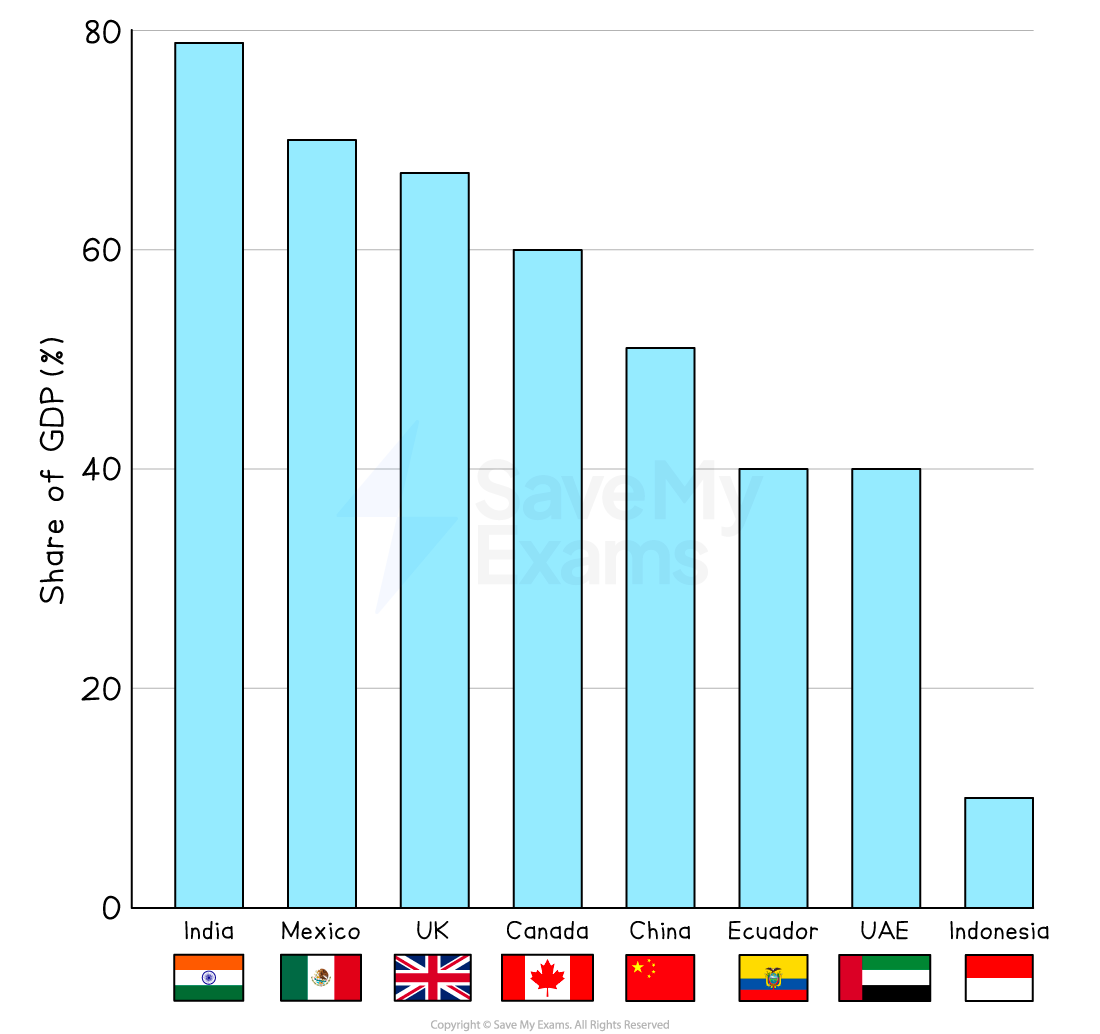
In some countries, family-owned businesses make up a significant proportion of enterprises
-
Globally, 90% of businesses are family-owned, contributing significantly to GDP and employing many millions of workers
-
In India more than 79% of GDP is generated by family-owned businesses
-
Its largest example is Reliance Industries, founded in 1973 and run by the Ambani family
-
-
GDP contribution of family businesses
Strengths and weaknesses of family-owned businesses
|
Strengths |
Weaknesses |
|---|---|
|
|
The role of small businesses in the economy
-
Small businesses bring a range of benefits to an economy
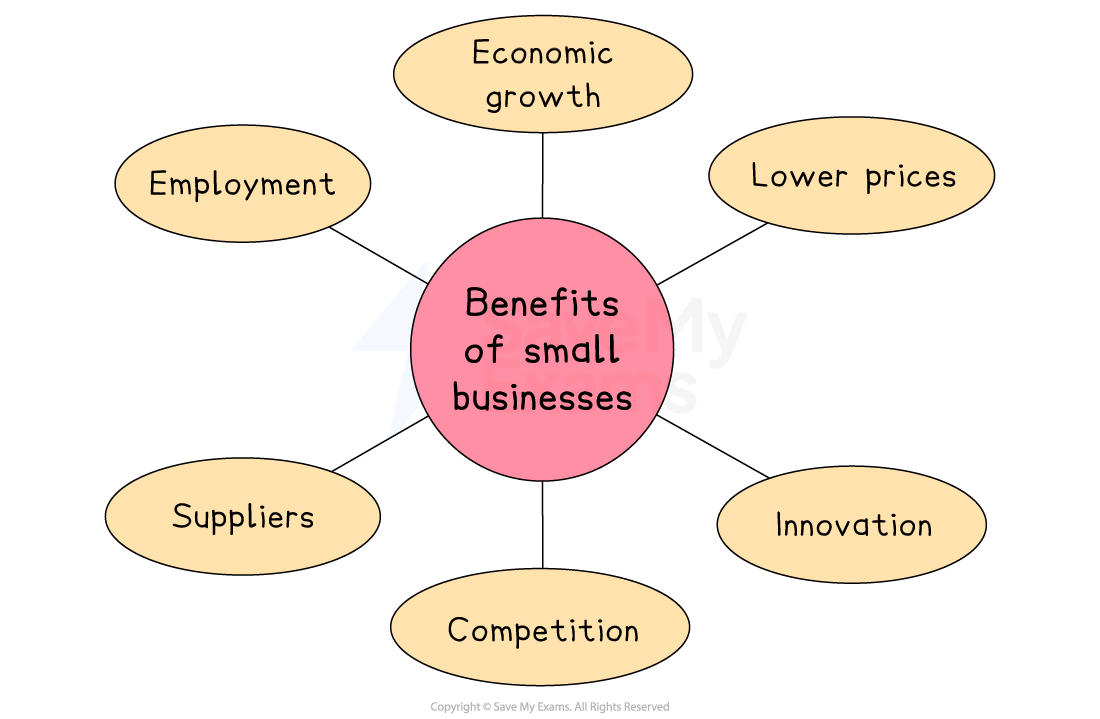
Employment
-
Small businesses employ a large proportion of the workforce in most economies
-
They account for 60 to 70 per cent of jobs in most OECD countries, with a particularly large share in Italy and Japan
-
In developing economies, small businesses create around 80% of new jobs
-
Economic growth
-
Growth in countries or regions with few large businesses is fuelled by small and growing businesses
-
UK government policies, including enterprise zones, encourage small businesses to set up in areas of industrial decline, such as South Wales and the North East
-
Lower prices
-
Small businesses often have lower wage and administration costs than large businesses
-
This may lead to lower prices for customers
-
Innovation and competition
-
Small businesses are often set up and run by creative entrepreneurs, whose ideas and problem-solving abilities bring new products and services to the market
-
This increases choice for customers and creates competition for larger firms
-
Suppliers
-
Small businesses can be important suppliers to large firms, offering innovative components, flexibility and adaptability, which can help them develop a strong unique selling point
-
E.g. Mark Levison supplies tailored audio equipment to luxury car manufacturer Lexus
-
The role of small businesses in different industrial sectors
-
Small businesses are particularly important in some industries
-
In the USA, small businesses make up a large proportion of firms operating in
-
Accommodation and f
-
Responses