
Exam code:9609
The features of primary and secondary research
Primary research
-
Primary research is the process of gathering information directly from consumers in the target market using field research methods such as surveys and interviews
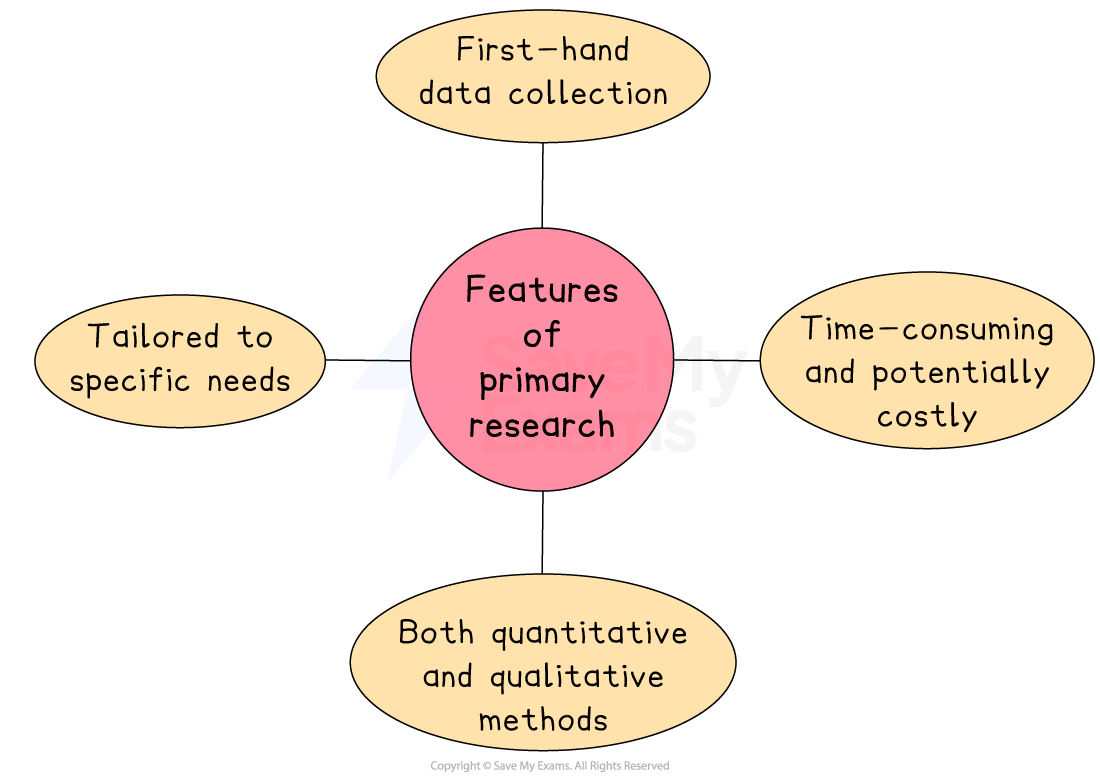
Common features of primary research
-
First-hand data collection
-
Primary research involves gathering new information directly from people, rather than using existing sources
-
-
Tailored to specific needs
-
The questions and methods are designed to collect information that is directly relevant to the business’s goals
-
E.g. A restaurant could ask customers what new dishes they’d like added to the menu
-
-
-
Time-consuming and potentially costly
-
Collecting and analysing primary data takes time, money, and effort, especially for large samples
-
E.g. Organising focus groups or conducting interviews may require trained staff and payment to participants
-
-
-
Includes both quantitative and qualitative methods
-
Primary research can gather numerical data (quantitative) or opinions and attitudes (qualitative)
-
E.g. A business may run a questionnaire with rating scales and follow-up interviews for deeper insight
-
-
Secondary research
-
Secondary research involves the collection, compilation and analysis of data that already exists
-
It is likely to have been collected for a broad purpose by another organisation, such as the government or a research specialist
-
Since the data is already available, it’s usually faster and often cheaper to access than primary research
-
E.g. downloading a report on consumer habits from a trade organisation’s website may be free or low-cost
-
-
Usefulness of primary market research data
-
Businesses can choose from a range of primary marketing research methods and may combine a selection of methods to obtain comprehensive first-hand data

Surveys
-
The most widely used method for gathering primary research data is sampling through surveys
-
A series of questions are posed to a certain number of people (respondents)
-
The results from the “sample” are used to make inferences, which tare extrapolated to be true for the wider population
-
|
Advantages |
Disadvantages |
|---|---|
|
|
Observation
-
This involves hiring someone to stand in an appropriate location and study consumer behaviour in a store or perhaps judge the potential consumer traffic at a particular location
-
Researchers may observe the impact of packaging or the particular placement of a product in a store on consumer choice
-
|
Advantages |
Disadvantages |
|---|---|
|
|
Interviews
-
The questions may be set up in a very similar way to a survey; however, an interviewer asks the questions
-
This method takes longer, but it does allow the interviewee to ask follow-up questions and gather information that might easily be missed when conducting surveys
|
Advantages |
Disadvantages |
|---|---|
|
|
Test marketing
-
Free samples are provided to the target market for a limited period to gauge their response to the product
-
Adjustments to the product or other elements of the marketing mix can be made following feedback
|
Advantages |
Disadvantages |
|---|---|
|
|
Focus groups
-
A marketing specialist leads free-form discussions to collect detailed feedback from the target market on all aspects of the marketing mix
-
Usually limited to a small group of 12–15 people
-
The group typically meets for 90 minutes to 3 hours
|
Advantages |
Disadvantages |
|---|---|
|
|
-
Businesses must choose a primary marketing research method that allows them to capture the correct form of data that can support decision-making
-
Each method has a range of advantages and disadvantages, which must be considered when making this choice
-
Evaluation of primary marketing research
|
Advantages |
Disadvantages |
|---|---|
|
|
|
|
|
|
Sampling
-
Sampling involves getting opinions from a selected group of people in order to find out about the market as a whole
-
It is expensive and time-consuming to collect data from all customers in a market
-
Marketing researchers use carefully designed sampling methods from which conclusions can be drawn about the market as a whole
-
In general, the larger the sample size, the more likely that results from marketing research activities will reflect the market as a whole
-
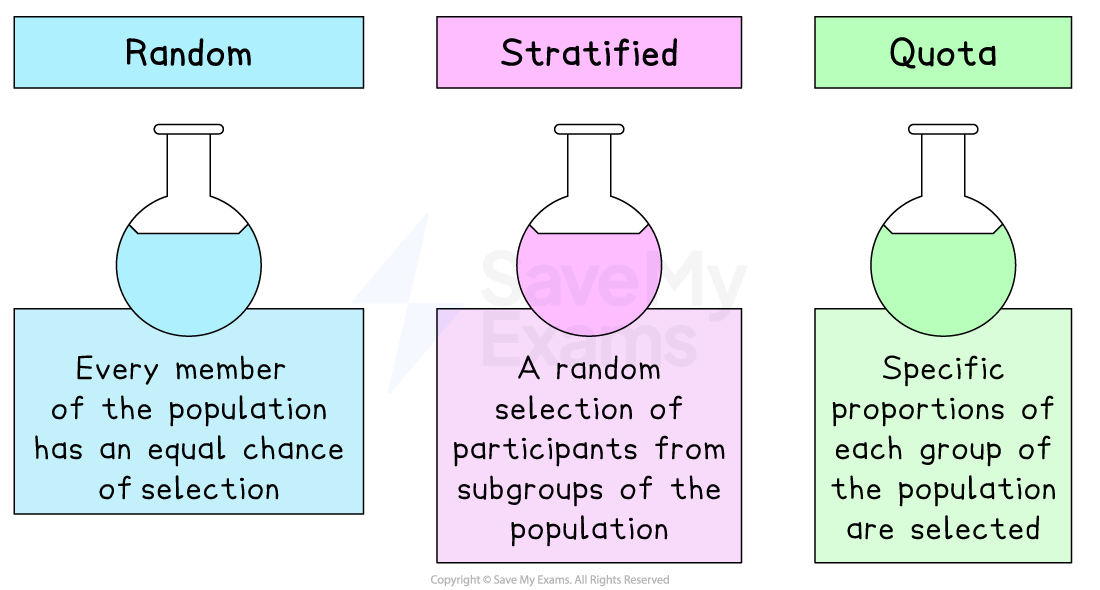
The main sampling methods: random, stratified and quota
Random sampling
-
This method ensures that every member of the population has an equal chance of selection
-
E.g. a survey of gym members may be sent to a random selection of customers taken from the membership database
-
Stratified sampling
-
This method involves the random selection of participants from subgroups of the population, such as age, gender, income level or education groups
-
E.g. a survey of school pupils may be carried out only on Year 10 girls
-
Quota sampling
-
This method obtains a representative sample by determining specific proportions of each group of the population upon which to carry out research
-
E.g. a researcher conducting a survey for a family car manufacturer may seek to interview a sample comprising 25% of individuals aged 18–24, 50% aged 25–45 and 25% aged 46 and above
-
The choice of sampling method
-
The choice of sampling method will depend upon a wide range of factors
-
Time available
-
Where little time is available to carry out marketing research, a random sample may be most appropriate, as it is usually very quick and straightforward to organise
-
-
Knowledge of the target population
-
Where a business has good knowledge of the target population, a quota sample should provide a set of research data that lacks bias
-
-
Skills of researchers
-
Where researchers lack experience or expertise in marketing research, a focused stratified sample is likely to provide a useful set of data that can be easily interpreted
-
-
Limitations of sampling
-
The sample might not reflect the views of the whole target market
-
If the group chosen for the research is too small or not diverse enough, the results may not represent the wider population
-
This can lead to incorrect assumptions about customer preferences or behaviour
-
E.g. If a sportswear company only surveys customers in one city, it may miss preferences in other regions
-
-
-
Sampling can be biased if certain groups are over- or under-represented
-
When the sample includes too
-
Responses