
Exam code:9609
Just in Time versus Just in Case
1. The just-in-time approach (JIT)
-
The just-in-time (JIT) approach involves raw materials and components being ordered as required and delivered “just in time” to be used in production
-
Raw materials and components are ordered from a small number of trusted key suppliers just before they are to be used
-
Close, long-term relationships with these suppliers need to be developed
-
Many businesses using JIT inventory management systems aim to source raw materials and components from local or regional suppliers
-
They must be flexible and reliable
-
They may be required to hold inventory on behalf of a JIT-operating customer
-
They are often in close proximity to their key JIT-operating customer
-
-
Evaluating the just-in-time approach
|
Advantages |
Disadvantages |
|---|---|
|
|
Examiner Tips and Tricks
When you explain the JIT approach, link every benefit (less inventory, lower storage costs) to a risk (stockouts if deliveries slip)
Showing both sides proves you understand why lean systems boost profit only when suppliers are rock‑solid
2. The just-in-case approach
-
Just-in-case inventory management involves a business holding a quantity of raw materials, components or finished goods as buffer stock
-
Stock is held in case of shortages so as to provide a competitive edge over rivals unable to meet demand
-
-
The decision to keep buffer stocks is one that businesses have to weigh up very carefully
-
Holding inventory incurs storage and security costs and can increase waste, as stock could be damaged, stolen or become obsolete
-
Failing to hold enough inventory could mean a business is unable to meet demand, potentially missing out on sales revenue
-
Evaluating the just-in-case approach
|
Advantages |
Disadvantages |
|---|---|
|
|
The impact of adopting a JIT approach
-
The JIT approach has significant effects on several areas of a business
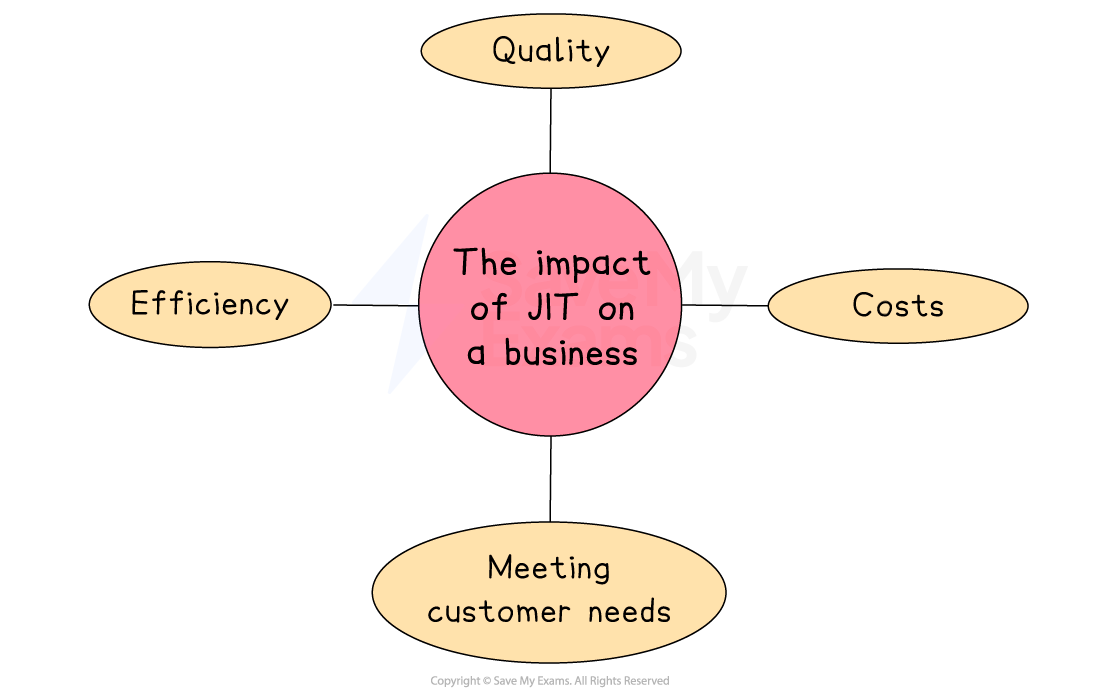
Impact on costs
-
Lower inventory costs
-
Since stock is only ordered when needed, businesses spend less on storage facilities and insurance
-
-
Less money tied up in stock
-
Firms have more working capital available for other uses, like marketing or staff training
-
-
Fewer waste costs
-
JIT reduces the risk of obsolete or damaged stock, especially for perishable or seasonal items
-
Impact on quality
-
Improved supplier quality
-
Businesses work closely with reliable suppliers to ensure materials meet high quality standards
-
-
Faster feedback loops
-
Any quality issues are noticed and fixed quickly, as production is continuous and lean
-
-
Focus on right-first-time
-
As there’s no buffer stock, production teams must work efficiently and avoid errors
-
Impact on efficiency
-
Streamlined production
-
JIT promotes smoother workflows and reduces idle time between stages of production
-
-
Motivated workforce
-
Workers often have more responsibility and take part in continuous improvement (Kaizen)
-
-
Space-saving
-
With fewer storage needs, factory space is better used for production activities
-
Impact on meeting customer needs
-
Faster response to changes
-
Businesses can adapt quickly to shifts in consumer demand, reducing the risk of overproducing unpopular products
-
-
Customisation
-
JIT allows more flexible and tailored production, often linked to modern mass customisation systems.
-
-
Freshness and quality
-
Products are made closer to the time of sale, especially useful in food and fashion industries
-
Responses