
Exam code:9609
Cooperation between management and the workforce
-
Workplace relations refers to the interactions between managers and workers in a business, including
-
How change is communicated and implemented
-
How grievances and disciplinary action are pursued
-
The level of consultation on key decisions
-
Fairness and effectiveness of business processes
-
-
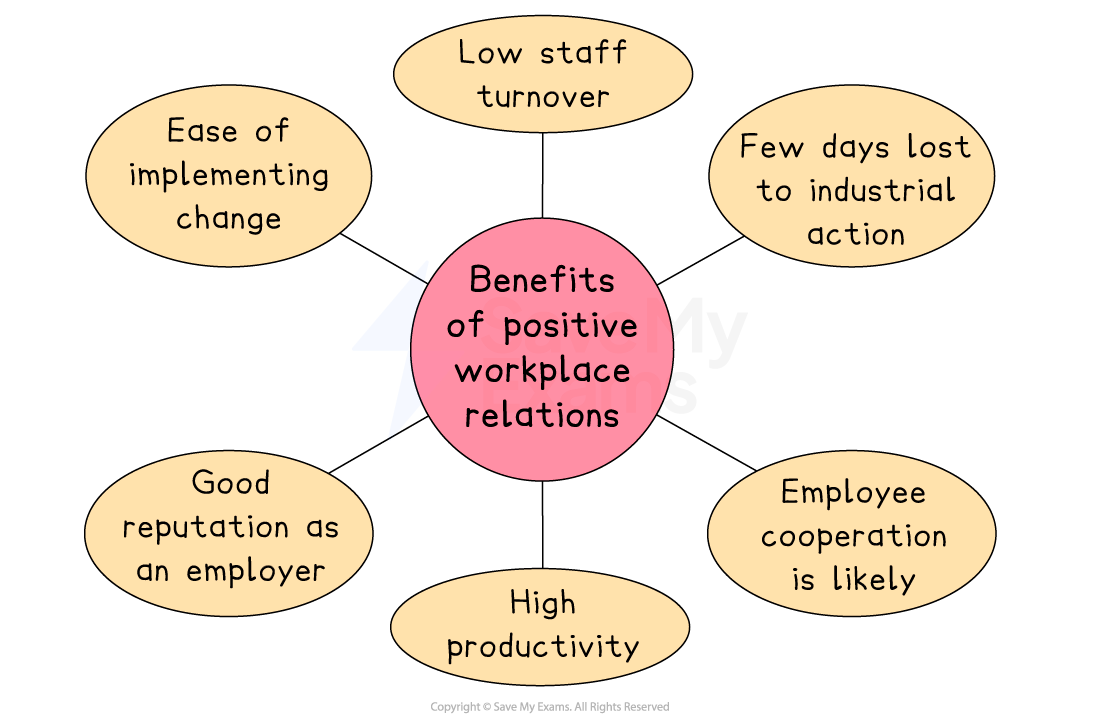
Positive workplace relations between management and workers brings a range of benefits
Benefits of positive workplace relations
-
Low staff turnover
-
When workers have a positive relationship with their managers, they are less likely to leave or face dismissal
-
-
Few days lost to industrial action
-
Industrial action is where trade union members, in dispute with management, protest or take action, such as strikes, to achieve their aims
-
Effective workplace relations mean that disruption as a result of industrial action is unlikely
-
-
Employee cooperation
-
Employees may ‘go the extra mile’ for the business if they feel valued
-
Support from employees for key decisions means that objectives are more likely to be met
-
-
High productivity
-
Good working relationships mean workers are less likely to be absent from work and more likely to be focused on maximising output
-
Workers are more likely to contribute ideas that lead to improved performance
-
-
Good reputation as an employer
-
Businesses with good relationships avoid negative publicity
-
These businesses attract and retain the best staff
-
-
Ease of implementing change
-
Significant change is more likely to be welcomed rather than feared
-
Employees look to play their part in implementing change
-
Employee morale and welfare
-
Some businesses make great efforts to improve employees’ welfare
-
Looking after workers is likely to lead to long-term loyalty and high levels of motivation, which can have a positive impact on labour productivity
-
Strategies to improve welfare
|
Strategy |
Explanation |
|---|---|
|
Equality and diversity |
|
|
Provision of facilities |
|
|
Wellbeing policies |
|
|
Perks |
|
Work-life balance
-
Ensuring employees have a healthy work-life balance can lead to several advantages
-
Less stress-related absence lowers business costs and reduces disruption to production
-
Increased employee output, as when they are at work, their focus is likely to be improved
-
A more diverse workforce that has time to enjoy leisure and creative activities outside of working hours
-
Ways to improve work-life balance
|
Teleworking |
Flexible working |
|---|---|
|
|
|
Job sharing |
Sabbaticals |
|
|
Examiner Tips and Tricks
Flexible working may appear to offer benefits that are largely focused on the employee
In the exam, you could be asked to analyse the impact on a business of flexible working
You should focus your answer on improved employee motivation and productivity, as well as the ability to attract a larger number of candidates to advertised job roles
The impact on employers and employees of trade union involvement in the workplace
-
A trade union is an organisation whose members come together to achieve common goals
-
Union members pay a membership fee and elect representatives in the workplace
-
-
They negotiate with employers to improve terms and conditions of employment for workers
-
Improved pay
-
Increases in paid holidays
-
Reduced hours of work
-
Sufficient rest breaks
-
Improved training and development
-
Better facilities
-
-
Trade unions can also give individual advice when employees have a problem at work
-
They also lobby governments to pass laws that favour employees, such as improved health and safety regulations
-
Examples of trade unions
 |
Communication Workers Union (CWU)
|
 |
IG Metall
|
 |
Unión General de Trabajadores (UGT)
|
Responses