
Exam code:9609
The dynamic business environment
-
The external environment in which businesses operate is constantly changing
-
Changes in technology, consumer needs, wants and expectations, as well as the economic and legal climate, can all have an impact on demand for products and the way a business operates
-
-
New business ideas emerge as entrepreneurs recognise opportunities created by changes in the market
-
Change can also mean that demand for the products a business sells falls
-
-
Successful businesses can identify opportunities, plan for changes that could have a negative effect, and develop innovative solutions that meet the changing needs of customers
Aspects of the dynamic business environment
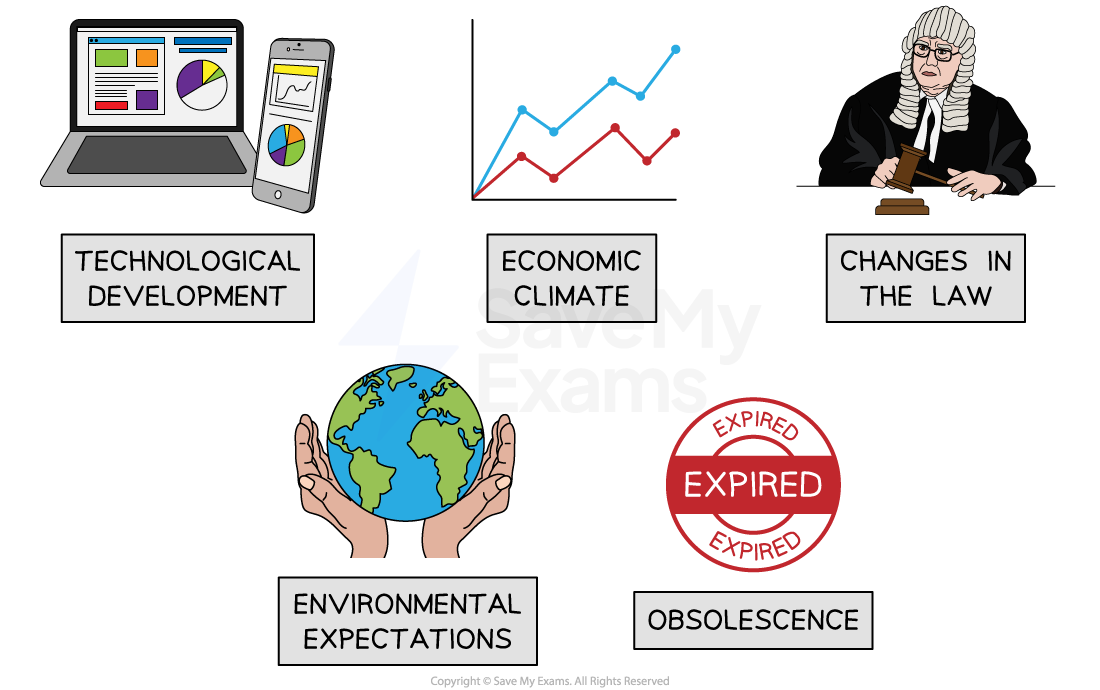
1. Changes in technology
-
Advances in technology can create new opportunities for businesses to develop innovative products and services
-
E.g. The emergence of smartphones and social media platforms created new opportunities for businesses to reach customers through mobile apps and digital marketing
-
2. Changes in the environmental expectations of consumers
-
Consumer demand for environmentally responsible products has changed over time, with more and more people making green buying choices
-
This has created opportunities for businesses to develop new products that are less damaging to the natural world
-
E.g. The growing demand for plant-based food products has led to the emergence of new businesses in the food industry, such as Impossible Foods
-
3. Products and services becoming obsolete
-
Products and services can become outdated due to changes in technology or changes in consumer demand
-
This can create opportunities for businesses to develop new products and services that meet the needs of consumers in new and innovative ways
-
E.g. The decline of physical media like CDs and DVDs created opportunities for businesses like Netflix and Spotify to develop digital streaming services
-
4. Changes in the economic situation
-
Factors such as changing interest rates, inflation, the level of unemployment and economic growth (or contraction) can affect demand for a businesses products
-
E.g. a business selling products that consumers normally purchase using credit, such as electrical consumer durables, is likely to face a fall in demand when interest rates rise
-
5. Changes in law
-
The introduction or amendment of laws and regulations can change consumer behaviour and require businesses to make changes to their operations
-
E.g. the introduction of legislation banning smoking in indoor spaces in 2007 meant that many hospitality businesses in the UK invested in outdoor spaces to accommodate smokers
-
Why do businesses succeed or fail?
Business success
-
There is no single ‘recipe for business success’
-
Those that thrive usually share some common characteristics
Reasons why some businesses succeed
|
Characteristic |
Explanation |
Example |
|---|---|---|
|
Understanding their customers |
|
|
|
Being adaptable |
|
|
|
Being financially stable |
|
|
|
Managing operations effectively |
|
|
Business failure
-
Business failure is a risk to both new and established businesses
-
In 2021, an average of 8% of businesses in EU countries failed
-
The highest failure rate was in Estonia, where almost one in four businesses failed
-
The lowest failure rate was in Greece, where just over 2% of businesses failed
-
-
-
New businesses are often more at risk of failure than well-established businesses
-
This is often due to lack of management skills, limited experience or cashflow problems during the initial start-up phase
-
The volume and variety of tasks required of new business owners can be overwhelming
-
Market research is unlikely to be detailed, as small business owners may lack the skills to understand findings and make effective decisions
-
Reasons why some businesses fail
|
Financial Factors |
Poor Management |
|---|---|
|
|
|
External Factors |
Overtrading |
|
|
Responses