
business-objectives mission-aims-objectives-strategy-and-tactics
Exam code:9609
The role of objectives in business decision making
-
Objectives provide a sense of direction and focus to those running and making decisions within a business
-
Objectives act as targets
-
Decisions that contribute to achieving these targets can be pursued, whilst those that make little contribution can be discarded
-
Poor decisions that fail to achieve objectives can be avoided in future and may inform management training
-
-
Objectives allow success criteria to be determined and outcomes to be measured
-
Suitable strategies that have the greatest chances of success can be implemented
-
Inappropriate or risky strategies may be avoided
-
-
The hierarchy of aims, mission and objectives
-
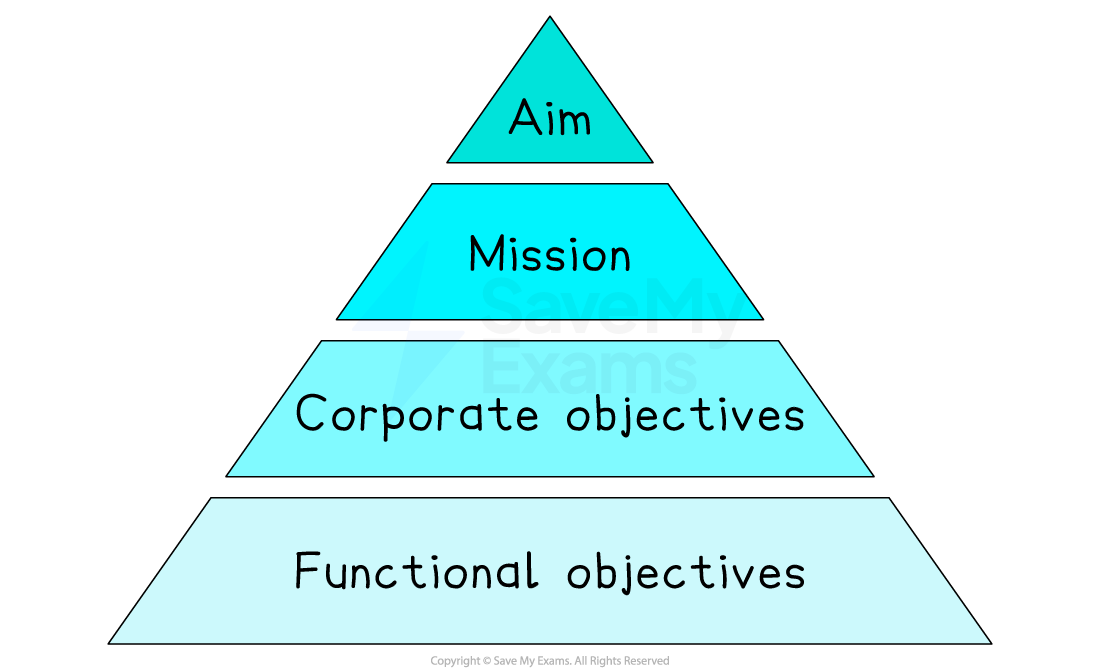
A business’s aim is its long-term direction, which is usually broadly stated and often aspirational
-
It is usually set by senior executives
-
E.g. To be the most successful independent coffee shop chain in the country
-
-
Some businesses express their aim in a mission statement
-
Mission statements usually include words or attractive phrases that appeal to key stakeholders
-
E.g. Bring the World of Coffee to Every Neighbourhood
-
-
Business objectives are derived from the aim and mission
-
Objectives state, specifically and in measurable terms, what the business wants to achieve
-
E.g. Increase sales of coffee by 25% in 2024
-
Corporate objectives are whole-business targets
-
Functional objectives are derived from corporate objectives and describe the targets of business departments or functional areas
-
-
-
The link between a business’s aim, mission and objectives can be illustrated as a hierarchy
The hierarchy of aims, mission and objectives
SMART Objectives
-
The most effective objectives are clearly stated and allow progress to be assessed
-
These types of objectives can be summarised using the acronym SMART
-
Specific: what exactly the business is measuring, such as the value of sales or sales volume
-
Measurable: a quantifiable success measure, such as a percentage increase
-
Agreed; the objective is shared with workers and perhaps mutually agreed
-
Realistic: Ambitious, but capable of being achieved in normal circumstances
-
Time-bound: a date or time by which the objective should be achieved
-
Example of a SMART Objective

Strategy and tactics
-
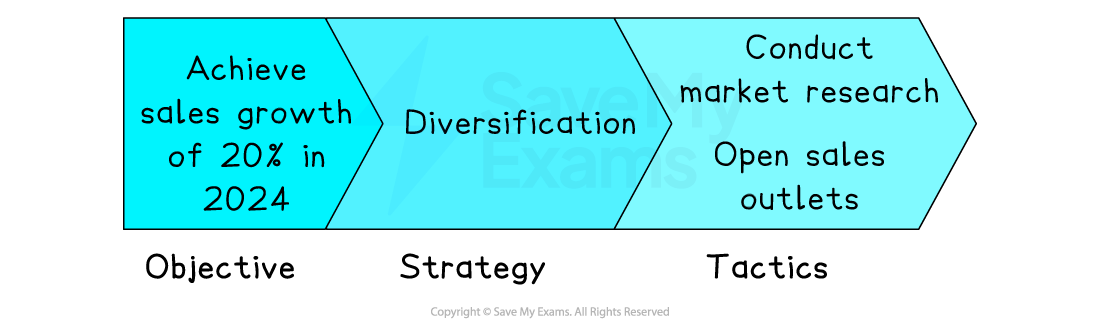
A business strategy is a long-term approach a business adopts to achieve its key objectives
-
E.g., A business pursuing an objective of growth may choose to adopt a strategy of diversification, targeting new customers with innovative products
-
-
Tactics are the short-term actions a business takes as part of its overall strategy
-
A business pursuing a strategy of diversification may choose to adopt the tactic of conducting research in the target market before establishing sales outlets in a new location
-
Objectives, strategy and tactics
Strategy, tactics and budgets
-
Once tactics have been determined, managers can set targets and allocate budgets to teams and individuals
-
Adhering to budgets and meeting these targets contribute to achieving the overall business objectives
-
Careful monitoring and adjustment, taking account of the external environment, is crucial
-
Budgets may need to be increased or more tightly controlled
-
If targets change, their impact on the likelihood of achieving objectives will need to be considered
-
Further resources may be required to meet deadlines or achieve budgetary targets
-
-
Examiner Tips and Tricks
This topic area contains a large number of key terms that you could be asked to define or explain in an exam.
Whilst ‘define’ questions simply ask for the meaning of a key term, you need to remember that ‘explain’ questions will need some reference to the business scenario you are given.
How objectives change over time
-
Businesses operate in a dynamic environment, which may require them to pivot between different objectives
-
These changes are often necessary to ensure that the business remains competitive, profitable, and compliant with regulations
Factors that cause business objectives to change over time
|
Factor |
Explanation |
Example |
|---|---|---|
|
Market conditions |
|
|
|
Technology |
|
|
|
Performance |
|
|
|
Legislation |
|
|
|
Ethics and social change |
|
|
|
Internal reasons |
|
|
Communicating the business objectives
-
Communicating the business objectives effectively, helps to ensure that employees are all working towards the same purposes
-
A range of other stakeholders benefit from this too
-
-
Businesses share objectives with key stakeholders in a range of ways
-
Public limited companies publish an annual report that shows a company’s operations and financial performance in the preceding 12 months and details the objectives it expects to achieve over the next twelve months
-
Shareholders and potential investors can use this information to determine the likely return on investment they will receive
-
-
Businesses often share their mission statement in marketing materials such as brochures or via their websites
-
Customers, employees and the local community are often interested in understanding the broad aim of a business in which they have an interest
-
-
Objectives are also commonly shared with employees in business meetings and, particularly, during the <span class=”popovers” data-content=”Annual review of an employee’s job performance and overall contri
Responses