
Exam code:9609
Why do businesses need finance?
-
Businesses need finance to get started, allow them to grow and fund continuing activity
-
Finance may be needed for capital expenditure, which is spending on fixed assets such as equipment, buildings, IT equipment and vehicles
-
Similarly, finance is required for operating expenditure, spending on raw materials or day-to-day expenses, such as wages or utilities
-

Why business finance is needed
1. Start-up finance
-
Start-up finance funds fixed assets and current assets such as inventory before a business can begin trading
-
The amount needed is identified in the business plan
-
Owners often invest their own capital into a new business
-
Some small new business owners obtain a start-up loan to cover initial costs
-
2. Finance for growth
-
As a business grows, it may need to purchase capital equipment
-
It may require more machinery, buildings, IT infrastructure or vehicles, which help the business to increase output
-
-
If a business wants to grow by developing new products, large amounts may need to be invested in research and development (R&D)
-
E.g. Apple‘s annual R&D expenses for 2023 were $29.915bn, a 13.96% increase from 2022, to invest heavily in artificial intelligence (AI) and product innovation
-
3. Working capital
-
Finance is required for working capital, day-to-day spending on raw materials, wages or utilities
-
Having a steady flow of working capital is essential
-
Without working capital, the business would be unable to cover its regular expenses
-
It may suffer cash-flow problems, which could lead to business failure
-
Short-term and long-term finance needs
Short-term finance needs
-
Short-term sources of finance are needed to meet regular costs such as paying for utilities, suppliers and employee wages
-
They are likely to be relatively small amounts and are rarely needed beyond a year
-
-
Important short-term finance needs include marketing costs and recruitment costs
-
These are closely linked to short-term business objectives
-
-
Where revenue from sales does not cover these expenses, sources such as overdrafts or trade credit may be useful
Long-term finance needs
-
Longer-term sources of finance are needed to fund the purchase of non-current assets such as buildings and other types of capital resources or to acquire other businesses
-
These are likely to be large sums that may be required for a significant period of time
-
-
Where retained profit is not sufficient to meet these needs, businesses may consider taking out long-term loans, mortgages or raising share capital
Cash versus profit
-
Profit is the difference between revenue generated and total business costs during a specific period of time
-
Profit is an important indicator of a company’s financial health and long-term sustainability, as it helps to assess the effectiveness of a company’s operations
-
-
Cash is measured by taking into account the full range of money flowing in and out of a business
-
This includes revenue from sales, operating expenses, investments, loans, and any other cash-related transactions
-
It performs a variety of functions in a business
-
It is used to cover regular operating expenses such as workers’ pay, supplier invoices and overheads such as rent and utility bills
-
It can also be used to meet unexpected expenses, such as the replacement of broken equipment
-
-
Profit versus cash flow

-
While a business may ultimately make a profit, they may lack cash at times
-
Some customers may not have paid them yet
-
They may have paid some large bills
-
-
Cash-poor businesses will struggle to pay suppliers, employees and operating expenses
-
This is called insolvency
-
Lifestyle retailer Joules announced plans to liquidate in December 2022 as a result of cash-flow difficulties, despite making a profit of £2.6 million during the previous year
-
-
Business failure and finance
-
Financial problems are one of the most common causes of business failure, especially for small and new businesses
-
Without sufficient finance, even a business with effective financial planning, good products and healthy demand may fail due to poor cash flow or unpaid debts
-
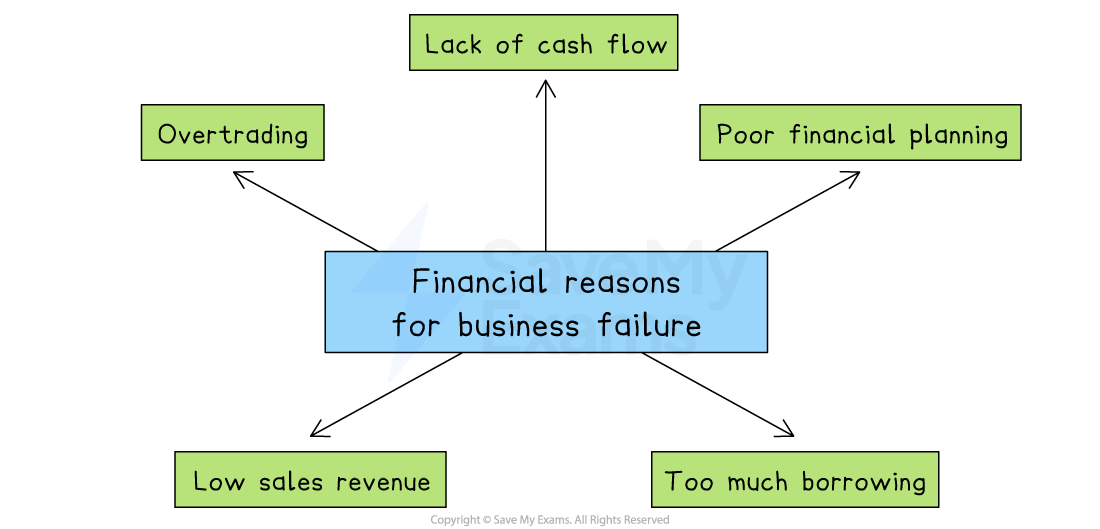
Financial reasons for business failure
Lack of cash flow
-
A business may be profitable on paper but still run out of cash
-
If customers delay payments or unexpected bills arise, the business may not have enough money to pay suppliers or wages
Poor financial planning
-
If a business does not forecast cash flow accurately or budget properly, it may overspend or run out of money
-
Poor planning can lead to missed loan repayments or unpaid bills
Too much borrowing
-
Relying heavily on loans or overdrafts increases pressure on the business to make regular repayments
-
High interest costs can add to financial stress, especially if revenue falls
Low sales revenue
-
If the business is not generating enough income from sales, it may not cover its costs
-
This is a particular risk if demand is seasonal, falls unexpectedly or pricing is too low
Overtrading
-
This happens when a business grows too quickly without enough capital to support its expansion
-
It may take on large orders or open new branches but run out of cash before it receives payments from customers
Responses