
Biology_A-level_Cie
-
1-1-the-microscope-in-cell-studies5 主题
-
1-2-cells-as-the-basic-units-of-living-organisms5 主题
-
2-1-testing-for-biological-molecules3 主题
-
2-2-carbohydrates-and-lipids8 主题
-
2-3-proteins6 主题
-
2-4-water2 主题
-
3-1-mode-of-action-of-enzymes5 主题
-
3-2-factors-that-affect-enzyme-action8 主题
-
4-1-fluid-mosaic-membranes4 主题
-
4-2-movement-into-and-out-of-cells12 主题
-
diffusion
-
osmosis
-
active-transport
-
endocytosis-and-exocytosis
-
investigating-transport-processes-in-plants
-
investigating-diffusion
-
surface-area-to-volume-ratios
-
investigating-surface-area
-
estimating-water-potential-in-plants
-
osmosis-in-plant-cells
-
osmosis-in-animals
-
comparing-osmosis-in-plants-and-animals
-
diffusion
-
5-1-replication-and-division-of-nuclei-and-cells6 主题
-
5-2-chromosome-behaviour-in-mitosis2 主题
-
6-1-structure-of-nucleic-acids-and-replication-of-dna4 主题
-
6-2-protein-synthesis5 主题
-
7-1-structure-of-transport-tissues4 主题
-
7-2-transport-mechanisms7 主题
-
8-1-the-circulatory-system7 主题
-
8-2-transport-of-oxygen-and-carbon-dioxide5 主题
-
8-3-the-heart4 主题
-
9-1-the-gas-exchange-system6 主题
-
10-1-infectious-diseases3 主题
-
10-2-antibiotics3 主题
-
11-1-the-immune-system4 主题
-
11-2-antibodies-and-vaccination6 主题
-
12-1-energy5 主题
-
12-2-respiration11 主题
-
aerobic-respiration-the-krebs-cycle
-
aerobic-respiration-role-of-nad-and-fad
-
aerobic-respiration-oxidative-phosphorylation
-
anaerobic-respiration
-
energy-yield-aerobic-and-anaerobic-respiration
-
anaerobic-adaptation-of-rice
-
aerobic-respiration-effect-of-temperature-and-substrate-concentration
-
structure-and-function-of-mitochondria
-
the-four-stages-in-aerobic-respiration
-
aerobic-respiration-glycolysis
-
aerobic-respiration-the-link-reaction
-
aerobic-respiration-the-krebs-cycle
-
13-1-photosynthesis-as-an-energy-transfer-process8 主题
-
13-2-investigation-of-limiting-factors2 主题
-
14-1-homeostasis-in-mammals8 主题
-
14-2-homeostasis-in-plants3 主题
-
15-1-control-and-coordination-in-mammals12 主题
-
the-endocrine-system
-
the-nervous-system
-
neurones
-
sensory-receptor-cells
-
sequence-of-events-resulting-in-an-action-potential
-
transmission-of-nerve-impulses
-
speed-of-conduction-of-impulses
-
the-refractory-period
-
cholinergic-synapses
-
stimulating-contraction-in-striated-muscle
-
ultrastructure-of-striated-muscle
-
sliding-filament-model-of-muscular-contraction
-
the-endocrine-system
-
15-2-control-and-coordination-in-plants3 主题
-
16-1-passage-of-information-from-parents-to-offspring5 主题
-
16-2-the-roles-of-genes-in-determining-the-phenotype7 主题
-
16-3-gene-control3 主题
-
17-1-variation4 主题
-
17-2-natural-and-artificial-selection7 主题
-
17-3-evolution2 主题
-
18-1-classification5 主题
-
18-2-biodiversity7 主题
-
18-3-conservation6 主题
-
19-1-principles-of-genetic-technology11 主题
-
19-2-genetic-technology-applied-to-medicine4 主题
-
19-3-genetically-modified-organisms-in-agriculture2 主题
-
1-1-the-microscope-in-cell-studies
-
1-2-cells-as-the-basic-units-of-living-organisms
-
2-1-testing-for-biological-molecules
-
2-2-carbohydrates-and-lipids
-
2-3-proteins
-
2-4-water
-
3-1-mode-of-action-of-enzymes
-
3-2-factors-that-affect-enzyme-action
-
4-1-fluid-mosaic-membranes
-
4-2-movement-into-and-out-of-cells
-
5-1-replication-and-division-of-nuclei-and-cells
-
5-2-chromosome-behaviour-in-mitosis
-
6-1-structure-of-nucleic-acids-and-replication-of-dna
-
6-2-protein-synthesis
-
7-1-structure-of-transport-tissues
-
7-2-transport-mechanisms
-
8-1-the-circulatory-system
-
8-2-transport-of-oxygen-and-carbon-dioxide
-
8-3-the-heart
-
9-1-the-gas-exchange-system
-
10-1-infectious-diseases
-
10-2-antibiotics
-
11-1-the-immune-system
-
11-2-antibodies-and-vaccination
the-cardiac-cycle
The cardiac cycle
-
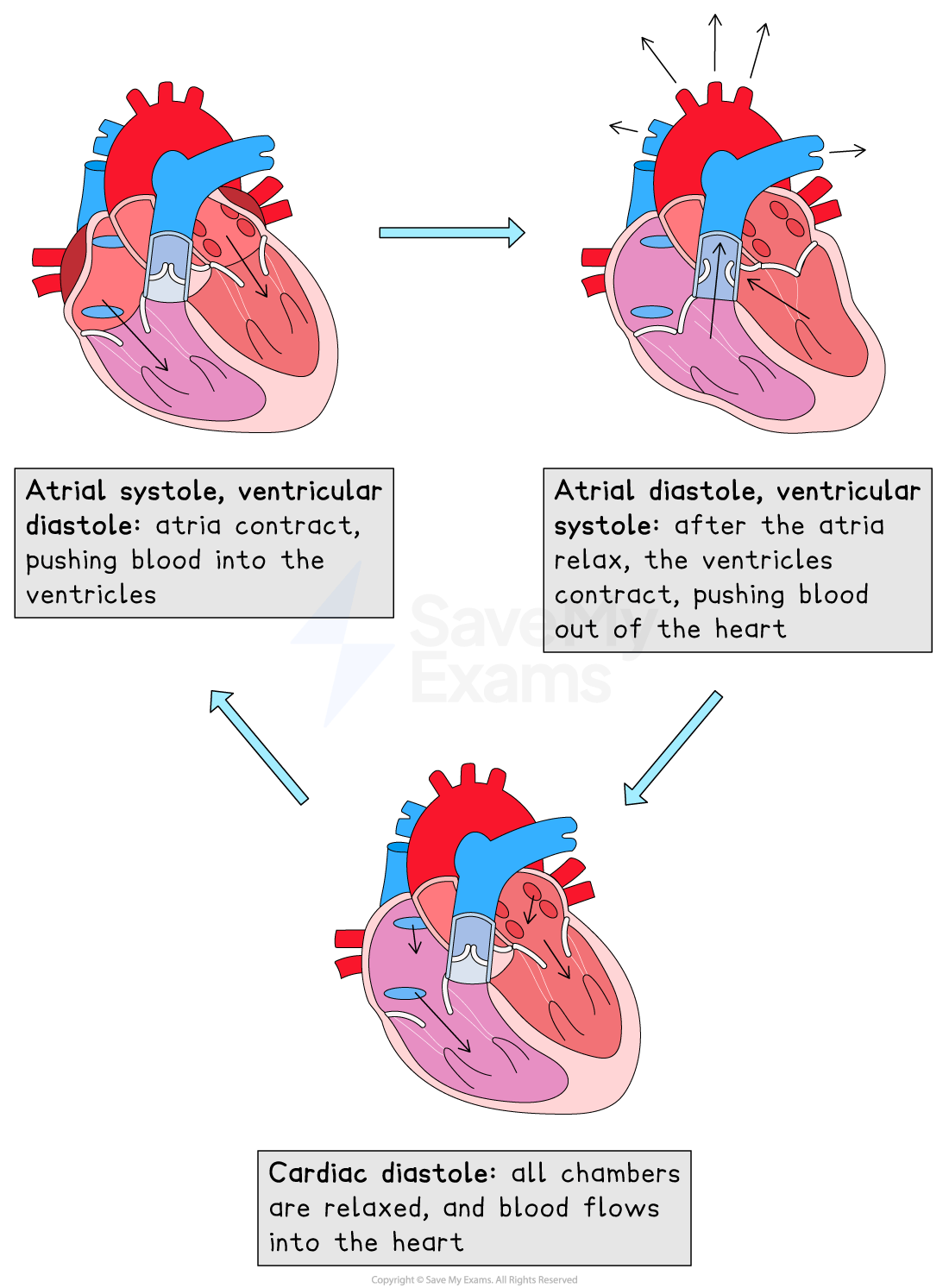
The cardiac cycle is the series of events that take place in one heart beat, including muscle contraction and relaxation
-
The contraction of the heart is called systole, while the relaxation of the heart is called diastole
-
-
One cardiac cycle is followed by another in a continuous process
-
There is no gap between cycles where blood stops flowing
-
Volume and pressure changes
-
Contraction of the heart muscle causes a decrease in volume in the corresponding chamber of the heart, which then increases again when the muscle relaxes
-
Volume changes lead to corresponding pressure changes
-
When volume decreases, pressure increases
-
When volume increases, pressure decreases
-
Atrial systole
-
The walls of the atria contract
-
Atrial volume decreases
-
Atrial pressure increases
-
-
The pressure in the atria rises above that in the ventricles, forcing the atrioventricular (AV) valves open
-
Blood is forced into the ventricles
-
There is a slight increase in ventricular pressure and chamber volume as the ventricles receive the blood from the atria
-
-
The ventricles are relaxed at this point; ventricular diastole coincides with atrial systole
Ventricular systole
-
The walls of the ventricles contract
-
Ventricular volume decreases
-
Ventricular pressure increases
-
-
The pressure in the ventricles rises above that in the atria
-
This forces the AV valves to close, preventing back flow of blood
-
-
The pressure in the ventricles rises above that in the aorta and pulmonary artery
-
This forces the semilunar (SL) valves open so blood is forced into the arteries and out of the heart
-
-
During this period, the atria are relaxing; atrial diastole coincides with ventricular systole
-
The blood flow to the heart continues, so the relaxed atria begin to fill with blood again
-
Diastole
-
The ventricles and atria are both relaxed
-
The pressure in the ventricles drops below that in the aorta and pulmonary artery, forcing the SL valves to close
-
The atria continue to fill with blood
-
Blood returns to the heart via the vena cava and pulmonary vein
-
-
Pressure in the atria rises above that in the ventricles, forcing the AV valves open
-
Blood flows passively into the ventricles without need of atrial systole
-
The cycle then begins again with atrial systole
-
Throughout the cardiac cycle, heart valves open and close as a result of pressure changes in different regions of the heart
-
Valves open when the pressure of blood behind them is greater than the pressure in front of them
-
They close when the pressure of blood in front of them is greater than the pressure behind them
-
-
Valves are an important mechanism to stop blood flowing backwards
|
Stage in cardiac cycle |
Atrioventricular valves |
Semilunar valves |
|---|---|---|
|
Atrial systole |
Open |
Closed |
|
Ventricular systole |
Closed |
Open |
|
Diastole |
Open |
Closed |
Analysing data relating to the cardiac cycle
-
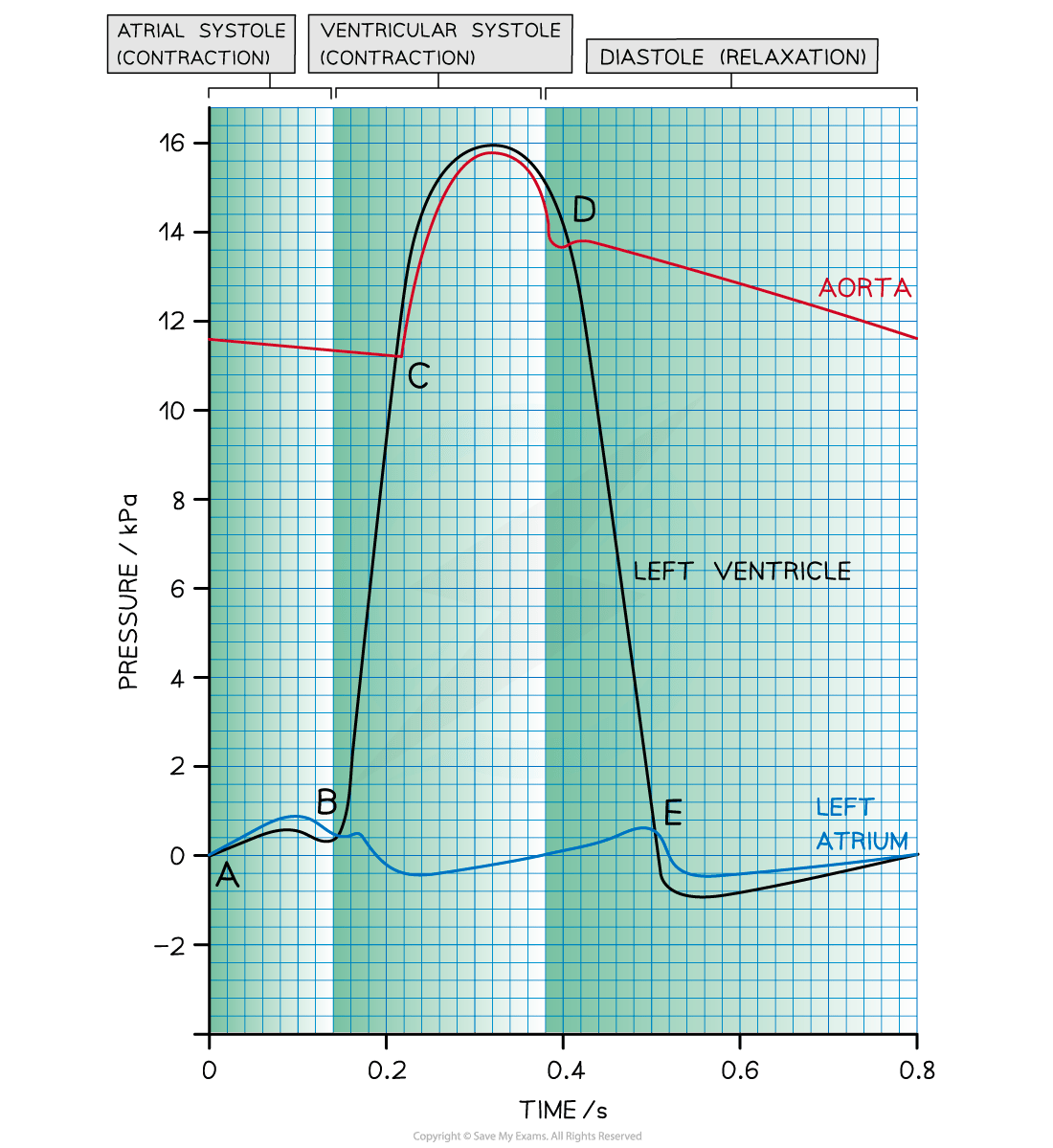
The changes that occur during the cardiac cycle can be shown on a graph, e.g.:
-
The lines on the graph below represent the pressure of the left atrium, aorta, and the left ventricle
-
Interpreting the cardiac cycle graph
-
Point A: the end of diastole
-
The atrium has filled with blood during the preceding diastole
-
Pressure is higher in the atrium than in the ventricle, so the AV valve is open
-
-
Point A-B: atrial systole
-
Left atrium contracts, causing an increase in atrial pressure and forcing blood into the left ventricle
-
Ventricular pressure increases slightly as it fills with blood
-
Pressure is higher in the atrium than in the ventricle, so the AV valve is open
-
-
Point B: beginning of ventricular systole
-
Left ventricle contracts causing the ventricular pressure to increase
-
Pressure in the left atrium drops as the muscle relaxes
-
Pressure in the ventricle exceeds pressure in the atrium, so the AV valve shuts
-
-
Point C: ventricular systole
-
The ventricle continues to contract
-
Pressure in the left ventricle exceeds that in the aorta
-
Aortic valve opens and blood is forced into the aorta
-
-
Point D: beginning of diastole
-
Left ventricle has been emptied of blood
-
Muscles in the walls of the left ventricle relax and pressure falls below that in the newly filled aorta
-
Aortic valve closes
-
-
Point D-E: early diastole
-
The ventricle remains relaxed and ventricular pressure continues to decrease
-
In the meantime, blood is flowing into the relaxed atrium from the pulmonary vein, causing an increase in pressure
-
-
Point E: diastole
-
The relaxed left atrium fills with blood, causing the pressure in the atrium to exceed that in the newly emptied ventricle
-
AV valve opens
-
-
After point E: late diastole
-
There is a short period of time during which the left ventricle expands due to relaxing muscles
-
This increases the internal volume of the left ventricle and decreases the ventricular pressure
-
At the same time, blood is flowing slowly through the newly opened AV valve into the left ventricle, causing a brief decrease in pressure in the left atrium
-
The pressure in both the atrium and ventricle then increases slowly as they continue to fill with blood
-
Worked Example
The graph below shows the cardiac cycle.
Calculate the heart rate of this person. Give your answer in beats per minute.

Step 1: Work out the length of one heart beat
It takes 0.7 seconds for completion of one cardiac cycle, which is one heart beat
So there is 1 cycle in 0.7 seconds
Step 2: Calculate how many heart beats occur per second
Divide by 0.7 to find out how many cycles in 1 second
1 format('truetype')%3Bfont-weight%3Anormal%3Bfont-style%3Anormal%3B%7D%3C%2Fstyle%3E%3C%2Fdefs%3E%3Ctext%20font-family%3D%22math13cec07e9ba5f5bb252d13f5f43%22%20font-size%3D%2216%22%20text-anchor%3D%22middle%22%20x%3D%229.5%22%20y%3D%2216%22%3E%26%23xF7%3B%3C%2Ftext%3E%3C%2Fsvg%3E) 0.7 = 1.43 beats in 1 second
0.7 = 1.43 beats in 1 second
Step 3: Calculate how many heart beats occur per minute
Multiply by 60 to find out how many cycles in 60 seconds
1.43 <img alt=”cross times” data-mathml='<math ><semantics><mo>×</mo><annotation encoding=”application/vnd.wiris.mtweb-params+json”>{“language”:”en”,”fontFamily”:”Times New Roman”,”fontSize”:”18″}</annotation></semantics></math>’ height=”19″ role=”math” src=”data:image/svg+xml;charset=utf8,%3Csvg%20xmlns%3D%22http%3A%2F%2Fwww.w3.org%2F2000%2Fsvg%22%20xmlns%3Awrs%3D%22http%3A%2F%2Fwww.wiris.com%2Fxml%2Fmathml-extension%22%20height%3D%2219%22%20width%3D%2218%22%20wrs%3Abaseline%3D%2216%22%3E%3C!–MathML%3A%20%3Cmath%20xmlns%3D%22http%3A%2F%2Fwww.w3.org%2F1998%2FMath%2FMathML%22%3E%3Cmo%3E%26%23xD7%3B%3C%2Fmo%3E%3C%2Fmath%3E–%3E%3Cdefs%3E%3Cstyle%20type%3D%22text%2Fcss%22%3E%40font-face%7Bfont-family%3A’math13b8a614226a953a8cd9526fca6’%3Bsrc%3Aurl(data%3Afont%2Ftruetype%3Bcharset%3Dutf-8%3Bbase64%2CAAEAAAAMAIAAAwBAT1MvMi7iBBMAAADMAAAATmNtYXDEvmKUAAABHAAAADRjdnQgDVUNBwAAAVAAAAA6Z2x5ZoPi2VsAAAGMAAAAl2hlYWQQC