
Biology_A-level_Cie
-
1-1-the-microscope-in-cell-studies5 主题
-
1-2-cells-as-the-basic-units-of-living-organisms5 主题
-
2-1-testing-for-biological-molecules3 主题
-
2-2-carbohydrates-and-lipids8 主题
-
2-3-proteins6 主题
-
2-4-water2 主题
-
3-1-mode-of-action-of-enzymes5 主题
-
3-2-factors-that-affect-enzyme-action8 主题
-
4-1-fluid-mosaic-membranes4 主题
-
4-2-movement-into-and-out-of-cells12 主题
-
diffusion
-
osmosis
-
active-transport
-
endocytosis-and-exocytosis
-
investigating-transport-processes-in-plants
-
investigating-diffusion
-
surface-area-to-volume-ratios
-
investigating-surface-area
-
estimating-water-potential-in-plants
-
osmosis-in-plant-cells
-
osmosis-in-animals
-
comparing-osmosis-in-plants-and-animals
-
diffusion
-
5-1-replication-and-division-of-nuclei-and-cells6 主题
-
5-2-chromosome-behaviour-in-mitosis2 主题
-
6-1-structure-of-nucleic-acids-and-replication-of-dna4 主题
-
6-2-protein-synthesis5 主题
-
7-1-structure-of-transport-tissues4 主题
-
7-2-transport-mechanisms7 主题
-
8-1-the-circulatory-system7 主题
-
8-2-transport-of-oxygen-and-carbon-dioxide5 主题
-
8-3-the-heart4 主题
-
9-1-the-gas-exchange-system6 主题
-
10-1-infectious-diseases3 主题
-
10-2-antibiotics3 主题
-
11-1-the-immune-system4 主题
-
11-2-antibodies-and-vaccination6 主题
-
12-1-energy5 主题
-
12-2-respiration11 主题
-
aerobic-respiration-the-krebs-cycle
-
aerobic-respiration-role-of-nad-and-fad
-
aerobic-respiration-oxidative-phosphorylation
-
anaerobic-respiration
-
energy-yield-aerobic-and-anaerobic-respiration
-
anaerobic-adaptation-of-rice
-
aerobic-respiration-effect-of-temperature-and-substrate-concentration
-
structure-and-function-of-mitochondria
-
the-four-stages-in-aerobic-respiration
-
aerobic-respiration-glycolysis
-
aerobic-respiration-the-link-reaction
-
aerobic-respiration-the-krebs-cycle
-
13-1-photosynthesis-as-an-energy-transfer-process8 主题
-
13-2-investigation-of-limiting-factors2 主题
-
14-1-homeostasis-in-mammals8 主题
-
14-2-homeostasis-in-plants3 主题
-
15-1-control-and-coordination-in-mammals12 主题
-
the-endocrine-system
-
the-nervous-system
-
neurones
-
sensory-receptor-cells
-
sequence-of-events-resulting-in-an-action-potential
-
transmission-of-nerve-impulses
-
speed-of-conduction-of-impulses
-
the-refractory-period
-
cholinergic-synapses
-
stimulating-contraction-in-striated-muscle
-
ultrastructure-of-striated-muscle
-
sliding-filament-model-of-muscular-contraction
-
the-endocrine-system
-
15-2-control-and-coordination-in-plants3 主题
-
16-1-passage-of-information-from-parents-to-offspring5 主题
-
16-2-the-roles-of-genes-in-determining-the-phenotype7 主题
-
16-3-gene-control3 主题
-
17-1-variation4 主题
-
17-2-natural-and-artificial-selection7 主题
-
17-3-evolution2 主题
-
18-1-classification5 主题
-
18-2-biodiversity7 主题
-
18-3-conservation6 主题
-
19-1-principles-of-genetic-technology11 主题
-
19-2-genetic-technology-applied-to-medicine4 主题
-
19-3-genetically-modified-organisms-in-agriculture2 主题
-
1-1-the-microscope-in-cell-studies
-
1-2-cells-as-the-basic-units-of-living-organisms
-
2-1-testing-for-biological-molecules
-
2-2-carbohydrates-and-lipids
-
2-3-proteins
-
2-4-water
-
3-1-mode-of-action-of-enzymes
-
3-2-factors-that-affect-enzyme-action
-
4-1-fluid-mosaic-membranes
-
4-2-movement-into-and-out-of-cells
-
5-1-replication-and-division-of-nuclei-and-cells
-
5-2-chromosome-behaviour-in-mitosis
-
6-1-structure-of-nucleic-acids-and-replication-of-dna
-
6-2-protein-synthesis
-
7-1-structure-of-transport-tissues
-
7-2-transport-mechanisms
-
8-1-the-circulatory-system
-
8-2-transport-of-oxygen-and-carbon-dioxide
-
8-3-the-heart
-
9-1-the-gas-exchange-system
-
10-1-infectious-diseases
-
10-2-antibiotics
-
11-1-the-immune-system
-
11-2-antibodies-and-vaccination
the-sucrose-loading-mechanism
The sucrose loading mechanism
-
Assimilates such as sucrose are transported from source to sink through the phloem sieve tubes
-
Carbohydrates are generally transported in plants in the form of sucrose because:
-
It allows for efficient energy transfer and increased energy storage (sucrose is a disaccharide and therefore contains more energy)
-
It is less reactive than glucose as it is a non-reducing sugar and therefore no intermediate reactions occur as it is being transported
-
Loading of assimilates
-
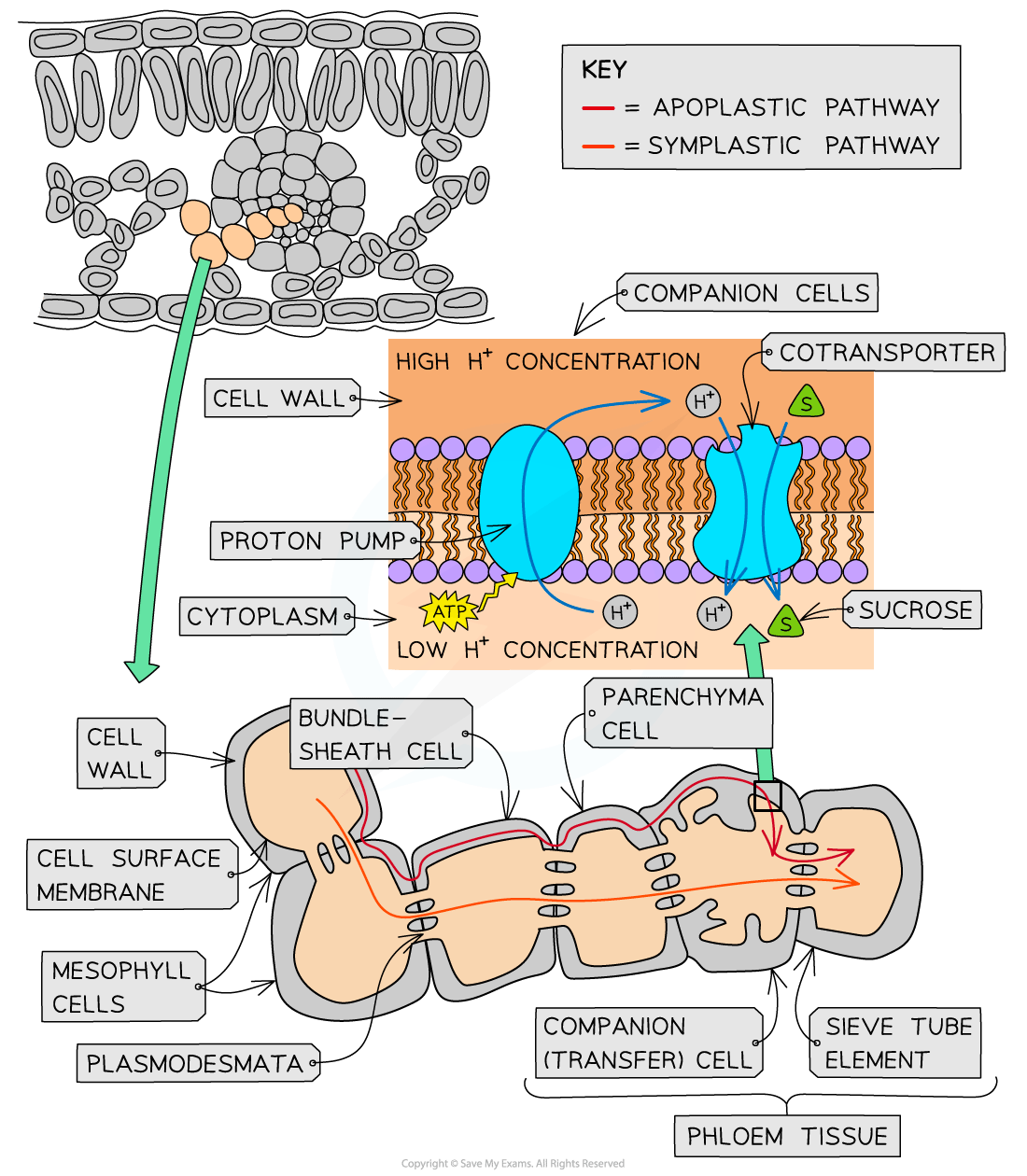
The pathway that sucrose molecules use to travel to the sieve tubes is not fully understood yet. The molecules may move by the:
-
symplastic pathway (through the cytoplasm and plasmodesmata) which is a passive process as the sucrose molecules move by diffusion
-
apoplastic pathway (through the cell walls) which is an active process
-
-
If the sucrose molecules are taking the apoplastic pathway then modified companion cells (called transfer cells) pump hydrogen ions out of the cytoplasm via a proton pump and into their cell walls
-
This is an active process and therefore requires ATP as an energy source
-
-
The large concentration of hydrogen ions in the cell wall of the companion cell results in the hydrogen ions moving down the concentration gradient back to the cytoplasm of the companion cell
-
The hydrogen ions move through a cotransporter protein
-
While transporting the hydrogen ions this protein also carries sucrose molecules into the companion cell against the concentration gradient for sucrose
-
-
The sucrose molecules then move into the sieve tubes via the plasmodesmata from the companion cells
-
Companion cells have infoldings in their cell surface membrane to increase the available surface area for the active transport of solutes and many mitochondria to provide the energy for the proton pump
-
-
This mechanism permits some plants to build up the sucrose in the phloem to up to three times the concentration of that in the mesophyll
Unloading of assimilates
-
The unloading of the assimilates (e.g. sucrose) occurs at the sinks
-
Scientists believe that the unloading of sucrose is similar to the loading of sucrose, with the sucrose being actively transported out of the companion cells and then moving out of the phloem tissue via apoplastic or symplastic pathways
-
To maintain a concentration gradient in the sink tissue, sucrose is converted into other molecules. This is a metabolic reaction so requires enzymes (e.g. invertase which hydrolyses sucrose into glucose and fructose)
Examiner Tips and Tricks
Remember that the loading of sucrose requires two protein pumps (proton and co-transporter) which are located in the companion cell surface membrane.