
Biology_A-level_Cie
-
1-1-the-microscope-in-cell-studies5 主题
-
1-2-cells-as-the-basic-units-of-living-organisms5 主题
-
2-1-testing-for-biological-molecules3 主题
-
2-2-carbohydrates-and-lipids8 主题
-
2-3-proteins6 主题
-
2-4-water2 主题
-
3-1-mode-of-action-of-enzymes5 主题
-
3-2-factors-that-affect-enzyme-action8 主题
-
4-1-fluid-mosaic-membranes4 主题
-
4-2-movement-into-and-out-of-cells12 主题
-
diffusion
-
osmosis
-
active-transport
-
endocytosis-and-exocytosis
-
investigating-transport-processes-in-plants
-
investigating-diffusion
-
surface-area-to-volume-ratios
-
investigating-surface-area
-
estimating-water-potential-in-plants
-
osmosis-in-plant-cells
-
osmosis-in-animals
-
comparing-osmosis-in-plants-and-animals
-
diffusion
-
5-1-replication-and-division-of-nuclei-and-cells6 主题
-
5-2-chromosome-behaviour-in-mitosis2 主题
-
6-1-structure-of-nucleic-acids-and-replication-of-dna4 主题
-
6-2-protein-synthesis5 主题
-
7-1-structure-of-transport-tissues4 主题
-
7-2-transport-mechanisms7 主题
-
8-1-the-circulatory-system7 主题
-
8-2-transport-of-oxygen-and-carbon-dioxide5 主题
-
8-3-the-heart4 主题
-
9-1-the-gas-exchange-system6 主题
-
10-1-infectious-diseases3 主题
-
10-2-antibiotics3 主题
-
11-1-the-immune-system4 主题
-
11-2-antibodies-and-vaccination6 主题
-
12-1-energy5 主题
-
12-2-respiration11 主题
-
aerobic-respiration-the-krebs-cycle
-
aerobic-respiration-role-of-nad-and-fad
-
aerobic-respiration-oxidative-phosphorylation
-
anaerobic-respiration
-
energy-yield-aerobic-and-anaerobic-respiration
-
anaerobic-adaptation-of-rice
-
aerobic-respiration-effect-of-temperature-and-substrate-concentration
-
structure-and-function-of-mitochondria
-
the-four-stages-in-aerobic-respiration
-
aerobic-respiration-glycolysis
-
aerobic-respiration-the-link-reaction
-
aerobic-respiration-the-krebs-cycle
-
13-1-photosynthesis-as-an-energy-transfer-process8 主题
-
13-2-investigation-of-limiting-factors2 主题
-
14-1-homeostasis-in-mammals8 主题
-
14-2-homeostasis-in-plants3 主题
-
15-1-control-and-coordination-in-mammals12 主题
-
the-endocrine-system
-
the-nervous-system
-
neurones
-
sensory-receptor-cells
-
sequence-of-events-resulting-in-an-action-potential
-
transmission-of-nerve-impulses
-
speed-of-conduction-of-impulses
-
the-refractory-period
-
cholinergic-synapses
-
stimulating-contraction-in-striated-muscle
-
ultrastructure-of-striated-muscle
-
sliding-filament-model-of-muscular-contraction
-
the-endocrine-system
-
15-2-control-and-coordination-in-plants3 主题
-
16-1-passage-of-information-from-parents-to-offspring5 主题
-
16-2-the-roles-of-genes-in-determining-the-phenotype7 主题
-
16-3-gene-control3 主题
-
17-1-variation4 主题
-
17-2-natural-and-artificial-selection7 主题
-
17-3-evolution2 主题
-
18-1-classification5 主题
-
18-2-biodiversity7 主题
-
18-3-conservation6 主题
-
19-1-principles-of-genetic-technology11 主题
-
19-2-genetic-technology-applied-to-medicine4 主题
-
19-3-genetically-modified-organisms-in-agriculture2 主题
-
1-1-the-microscope-in-cell-studies
-
1-2-cells-as-the-basic-units-of-living-organisms
-
2-1-testing-for-biological-molecules
-
2-2-carbohydrates-and-lipids
-
2-3-proteins
-
2-4-water
-
3-1-mode-of-action-of-enzymes
-
3-2-factors-that-affect-enzyme-action
-
4-1-fluid-mosaic-membranes
-
4-2-movement-into-and-out-of-cells
-
5-1-replication-and-division-of-nuclei-and-cells
-
5-2-chromosome-behaviour-in-mitosis
-
6-1-structure-of-nucleic-acids-and-replication-of-dna
-
6-2-protein-synthesis
-
7-1-structure-of-transport-tissues
-
7-2-transport-mechanisms
-
8-1-the-circulatory-system
-
8-2-transport-of-oxygen-and-carbon-dioxide
-
8-3-the-heart
-
9-1-the-gas-exchange-system
-
10-1-infectious-diseases
-
10-2-antibiotics
-
11-1-the-immune-system
-
11-2-antibodies-and-vaccination
constructing-polypeptides
Constructing polypeptides: transcription & translation
-
A gene is a sequence of nucleotide bases in a DNA molecule that codes for the production of a specific sequence of amino acids, that in turn make up a specific polypeptide (protein)
-
This process of protein synthesis occurs in two stages:
-
Transcription:
-
DNA is transcribed and an mRNA molecule is produced
-
-
Translation:
-
mRNA (messenger RNA) is translated and an amino acid sequence is produced
-
-
Transcription
-
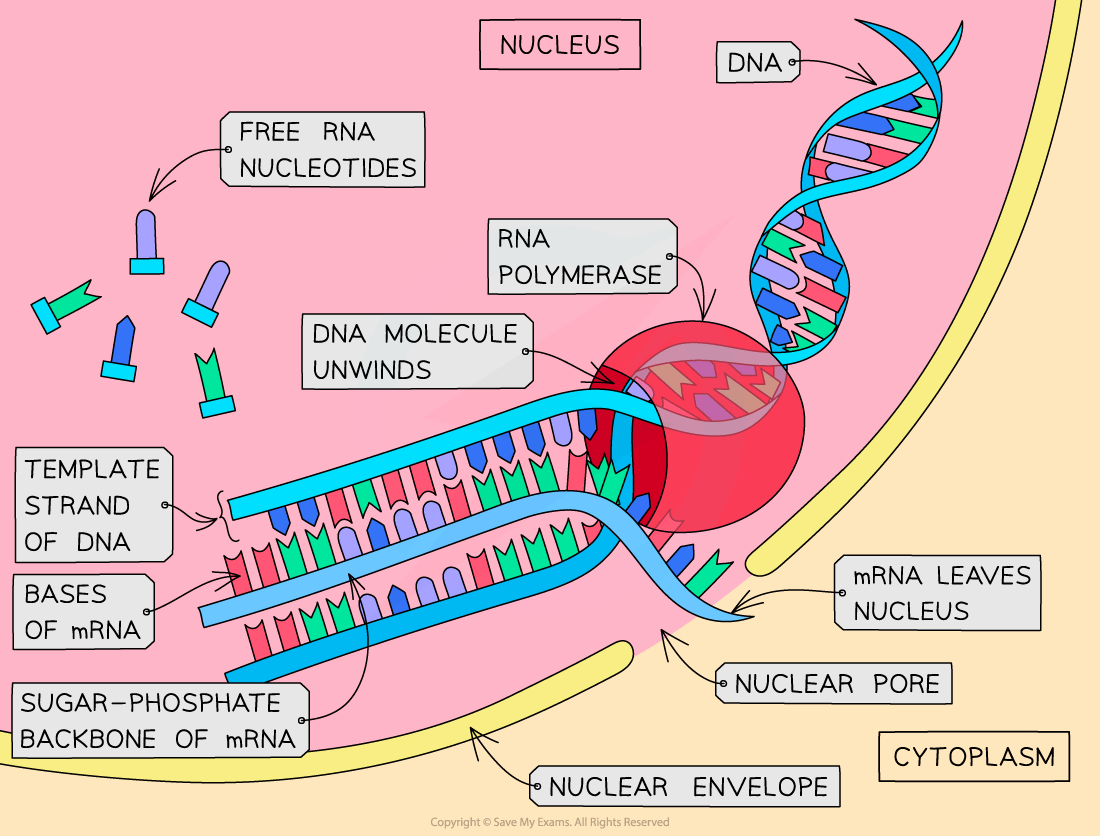
This stage of protein synthesis occurs in the nucleus of the cell
-
Part of a DNA molecule unwinds (the hydrogen bonds between the complementary base pairs break)
-
This exposes the gene to be transcribed (the gene from which a particular polypeptide will be produced)
-
A complementary copy of the code from the gene is made by building a single-stranded nucleic acid molecule known as mRNA (messenger RNA)
-
The DNA triplets of bases are transcribed as mRNA codons
-
The single-stranded mRNA molecule can fit through the pores in the nuclear envelope, unlike double-stranded DNA
-
-
Free RNA nucleotides pair up (via hydrogen bonds) with their complementary (now exposed) bases on one strand (the template strand) of the ‘unzipped’ DNA molecule
-
The sugar-phosphate groups of these RNA nucleotides are then bonded together by the enzyme RNA polymerase to form the sugar-phosphate backbone of the mRNA molecule
-
When the gene has been transcribed (when the mRNA molecule is complete), the hydrogen bonds between the mRNA and DNA strands break
-
The double-stranded DNA molecule then re-forms
-
-
The mRNA molecule then leaves the nucleus via a pore in the nuclear envelope
Translation
-
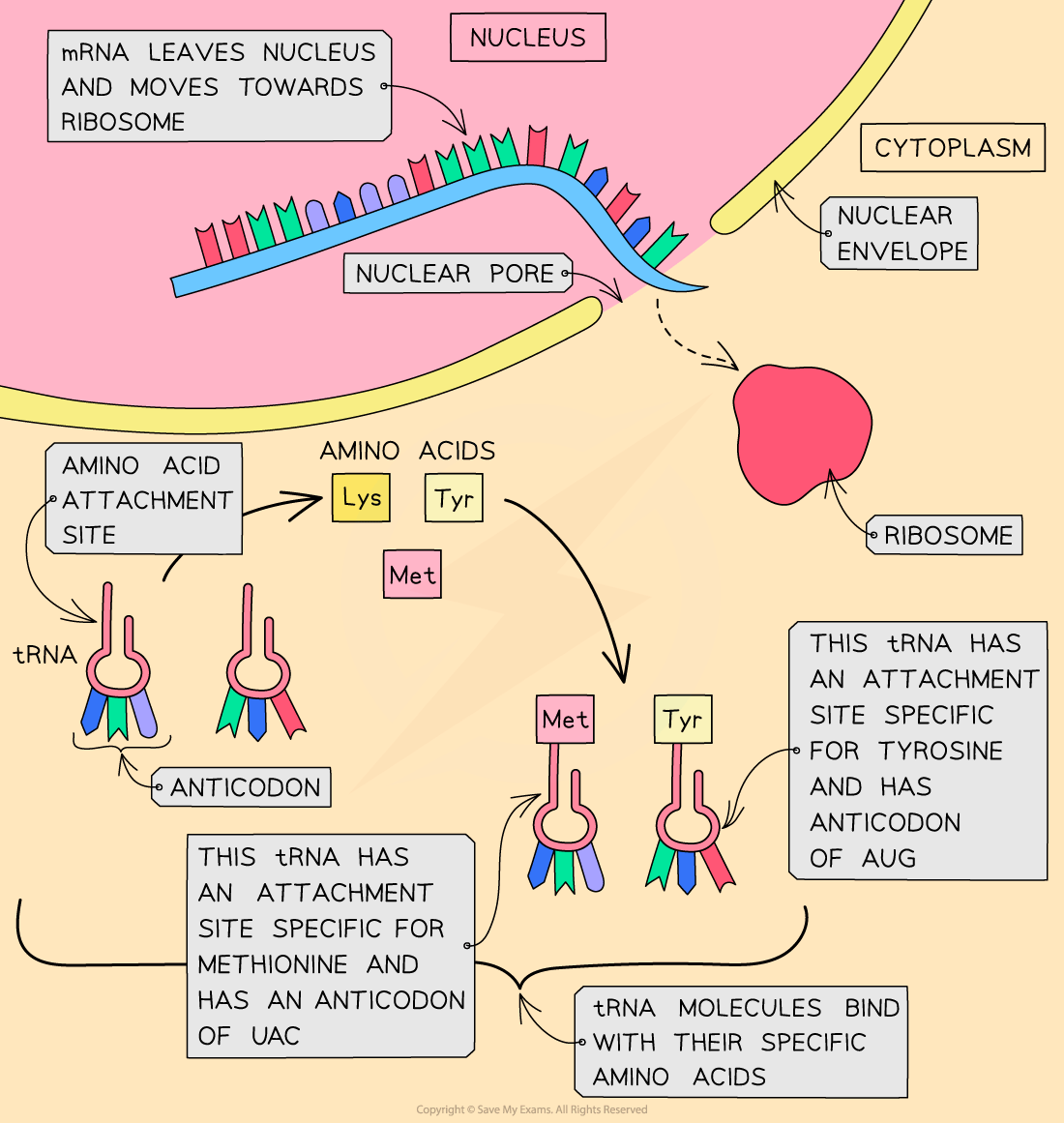
This stage of protein synthesis occurs in the cytoplasm of the cell
-
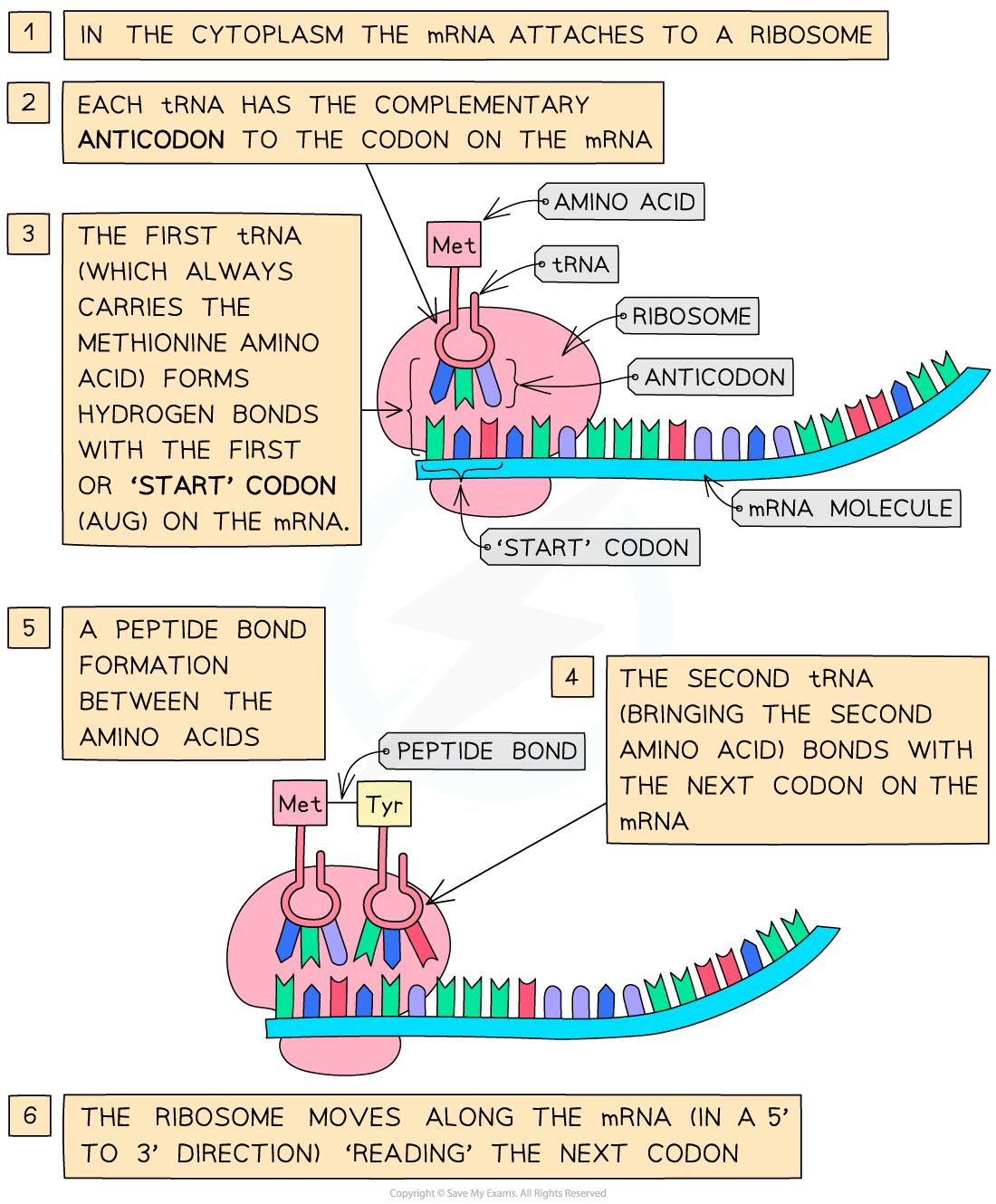
After leaving the nucleus, the mRNA molecule attaches to a ribosome
-
In the cytoplasm, there are free molecules of tRNA (transfer RNA)
-
These tRNA molecules have:
-
A triplet of unpaired bases at one end, known as the anticodon
-
A region where a specific amino acid can attach at the other
-
-
There are at least 20 different tRNA molecules, each with a specific anticodon and specific amino acid binding site
-
The tRNA molecules bind with their specific amino acids (also in the cytoplasm) and bring them to the mRNA molecule on the ribosome
-
The anticodon on each tRNA molecule pairs with a complementary codon on the mRNA molecule
-
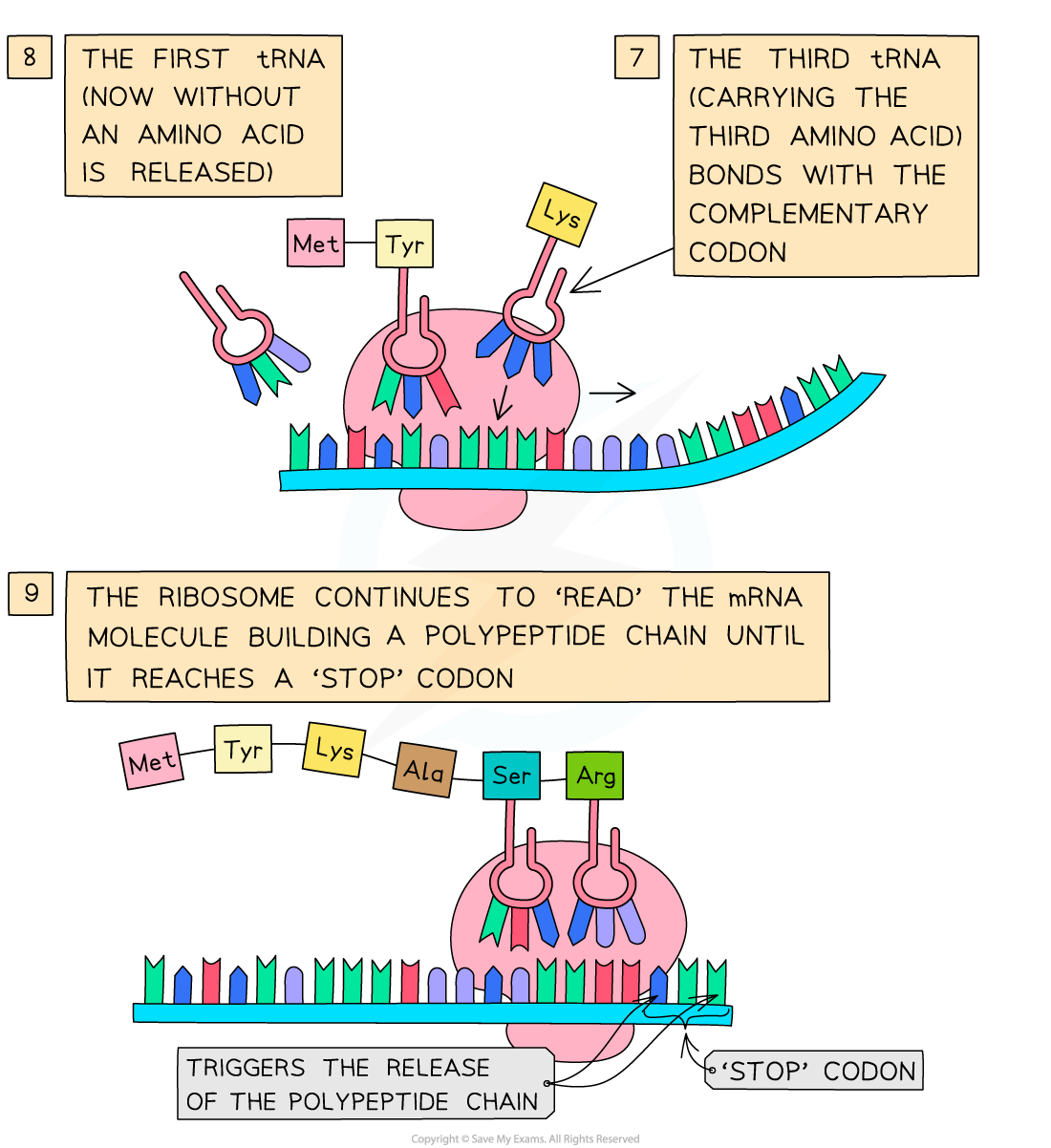
Two tRNA molecules fit onto the ribosome at any one time, bringing the amino acid they are each carrying side by side
-
A peptide bond is then formed between the two amino acids
-
This process continues until a ‘stop’ codon on the mRNA molecule is reached
-
The ‘stop’ codon acts as a signal for translation to stop and at this point the amino acid chain coded for by the mRNA molecule is complete
-
-
This amino acid chain then forms the final polypeptide
Examiner Tips and Tricks
Make sure you learn both stages of protein synthesis fully.
Don’t forget—transcription occurs in the nucleus but translation occurs in the cytoplasm!
Be careful—DNA polymerase is the enzyme involved in DNA replication; RNA polymerase is the enzyme involved in transcription—don’t get these confused.