
Biology_A-level_Cie
-
1-1-the-microscope-in-cell-studies5 主题
-
1-2-cells-as-the-basic-units-of-living-organisms5 主题
-
2-1-testing-for-biological-molecules3 主题
-
2-2-carbohydrates-and-lipids8 主题
-
2-3-proteins6 主题
-
2-4-water2 主题
-
3-1-mode-of-action-of-enzymes5 主题
-
3-2-factors-that-affect-enzyme-action8 主题
-
4-1-fluid-mosaic-membranes4 主题
-
4-2-movement-into-and-out-of-cells12 主题
-
diffusion
-
osmosis
-
active-transport
-
endocytosis-and-exocytosis
-
investigating-transport-processes-in-plants
-
investigating-diffusion
-
surface-area-to-volume-ratios
-
investigating-surface-area
-
estimating-water-potential-in-plants
-
osmosis-in-plant-cells
-
osmosis-in-animals
-
comparing-osmosis-in-plants-and-animals
-
diffusion
-
5-1-replication-and-division-of-nuclei-and-cells6 主题
-
5-2-chromosome-behaviour-in-mitosis2 主题
-
6-1-structure-of-nucleic-acids-and-replication-of-dna4 主题
-
6-2-protein-synthesis5 主题
-
7-1-structure-of-transport-tissues4 主题
-
7-2-transport-mechanisms7 主题
-
8-1-the-circulatory-system7 主题
-
8-2-transport-of-oxygen-and-carbon-dioxide5 主题
-
8-3-the-heart4 主题
-
9-1-the-gas-exchange-system6 主题
-
10-1-infectious-diseases3 主题
-
10-2-antibiotics3 主题
-
11-1-the-immune-system4 主题
-
11-2-antibodies-and-vaccination6 主题
-
12-1-energy5 主题
-
12-2-respiration11 主题
-
aerobic-respiration-the-krebs-cycle
-
aerobic-respiration-role-of-nad-and-fad
-
aerobic-respiration-oxidative-phosphorylation
-
anaerobic-respiration
-
energy-yield-aerobic-and-anaerobic-respiration
-
anaerobic-adaptation-of-rice
-
aerobic-respiration-effect-of-temperature-and-substrate-concentration
-
structure-and-function-of-mitochondria
-
the-four-stages-in-aerobic-respiration
-
aerobic-respiration-glycolysis
-
aerobic-respiration-the-link-reaction
-
aerobic-respiration-the-krebs-cycle
-
13-1-photosynthesis-as-an-energy-transfer-process8 主题
-
13-2-investigation-of-limiting-factors2 主题
-
14-1-homeostasis-in-mammals8 主题
-
14-2-homeostasis-in-plants3 主题
-
15-1-control-and-coordination-in-mammals12 主题
-
the-endocrine-system
-
the-nervous-system
-
neurones
-
sensory-receptor-cells
-
sequence-of-events-resulting-in-an-action-potential
-
transmission-of-nerve-impulses
-
speed-of-conduction-of-impulses
-
the-refractory-period
-
cholinergic-synapses
-
stimulating-contraction-in-striated-muscle
-
ultrastructure-of-striated-muscle
-
sliding-filament-model-of-muscular-contraction
-
the-endocrine-system
-
15-2-control-and-coordination-in-plants3 主题
-
16-1-passage-of-information-from-parents-to-offspring5 主题
-
16-2-the-roles-of-genes-in-determining-the-phenotype7 主题
-
16-3-gene-control3 主题
-
17-1-variation4 主题
-
17-2-natural-and-artificial-selection7 主题
-
17-3-evolution2 主题
-
18-1-classification5 主题
-
18-2-biodiversity7 主题
-
18-3-conservation6 主题
-
19-1-principles-of-genetic-technology11 主题
-
19-2-genetic-technology-applied-to-medicine4 主题
-
19-3-genetically-modified-organisms-in-agriculture2 主题
-
1-1-the-microscope-in-cell-studies
-
1-2-cells-as-the-basic-units-of-living-organisms
-
2-1-testing-for-biological-molecules
-
2-2-carbohydrates-and-lipids
-
2-3-proteins
-
2-4-water
-
3-1-mode-of-action-of-enzymes
-
3-2-factors-that-affect-enzyme-action
-
4-1-fluid-mosaic-membranes
-
4-2-movement-into-and-out-of-cells
-
5-1-replication-and-division-of-nuclei-and-cells
-
5-2-chromosome-behaviour-in-mitosis
-
6-1-structure-of-nucleic-acids-and-replication-of-dna
-
6-2-protein-synthesis
-
7-1-structure-of-transport-tissues
-
7-2-transport-mechanisms
-
8-1-the-circulatory-system
-
8-2-transport-of-oxygen-and-carbon-dioxide
-
8-3-the-heart
-
9-1-the-gas-exchange-system
-
10-1-infectious-diseases
-
10-2-antibiotics
-
11-1-the-immune-system
-
11-2-antibodies-and-vaccination
the-structure-of-dna
DNA structure
-
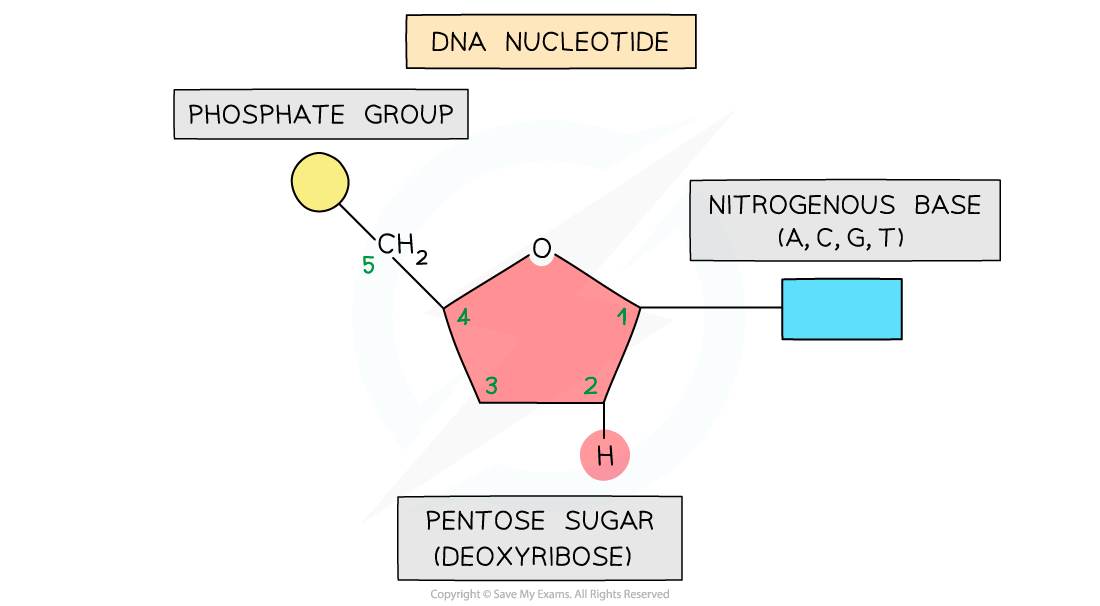
The nucleic acid DNA is a polynucleotide—it is made up of many nucleotides bonded together in a long chain
-
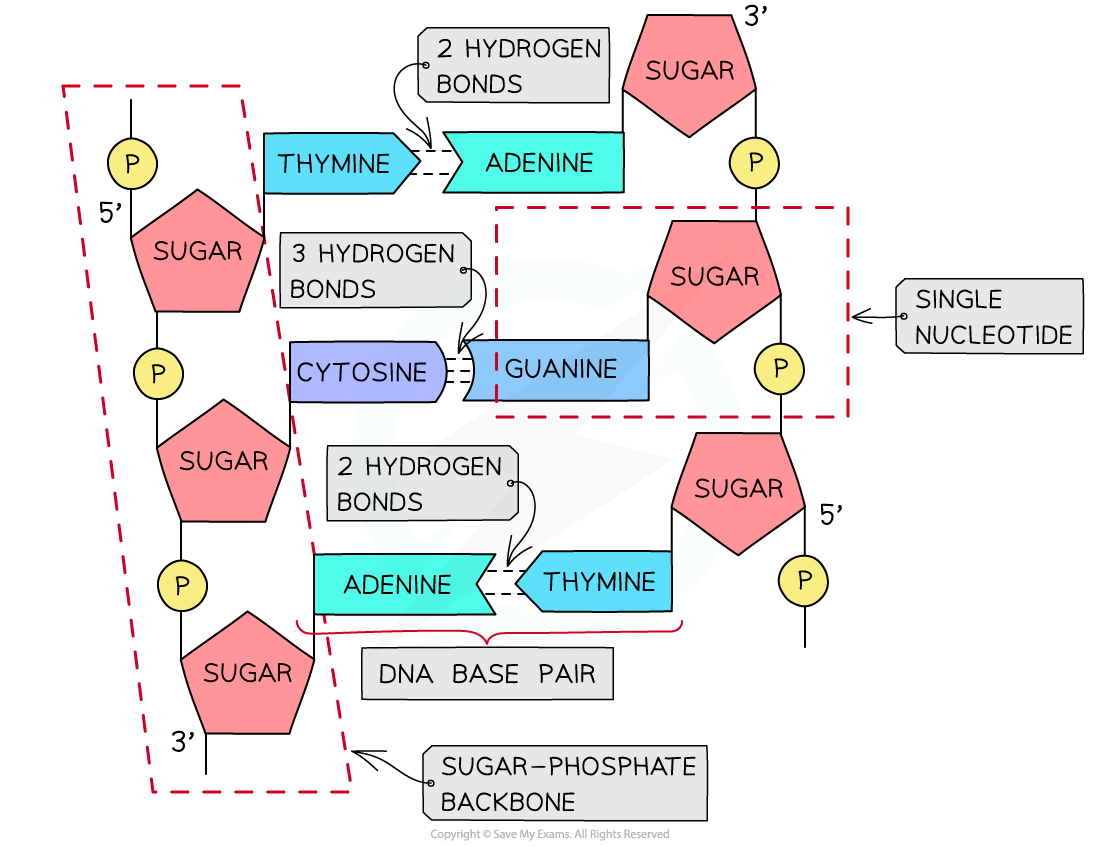
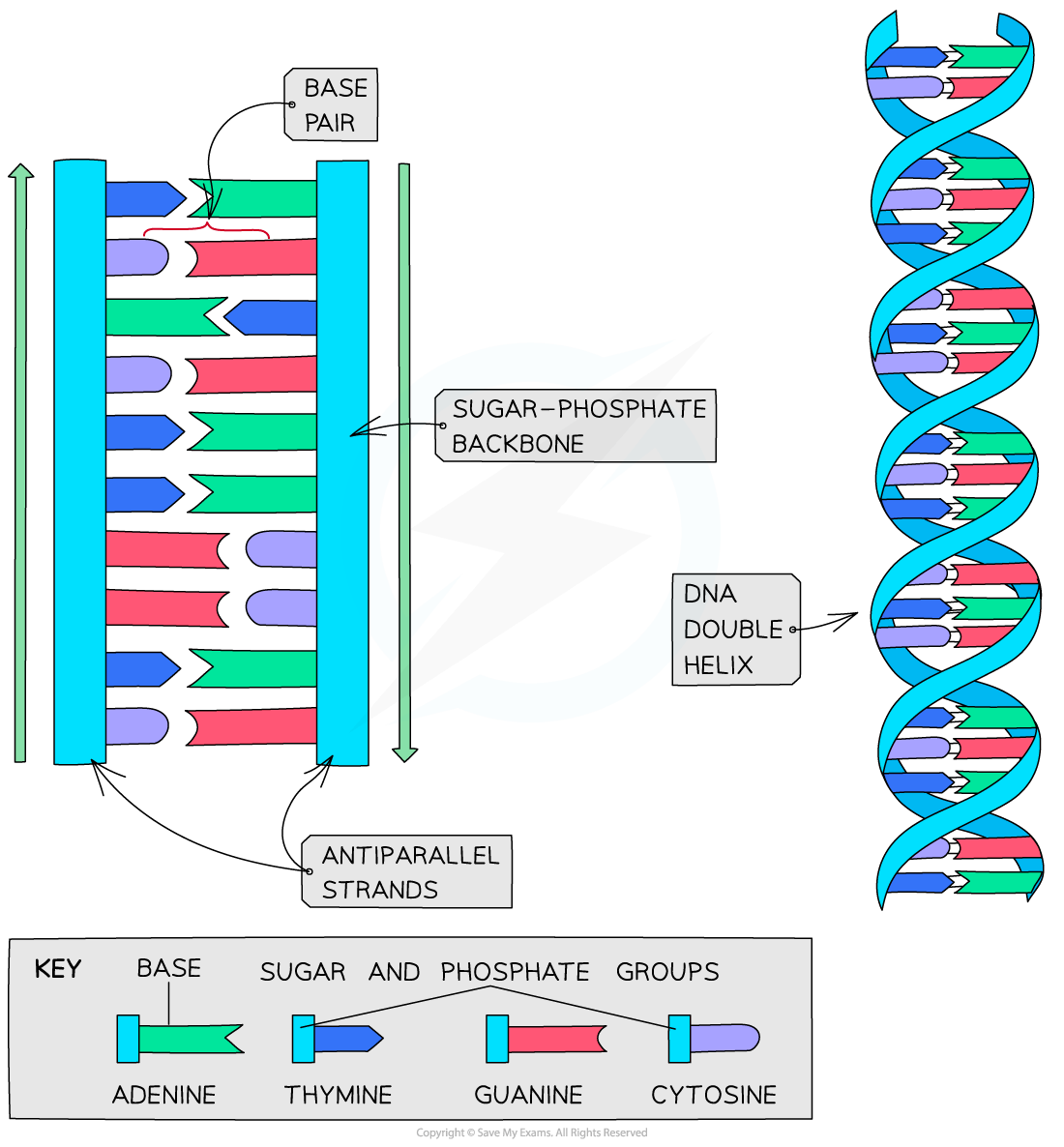
DNA molecules are made up of two polynucleotide strands lying side by side, running in opposite directions
-
The strands are said to be antiparallel
-
-
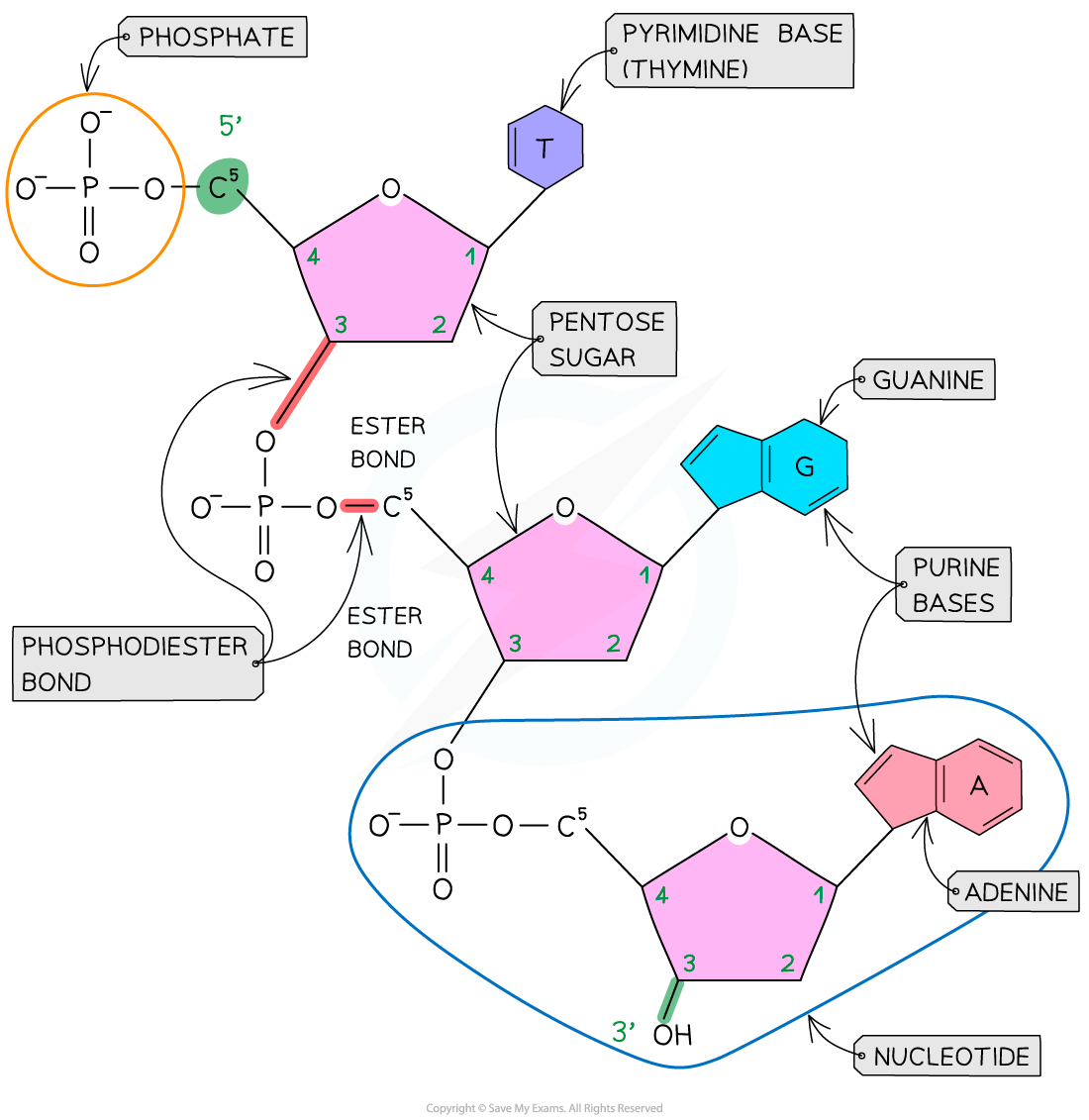
Each DNA polynucleotide strand is made up of alternating deoxyribose sugars and phosphate groups bonded together to form the sugar-phosphate backbone
-
These bonds are covalent bonds known as phosphodiester bonds
-
The phosphodiester bonds link the 5-carbon of one deoxyribose sugar molecule to the phosphate group from the same nucleotide
-
The phosphate group is linked by another phosphodiester bond to the 3-carbon of the deoxyribose sugar molecule of the next nucleotide in the strand
-
Each DNA polynucleotide strand is said to have a 3’ end and a 5’ end (these numbers relate to which carbon on the pentose sugar could be bonded with another nucleotide)
-
As the strands run in opposite directions (they are antiparallel), one is known as the 5’ to 3’ strand and the other is known as the 3’ to 5’ strand
-
-
The nitrogenous bases of each nucleotide project out from the backbone towards the interior of the double-stranded DNA molecule
Hydrogen bonding
-
The two antiparallel DNA polynucleotide strands that make up the DNA molecule are held together by hydrogen bonds between the nitrogenous bases
-
These hydrogen bonds always occur between the same pairs of bases:
-
The purine adenine (A) always pairs with the pyrimidine thymine (T)
-
Two hydrogen bonds are formed between these bases
-
-
The purine guanine (G) always pairs with the pyrimidine cytosine (C)
-
Three hydrogen bonds are formed between these bases
-
-
This is known as complementary base pairing
-
These pairs are known as DNA base pairs
-
Double helix
-
DNA is not two-dimensional as seen in the diagram above
-
DNA is described as a double helix
-
This refers to the three-dimensional shape that DNA molecules form
Examiner Tips and Tricks
Make sure you can:
-
Name the different components of a DNA molecule (sugar-phosphate backbone, nucleotide, complementary base pairs, phosphodiester bonds, hydrogen bonds)
-
Locate these on a diagram
You must know how many hydrogen bonds occur between the different base pairs.
Remember that the bases are complementary so the number of A = the number of T and the number of C = the number of G.
You could be asked to determine how many bases are present in a DNA molecule if given the number of one of the bases.