
Biology_A-level_Cie
-
1-1-the-microscope-in-cell-studies5 主题
-
1-2-cells-as-the-basic-units-of-living-organisms5 主题
-
2-1-testing-for-biological-molecules3 主题
-
2-2-carbohydrates-and-lipids8 主题
-
2-3-proteins6 主题
-
2-4-water2 主题
-
3-1-mode-of-action-of-enzymes5 主题
-
3-2-factors-that-affect-enzyme-action8 主题
-
4-1-fluid-mosaic-membranes4 主题
-
4-2-movement-into-and-out-of-cells12 主题
-
diffusion
-
osmosis
-
active-transport
-
endocytosis-and-exocytosis
-
investigating-transport-processes-in-plants
-
investigating-diffusion
-
surface-area-to-volume-ratios
-
investigating-surface-area
-
estimating-water-potential-in-plants
-
osmosis-in-plant-cells
-
osmosis-in-animals
-
comparing-osmosis-in-plants-and-animals
-
diffusion
-
5-1-replication-and-division-of-nuclei-and-cells6 主题
-
5-2-chromosome-behaviour-in-mitosis2 主题
-
6-1-structure-of-nucleic-acids-and-replication-of-dna4 主题
-
6-2-protein-synthesis5 主题
-
7-1-structure-of-transport-tissues4 主题
-
7-2-transport-mechanisms7 主题
-
8-1-the-circulatory-system7 主题
-
8-2-transport-of-oxygen-and-carbon-dioxide5 主题
-
8-3-the-heart4 主题
-
9-1-the-gas-exchange-system6 主题
-
10-1-infectious-diseases3 主题
-
10-2-antibiotics3 主题
-
11-1-the-immune-system4 主题
-
11-2-antibodies-and-vaccination6 主题
-
12-1-energy5 主题
-
12-2-respiration11 主题
-
aerobic-respiration-the-krebs-cycle
-
aerobic-respiration-role-of-nad-and-fad
-
aerobic-respiration-oxidative-phosphorylation
-
anaerobic-respiration
-
energy-yield-aerobic-and-anaerobic-respiration
-
anaerobic-adaptation-of-rice
-
aerobic-respiration-effect-of-temperature-and-substrate-concentration
-
structure-and-function-of-mitochondria
-
the-four-stages-in-aerobic-respiration
-
aerobic-respiration-glycolysis
-
aerobic-respiration-the-link-reaction
-
aerobic-respiration-the-krebs-cycle
-
13-1-photosynthesis-as-an-energy-transfer-process8 主题
-
13-2-investigation-of-limiting-factors2 主题
-
14-1-homeostasis-in-mammals8 主题
-
14-2-homeostasis-in-plants3 主题
-
15-1-control-and-coordination-in-mammals12 主题
-
the-endocrine-system
-
the-nervous-system
-
neurones
-
sensory-receptor-cells
-
sequence-of-events-resulting-in-an-action-potential
-
transmission-of-nerve-impulses
-
speed-of-conduction-of-impulses
-
the-refractory-period
-
cholinergic-synapses
-
stimulating-contraction-in-striated-muscle
-
ultrastructure-of-striated-muscle
-
sliding-filament-model-of-muscular-contraction
-
the-endocrine-system
-
15-2-control-and-coordination-in-plants3 主题
-
16-1-passage-of-information-from-parents-to-offspring5 主题
-
16-2-the-roles-of-genes-in-determining-the-phenotype7 主题
-
16-3-gene-control3 主题
-
17-1-variation4 主题
-
17-2-natural-and-artificial-selection7 主题
-
17-3-evolution2 主题
-
18-1-classification5 主题
-
18-2-biodiversity7 主题
-
18-3-conservation6 主题
-
19-1-principles-of-genetic-technology11 主题
-
19-2-genetic-technology-applied-to-medicine4 主题
-
19-3-genetically-modified-organisms-in-agriculture2 主题
-
1-1-the-microscope-in-cell-studies
-
1-2-cells-as-the-basic-units-of-living-organisms
-
2-1-testing-for-biological-molecules
-
2-2-carbohydrates-and-lipids
-
2-3-proteins
-
2-4-water
-
3-1-mode-of-action-of-enzymes
-
3-2-factors-that-affect-enzyme-action
-
4-1-fluid-mosaic-membranes
-
4-2-movement-into-and-out-of-cells
-
5-1-replication-and-division-of-nuclei-and-cells
-
5-2-chromosome-behaviour-in-mitosis
-
6-1-structure-of-nucleic-acids-and-replication-of-dna
-
6-2-protein-synthesis
-
7-1-structure-of-transport-tissues
-
7-2-transport-mechanisms
-
8-1-the-circulatory-system
-
8-2-transport-of-oxygen-and-carbon-dioxide
-
8-3-the-heart
-
9-1-the-gas-exchange-system
-
10-1-infectious-diseases
-
10-2-antibiotics
-
11-1-the-immune-system
-
11-2-antibodies-and-vaccination
the-fluid-mosaic-model
The fluid mosaic model of membranes
-
Membranes are vital structures found in all cells
-
The cell surface membrane creates an enclosed space separating the internal cell environment from the external environment
-
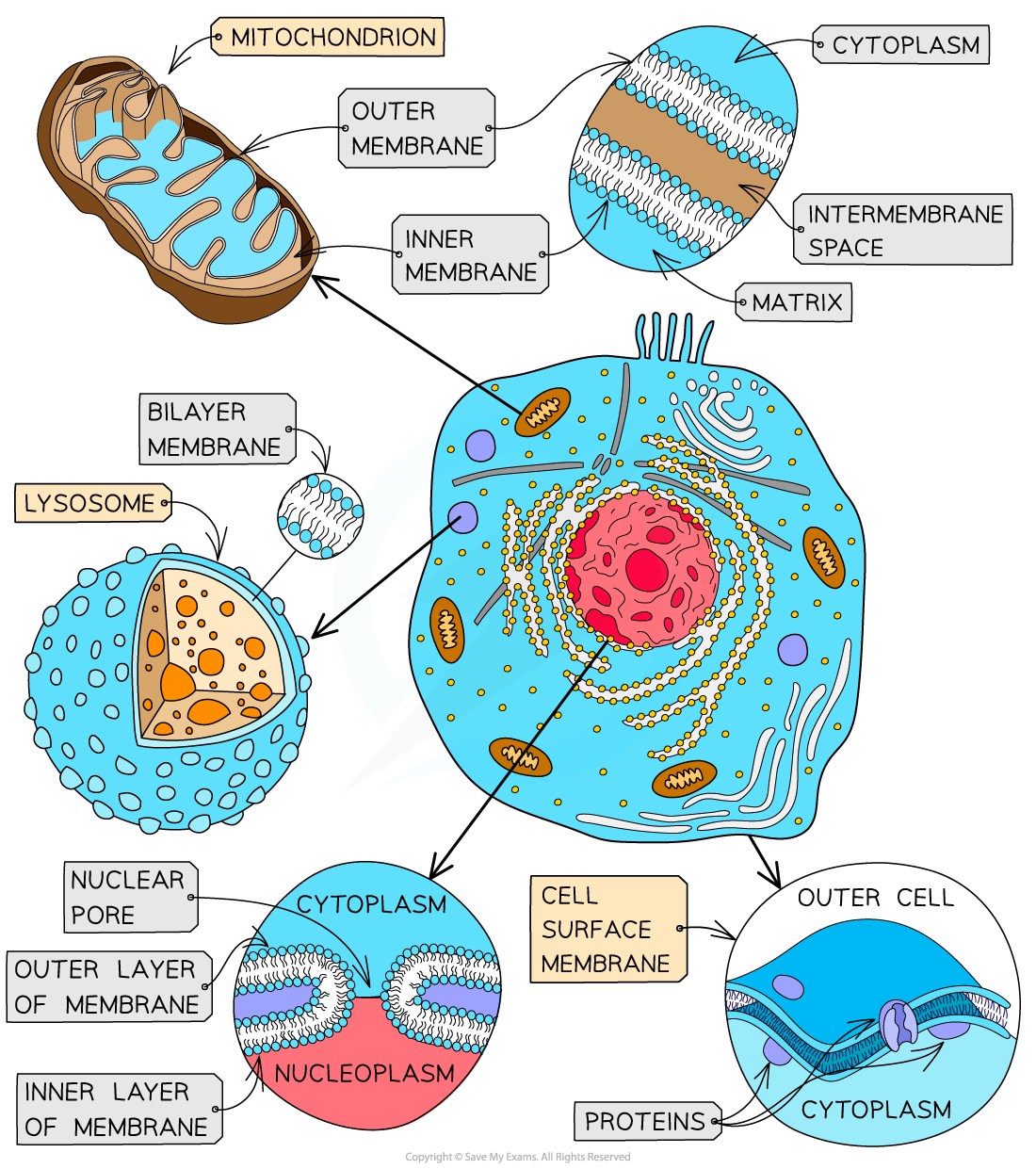
Intracellular membranes form compartments within the cell such as the nucleus, mitochondria and RER
-
-
Membranes do not only separate different areas but also control the exchange of materials across them, as well as acting as an interface for communication
-
Membranes are selectively permeable
-
Substances can cross membranes by diffusion, osmosis and active transport
-
-
Cellular membranes are formed from a bilayer of phospholipids which is roughly 7nm (7 × 10⁻⁹ metres) wide and therefore just visible under an electron microscope at very high magnifications
-
The fluid mosaic model of the membrane was first outlined in 1972 and it explains how biological molecules are arranged to form cell membranes
-
The fluid mosaic model also helps to explain:
-
Passive and active movement between cells and their surroundings
-
Cell-to-cell interactions
-
Cell signalling
-
Phospholipids
-
Phospholipids structurally contain two distinct regions: a polar head and two nonpolar tails
-
The phosphate head of a phospholipid is polar (hydrophilic) and therefore soluble in water
-
The lipid tail is non-polar (hydrophobic) and insoluble in water
-
-
If phospholipids are spread over the surface of water they form a single layer with the hydrophilic phosphate heads in the water and the hydrophobic fatty acid tails sticking up away from the water
-
This is called a phospholipid monolayer
-

-
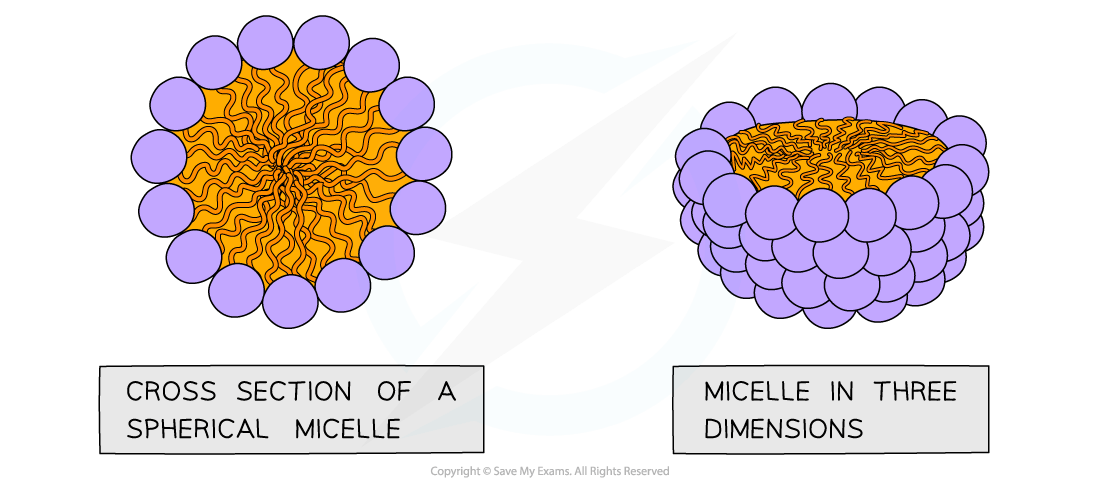
If phospholipids are mixed/shaken with water they form spheres
-
With the hydrophilic phosphate heads facing out towards the water, and
-
The hydrophobic fatty acid tails facing in towards each other
-
This is called a micelle
-
-
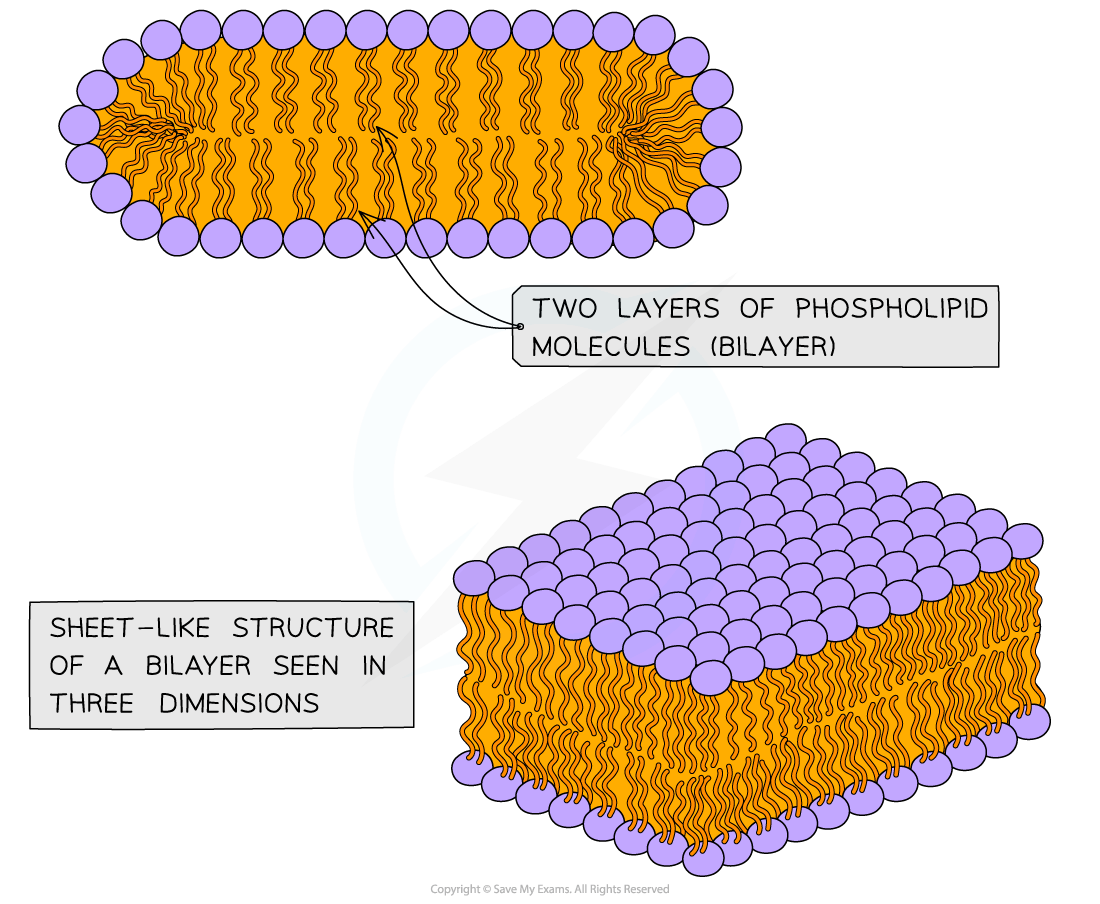
Alternatively, two-layered structures may form in sheets
-
These are called phospholipid bilayers – this is the basic structure of the cell membrane
-
Phospholipid bilayers can form compartments – the bilayer forming the cell surface membrane establishing the boundary of each cell
-
Internally, membrane-bound compartments formed from phospholipid bilayers provide the basic structure of organelles
-
This allows for specialisation of processes within the cell
-
-
An example of a membrane-bound organelle is the lysosome (found in animal cells)
-
Each lysosome contains many hydrolytic enzymes that can break down many different kinds of biomolecule
-
-
These enzymes need to be kept compartmentalised otherwise they would break down most of the cellular components
Structure of membranes
-
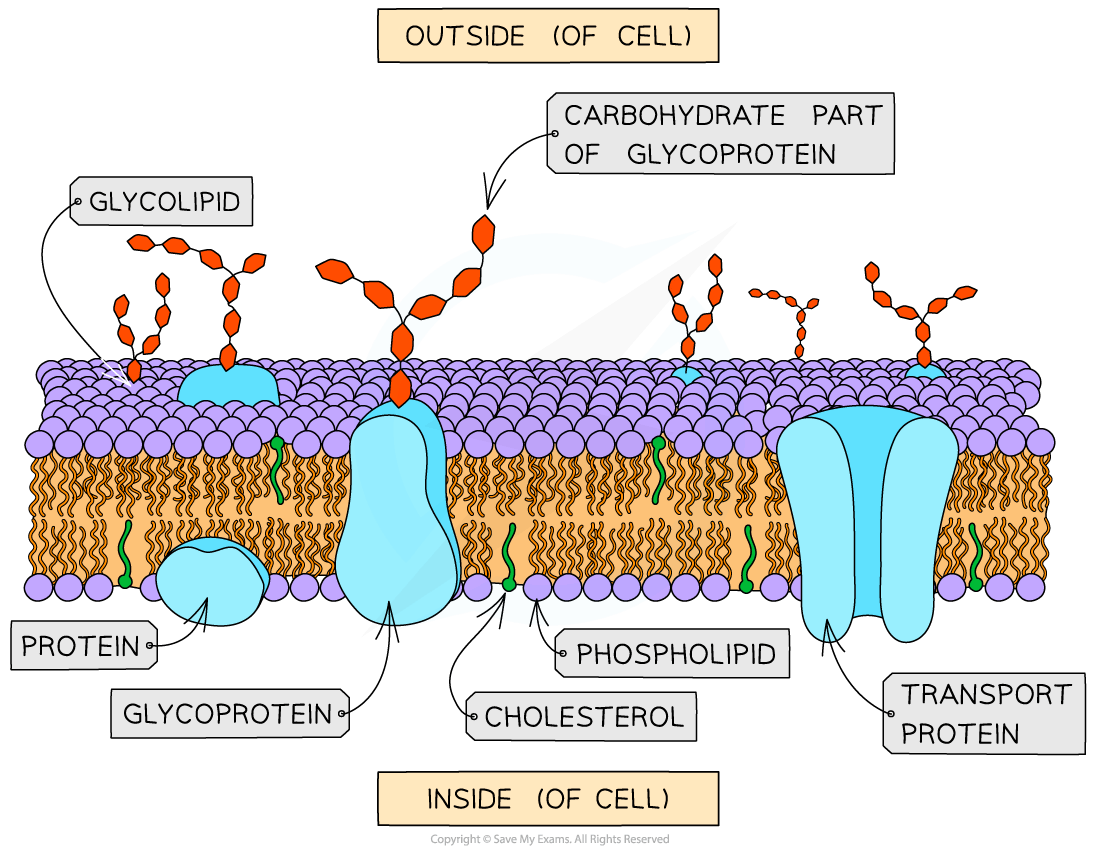
The phospholipid bilayers that make up cell membranes also contain proteins
-
The proteins can either be intrinsic (or integral) or extrinsic (peripheral)
-
Intrinsic proteins are embedded in the membrane with their arrangement determined by their hydrophilic and hydrophobic regions
-
Extrinsic proteins are found on the outer or inner surfaces of the membrane
-
-
The fluid mosaic model describes cell membranes as ‘fluid’ because:
-
The phospholipids and proteins can move around via diffusion
-
The phospholipids mainly move sideways, within their own layers
-
The many different types of protein that are interspersed throughout the bilayer move about within it (a bit like icebergs in the sea) although some may be fixed in position
-
-
The fluid mosaic model describes cell membranes as ‘mosaics’ because:
-
The scattered pattern produced by the proteins within the phospholipid bilayer looks somewhat like a mosaic when viewed from above
-
Examiner Tips and Tricks
You must know how to draw and label the fluid mosaic model, as well as ensure that you can describe why it is called the fluid mosaic model.