Biology_A-level_Cie
-
1-1-the-microscope-in-cell-studies5 主题
-
1-2-cells-as-the-basic-units-of-living-organisms5 主题
-
2-1-testing-for-biological-molecules3 主题
-
2-2-carbohydrates-and-lipids8 主题
-
2-3-proteins6 主题
-
2-4-water2 主题
-
3-1-mode-of-action-of-enzymes5 主题
-
3-2-factors-that-affect-enzyme-action8 主题
-
4-1-fluid-mosaic-membranes4 主题
-
4-2-movement-into-and-out-of-cells12 主题
-
diffusion
-
osmosis
-
active-transport
-
endocytosis-and-exocytosis
-
investigating-transport-processes-in-plants
-
investigating-diffusion
-
surface-area-to-volume-ratios
-
investigating-surface-area
-
estimating-water-potential-in-plants
-
osmosis-in-plant-cells
-
osmosis-in-animals
-
comparing-osmosis-in-plants-and-animals
-
diffusion
-
5-1-replication-and-division-of-nuclei-and-cells6 主题
-
5-2-chromosome-behaviour-in-mitosis2 主题
-
6-1-structure-of-nucleic-acids-and-replication-of-dna4 主题
-
6-2-protein-synthesis5 主题
-
7-1-structure-of-transport-tissues4 主题
-
7-2-transport-mechanisms7 主题
-
8-1-the-circulatory-system7 主题
-
8-2-transport-of-oxygen-and-carbon-dioxide5 主题
-
8-3-the-heart4 主题
-
9-1-the-gas-exchange-system6 主题
-
10-1-infectious-diseases3 主题
-
10-2-antibiotics3 主题
-
11-1-the-immune-system4 主题
-
11-2-antibodies-and-vaccination6 主题
-
12-1-energy5 主题
-
12-2-respiration11 主题
-
aerobic-respiration-the-krebs-cycle
-
aerobic-respiration-role-of-nad-and-fad
-
aerobic-respiration-oxidative-phosphorylation
-
anaerobic-respiration
-
energy-yield-aerobic-and-anaerobic-respiration
-
anaerobic-adaptation-of-rice
-
aerobic-respiration-effect-of-temperature-and-substrate-concentration
-
structure-and-function-of-mitochondria
-
the-four-stages-in-aerobic-respiration
-
aerobic-respiration-glycolysis
-
aerobic-respiration-the-link-reaction
-
aerobic-respiration-the-krebs-cycle
-
13-1-photosynthesis-as-an-energy-transfer-process8 主题
-
13-2-investigation-of-limiting-factors2 主题
-
14-1-homeostasis-in-mammals8 主题
-
14-2-homeostasis-in-plants3 主题
-
15-1-control-and-coordination-in-mammals12 主题
-
the-endocrine-system
-
the-nervous-system
-
neurones
-
sensory-receptor-cells
-
sequence-of-events-resulting-in-an-action-potential
-
transmission-of-nerve-impulses
-
speed-of-conduction-of-impulses
-
the-refractory-period
-
cholinergic-synapses
-
stimulating-contraction-in-striated-muscle
-
ultrastructure-of-striated-muscle
-
sliding-filament-model-of-muscular-contraction
-
the-endocrine-system
-
15-2-control-and-coordination-in-plants3 主题
-
16-1-passage-of-information-from-parents-to-offspring5 主题
-
16-2-the-roles-of-genes-in-determining-the-phenotype7 主题
-
16-3-gene-control3 主题
-
17-1-variation4 主题
-
17-2-natural-and-artificial-selection7 主题
-
17-3-evolution2 主题
-
18-1-classification5 主题
-
18-2-biodiversity7 主题
-
18-3-conservation6 主题
-
19-1-principles-of-genetic-technology11 主题
-
19-2-genetic-technology-applied-to-medicine4 主题
-
19-3-genetically-modified-organisms-in-agriculture2 主题
-
1-1-the-microscope-in-cell-studies
-
1-2-cells-as-the-basic-units-of-living-organisms
-
2-1-testing-for-biological-molecules
-
2-2-carbohydrates-and-lipids
-
2-3-proteins
-
2-4-water
-
3-1-mode-of-action-of-enzymes
-
3-2-factors-that-affect-enzyme-action
-
4-1-fluid-mosaic-membranes
-
4-2-movement-into-and-out-of-cells
-
5-1-replication-and-division-of-nuclei-and-cells
-
5-2-chromosome-behaviour-in-mitosis
-
6-1-structure-of-nucleic-acids-and-replication-of-dna
-
6-2-protein-synthesis
-
7-1-structure-of-transport-tissues
-
7-2-transport-mechanisms
-
8-1-the-circulatory-system
-
8-2-transport-of-oxygen-and-carbon-dioxide
-
8-3-the-heart
-
9-1-the-gas-exchange-system
-
10-1-infectious-diseases
-
10-2-antibiotics
-
11-1-the-immune-system
-
11-2-antibodies-and-vaccination
genetically-modified-organisms-in-agriculture
Genetic engineering: use in agriculture
-
Genetic engineering is a technique used to deliberately modify a specific characteristic (or characteristics) of an organism
-
The technique involves removing a gene (or genes) with the desired characteristic from one organism and transferring the gene (using a vector) into another organism where the desired gene is then expressed
-
The genetically engineered organism will then contain recombinant DNA and will be a genetically modified organism (GMO)
-
Although plants and animals have been genetically engineered to produce proteins used in medicine, the main purpose of genetically engineering them is to meet the global demand for food
-
Crop plants have been genetically modified to be:
-
Resistant to herbicides – increases productivity/yield
-
Resistant to pests – increases productivity/yield
-
Enriched in vitamins – increases the nutritional value
-
-
Farmed animals have been genetically modified to grow faster
-
It is rarer for animals to be modified for food production due to ethical concerns associated with this practice
-
-
Scientists have genetically modified many organisms including
-
Bacteria (e.g. to produce insulin)
-
Sheep (e.g. to produce a human blood protein known as AAT)
-
Maize (e.g. to be resistant to insect attacks)
-
Rice (e.g. to produce β-carotene to provide vitamin A)
-
-
The benefits of using genetic engineering rather than the more traditional selective breeding techniques to solve the global demand for food are:
-
Organisms with the desired characteristics are produced more quickly
-
All organisms will contain the desired characteristic (there is no chance that recessive allele may arise in the population)
-
The desired characteristic may come from a different species/kingdom
-
GM salmon
-
In 2015 AquaAdventure Salmon was approved by the US Food and Drug Authority (FDA) for human consumption
-
This salmon has been genetically modified (GM) to grow more rapidly than non-GM salmon as a result of growth hormone being produced in the salmon throughout the year, instead of just in spring and summer
-
The producer therefore has a product to sell in half the time, which increases their yield
-
Scientists combined a growth hormone gene from a chinook salmon with the promoter gene from an ocean pout, a cold-water fish
-
The ocean pout fish can grow in near-freezing waters, thus the promoter gene ensured the growth hormone was continually being expressed
-
-
To prevent the GM salmon from reproducing in the wild, all the salmon are female and sterile
Herbicide resistance in soybean
-
Growing herbicide-resistant soybeans allows farmers to spray a herbicide on the crop after germination to kill weeds that would otherwise compete with the growing soybeans for light, water and minerals, therefore decreasing the yield
-
The resistant gene comes from a strain of the bacterium Agrobacterium
-
This gene allows an enzyme in the soybean to continue to synthesise three amino acids (phenylalanine, tyrosine and tryptophan) needed to produce proteins required in the growing tips of plants
-
The herbicide glyphosate inhibits the enzyme in plants without the resistant gene; without the proteins being synthesised, the plants die
Insect resistance in maize
-
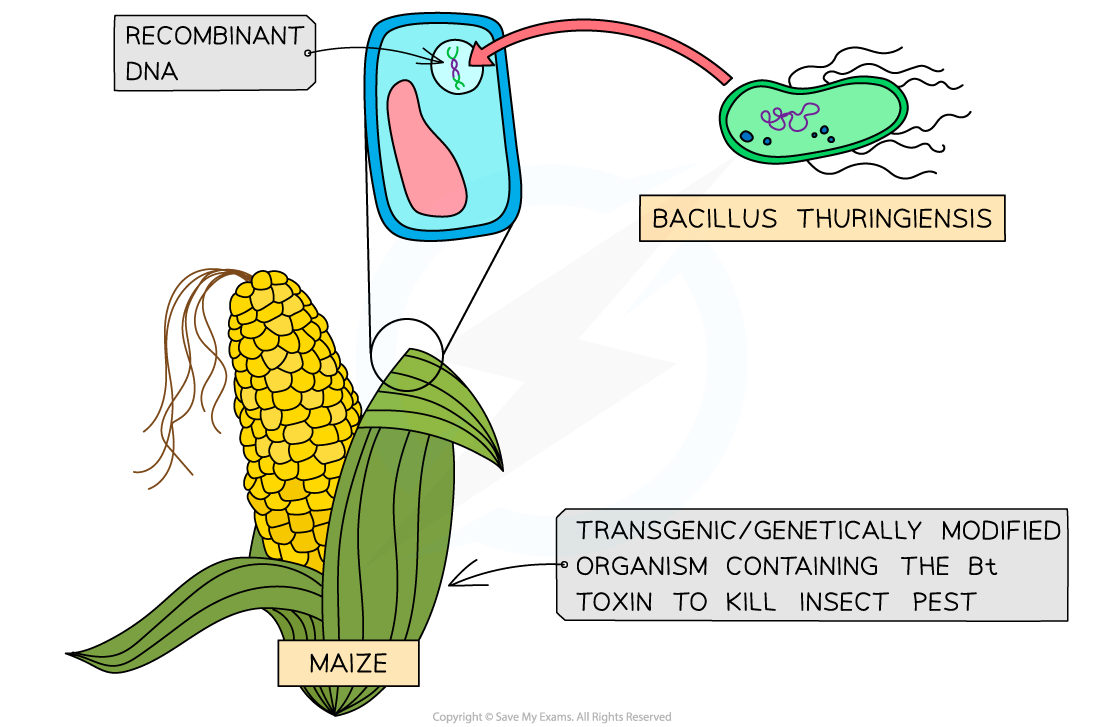
Maize has been genetically modified with a gene for the Bt toxin, which is taken from the bacterium Bacillus thuringiensis
-
Maize plants modified with the Bt toxin gene produce their own insecticide
-
When an insect ingests parts of the maize plant, the alkaline conditions in their guts activate the toxin (the toxin is harmless to vertebrates as their stomach is highly acidic), killing the insect
-
Different strains of B. thuringiensis produce different toxins which are toxic to different insect species
-
Insect populations have developed resistance to the genes for Bt toxin, reducing effectiveness as a means of protecting crops