
Biology_A-level_Cie
-
1-1-the-microscope-in-cell-studies5 主题
-
1-2-cells-as-the-basic-units-of-living-organisms5 主题
-
2-1-testing-for-biological-molecules3 主题
-
2-2-carbohydrates-and-lipids8 主题
-
2-3-proteins6 主题
-
2-4-water2 主题
-
3-1-mode-of-action-of-enzymes5 主题
-
3-2-factors-that-affect-enzyme-action8 主题
-
4-1-fluid-mosaic-membranes4 主题
-
4-2-movement-into-and-out-of-cells12 主题
-
diffusion
-
osmosis
-
active-transport
-
endocytosis-and-exocytosis
-
investigating-transport-processes-in-plants
-
investigating-diffusion
-
surface-area-to-volume-ratios
-
investigating-surface-area
-
estimating-water-potential-in-plants
-
osmosis-in-plant-cells
-
osmosis-in-animals
-
comparing-osmosis-in-plants-and-animals
-
diffusion
-
5-1-replication-and-division-of-nuclei-and-cells6 主题
-
5-2-chromosome-behaviour-in-mitosis2 主题
-
6-1-structure-of-nucleic-acids-and-replication-of-dna4 主题
-
6-2-protein-synthesis5 主题
-
7-1-structure-of-transport-tissues4 主题
-
7-2-transport-mechanisms7 主题
-
8-1-the-circulatory-system7 主题
-
8-2-transport-of-oxygen-and-carbon-dioxide5 主题
-
8-3-the-heart4 主题
-
9-1-the-gas-exchange-system6 主题
-
10-1-infectious-diseases3 主题
-
10-2-antibiotics3 主题
-
11-1-the-immune-system4 主题
-
11-2-antibodies-and-vaccination6 主题
-
12-1-energy5 主题
-
12-2-respiration11 主题
-
aerobic-respiration-the-krebs-cycle
-
aerobic-respiration-role-of-nad-and-fad
-
aerobic-respiration-oxidative-phosphorylation
-
anaerobic-respiration
-
energy-yield-aerobic-and-anaerobic-respiration
-
anaerobic-adaptation-of-rice
-
aerobic-respiration-effect-of-temperature-and-substrate-concentration
-
structure-and-function-of-mitochondria
-
the-four-stages-in-aerobic-respiration
-
aerobic-respiration-glycolysis
-
aerobic-respiration-the-link-reaction
-
aerobic-respiration-the-krebs-cycle
-
13-1-photosynthesis-as-an-energy-transfer-process8 主题
-
13-2-investigation-of-limiting-factors2 主题
-
14-1-homeostasis-in-mammals8 主题
-
14-2-homeostasis-in-plants3 主题
-
15-1-control-and-coordination-in-mammals12 主题
-
the-endocrine-system
-
the-nervous-system
-
neurones
-
sensory-receptor-cells
-
sequence-of-events-resulting-in-an-action-potential
-
transmission-of-nerve-impulses
-
speed-of-conduction-of-impulses
-
the-refractory-period
-
cholinergic-synapses
-
stimulating-contraction-in-striated-muscle
-
ultrastructure-of-striated-muscle
-
sliding-filament-model-of-muscular-contraction
-
the-endocrine-system
-
15-2-control-and-coordination-in-plants3 主题
-
16-1-passage-of-information-from-parents-to-offspring5 主题
-
16-2-the-roles-of-genes-in-determining-the-phenotype7 主题
-
16-3-gene-control3 主题
-
17-1-variation4 主题
-
17-2-natural-and-artificial-selection7 主题
-
17-3-evolution2 主题
-
18-1-classification5 主题
-
18-2-biodiversity7 主题
-
18-3-conservation6 主题
-
19-1-principles-of-genetic-technology11 主题
-
19-2-genetic-technology-applied-to-medicine4 主题
-
19-3-genetically-modified-organisms-in-agriculture2 主题
-
1-1-the-microscope-in-cell-studies
-
1-2-cells-as-the-basic-units-of-living-organisms
-
2-1-testing-for-biological-molecules
-
2-2-carbohydrates-and-lipids
-
2-3-proteins
-
2-4-water
-
3-1-mode-of-action-of-enzymes
-
3-2-factors-that-affect-enzyme-action
-
4-1-fluid-mosaic-membranes
-
4-2-movement-into-and-out-of-cells
-
5-1-replication-and-division-of-nuclei-and-cells
-
5-2-chromosome-behaviour-in-mitosis
-
6-1-structure-of-nucleic-acids-and-replication-of-dna
-
6-2-protein-synthesis
-
7-1-structure-of-transport-tissues
-
7-2-transport-mechanisms
-
8-1-the-circulatory-system
-
8-2-transport-of-oxygen-and-carbon-dioxide
-
8-3-the-heart
-
9-1-the-gas-exchange-system
-
10-1-infectious-diseases
-
10-2-antibiotics
-
11-1-the-immune-system
-
11-2-antibodies-and-vaccination
polymerase-chain-reaction
Polymerase chain reaction (PCR)
-
Polymerase chain reaction (PCR) is a common molecular biology technique used in most applications of gene technology, for example, DNA profiling (eg. identification of criminals and determining paternity) or genetic engineering
-
It can be described as an in vitro method of DNA amplification
-
It is used to produce large quantities of specific fragments of DNA or RNA from very small quantities (even just one molecule of DNA or RNA)
-
By using PCR, scientists can have billions of identical copies of the DNA or RNA sample within a few hours
-
-
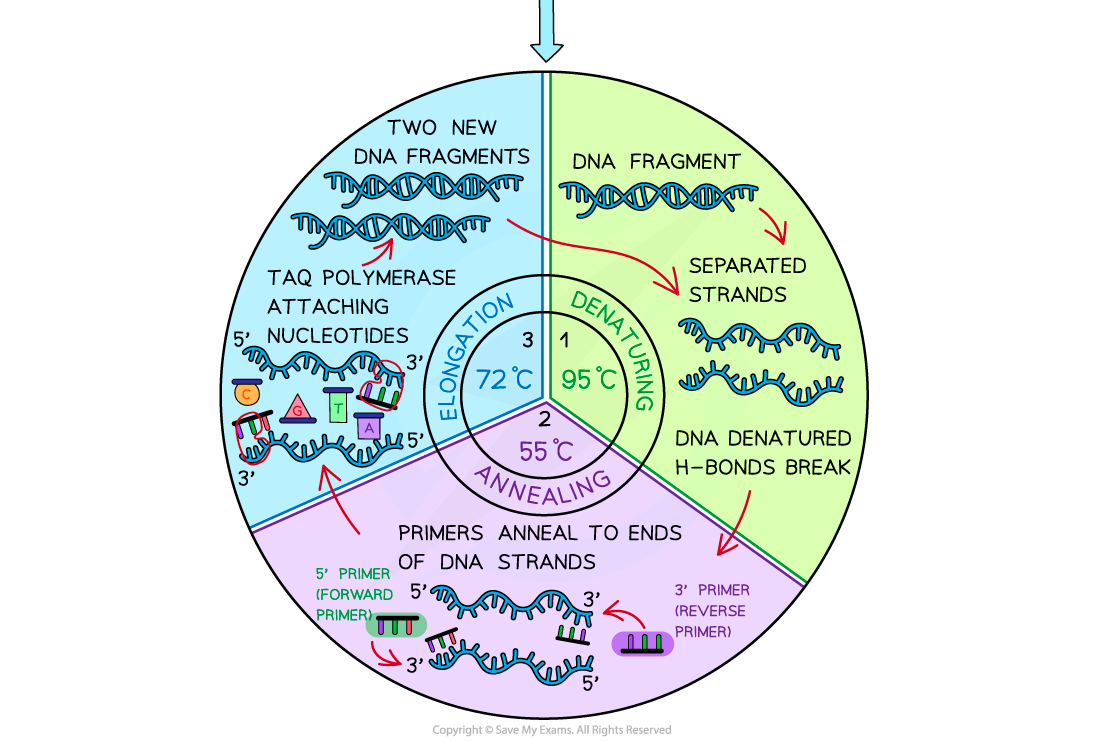
The PCR process involves three key stages per cycle. In each cycle, the DNA is doubled so in a standard run of 20 cycles a million DNA molecules are produced
-
The three stages are undertaken in a PCR instrument (or thermal cycler) which automatically provides the optimal temperature for each stage and controls the length of time spent at each stage
-
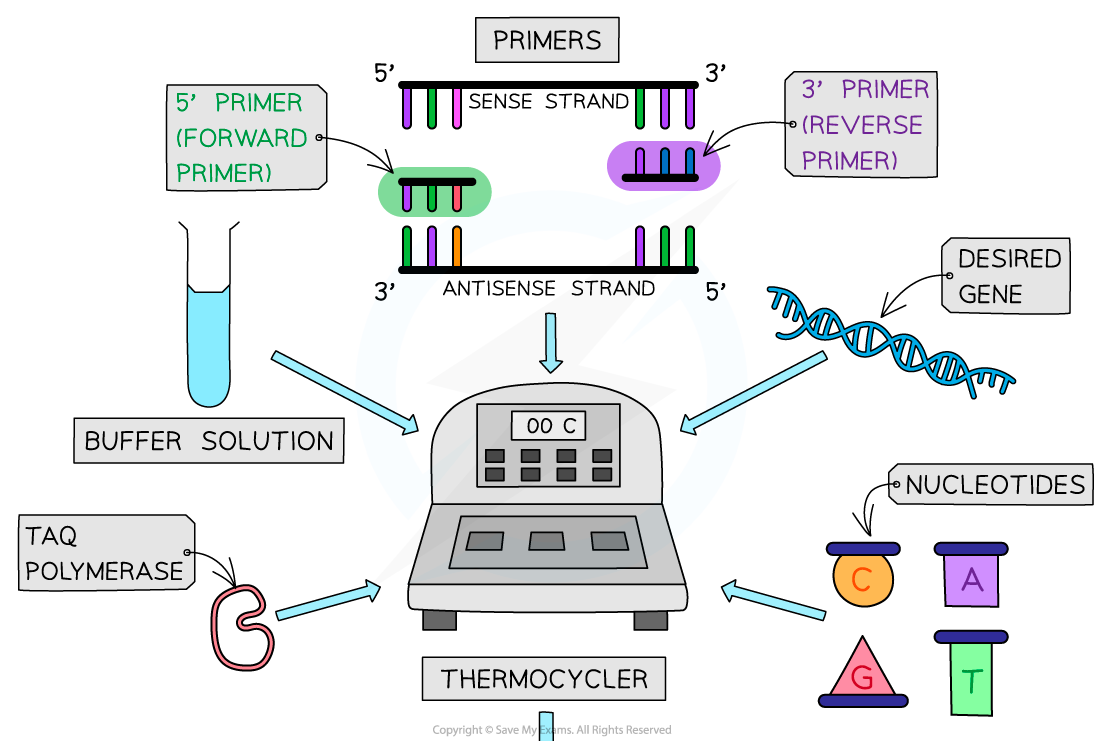
Requirements of PCR reaction
-
Target DNA or RNA being amplified
-
Primers (forward and reverse) – these are short sequences of single-stranded DNA that have base sequences complementary to the 3’ end of the DNA or RNA being copied
-
Primers define the region that is to be amplified by signalling to the DNA polymerase where to begin building the new strands
-
DNA polymerase – is the enzyme used to build the new DNA or RNA strand
-
The most commonly used polymerase is Taq polymerase as it comes from a thermophilic bacterium Thermus aquaticus which means it does not denature at the high temperature involved during the first stage of the PCR reaction
-
Secondly, its optimum temperature is high enough to prevent annealing of the DNA strands that have not been copied yet
-
-
Free nucleotides – used in the construction of the DNA or RNA strands
-
Buffer solution – to provide the optimum pH for the reactions to occur in
Stages of PCR reaction
-
Denaturation – the double-stranded DNA is heated to 95°C which breaks the hydrogen bonds that bond the two DNA strands together
-
Annealing – the temperature is decreased to between 50 – 60°C so that primers (forward and reverse ones) can anneal to the ends of the single strands of DNA
-
Elongation / Extension – the temperature is increased to 72°C for at least a minute, as this is the optimum temperature for Taq polymerase to build the complementary strands of DNA to produce the new identical double-stranded DNA molecules
Examiner Tips and Tricks
It is important to know the three stages and the temperatures the reactions occur at during the different stages. You must also know why the Taq polymerase is used in PCR.