
Biology_A-level_Cie
-
1-1-the-microscope-in-cell-studies5 主题
-
1-2-cells-as-the-basic-units-of-living-organisms5 主题
-
2-1-testing-for-biological-molecules3 主题
-
2-2-carbohydrates-and-lipids8 主题
-
2-3-proteins6 主题
-
2-4-water2 主题
-
3-1-mode-of-action-of-enzymes5 主题
-
3-2-factors-that-affect-enzyme-action8 主题
-
4-1-fluid-mosaic-membranes4 主题
-
4-2-movement-into-and-out-of-cells12 主题
-
diffusion
-
osmosis
-
active-transport
-
endocytosis-and-exocytosis
-
investigating-transport-processes-in-plants
-
investigating-diffusion
-
surface-area-to-volume-ratios
-
investigating-surface-area
-
estimating-water-potential-in-plants
-
osmosis-in-plant-cells
-
osmosis-in-animals
-
comparing-osmosis-in-plants-and-animals
-
diffusion
-
5-1-replication-and-division-of-nuclei-and-cells6 主题
-
5-2-chromosome-behaviour-in-mitosis2 主题
-
6-1-structure-of-nucleic-acids-and-replication-of-dna4 主题
-
6-2-protein-synthesis5 主题
-
7-1-structure-of-transport-tissues4 主题
-
7-2-transport-mechanisms7 主题
-
8-1-the-circulatory-system7 主题
-
8-2-transport-of-oxygen-and-carbon-dioxide5 主题
-
8-3-the-heart4 主题
-
9-1-the-gas-exchange-system6 主题
-
10-1-infectious-diseases3 主题
-
10-2-antibiotics3 主题
-
11-1-the-immune-system4 主题
-
11-2-antibodies-and-vaccination6 主题
-
12-1-energy5 主题
-
12-2-respiration11 主题
-
aerobic-respiration-the-krebs-cycle
-
aerobic-respiration-role-of-nad-and-fad
-
aerobic-respiration-oxidative-phosphorylation
-
anaerobic-respiration
-
energy-yield-aerobic-and-anaerobic-respiration
-
anaerobic-adaptation-of-rice
-
aerobic-respiration-effect-of-temperature-and-substrate-concentration
-
structure-and-function-of-mitochondria
-
the-four-stages-in-aerobic-respiration
-
aerobic-respiration-glycolysis
-
aerobic-respiration-the-link-reaction
-
aerobic-respiration-the-krebs-cycle
-
13-1-photosynthesis-as-an-energy-transfer-process8 主题
-
13-2-investigation-of-limiting-factors2 主题
-
14-1-homeostasis-in-mammals8 主题
-
14-2-homeostasis-in-plants3 主题
-
15-1-control-and-coordination-in-mammals12 主题
-
the-endocrine-system
-
the-nervous-system
-
neurones
-
sensory-receptor-cells
-
sequence-of-events-resulting-in-an-action-potential
-
transmission-of-nerve-impulses
-
speed-of-conduction-of-impulses
-
the-refractory-period
-
cholinergic-synapses
-
stimulating-contraction-in-striated-muscle
-
ultrastructure-of-striated-muscle
-
sliding-filament-model-of-muscular-contraction
-
the-endocrine-system
-
15-2-control-and-coordination-in-plants3 主题
-
16-1-passage-of-information-from-parents-to-offspring5 主题
-
16-2-the-roles-of-genes-in-determining-the-phenotype7 主题
-
16-3-gene-control3 主题
-
17-1-variation4 主题
-
17-2-natural-and-artificial-selection7 主题
-
17-3-evolution2 主题
-
18-1-classification5 主题
-
18-2-biodiversity7 主题
-
18-3-conservation6 主题
-
19-1-principles-of-genetic-technology11 主题
-
19-2-genetic-technology-applied-to-medicine4 主题
-
19-3-genetically-modified-organisms-in-agriculture2 主题
-
1-1-the-microscope-in-cell-studies
-
1-2-cells-as-the-basic-units-of-living-organisms
-
2-1-testing-for-biological-molecules
-
2-2-carbohydrates-and-lipids
-
2-3-proteins
-
2-4-water
-
3-1-mode-of-action-of-enzymes
-
3-2-factors-that-affect-enzyme-action
-
4-1-fluid-mosaic-membranes
-
4-2-movement-into-and-out-of-cells
-
5-1-replication-and-division-of-nuclei-and-cells
-
5-2-chromosome-behaviour-in-mitosis
-
6-1-structure-of-nucleic-acids-and-replication-of-dna
-
6-2-protein-synthesis
-
7-1-structure-of-transport-tissues
-
7-2-transport-mechanisms
-
8-1-the-circulatory-system
-
8-2-transport-of-oxygen-and-carbon-dioxide
-
8-3-the-heart
-
9-1-the-gas-exchange-system
-
10-1-infectious-diseases
-
10-2-antibiotics
-
11-1-the-immune-system
-
11-2-antibodies-and-vaccination
isolating-the-desired-gene
Isolating the desired gene
-
The gene with the specific characteristic that is required can be obtained in the following ways:
-
Extracting the gene from the DNA of a donor organism using enzymes (restriction endonucleases)
-
Using reverse transcriptase to synthesise a single strand of complementary DNA (cDNA) from the mRNA of a donor organism
-
Synthesising the gene artificially using nucleotides
-
Extraction of genes
-
The extraction of the gene (containing the desired nucleotide sequence) from the donor organism occurs using restriction endonucleases
-
Restriction endonucleases are a class of enzymes found in bacteria
-
They are used as a defence mechanism by bacteria against bacteriophages (viruses that infect bacteria, also known simply as phages)
-
-
The enzymes restrict a viral infection by cutting the viral genetic material into smaller pieces at specific nucleotide sequences within the molecule
-
This is why they are called restriction endonuclease (‘endo’ means within)
-
-
They are also referred to simply as restriction enzymes
-
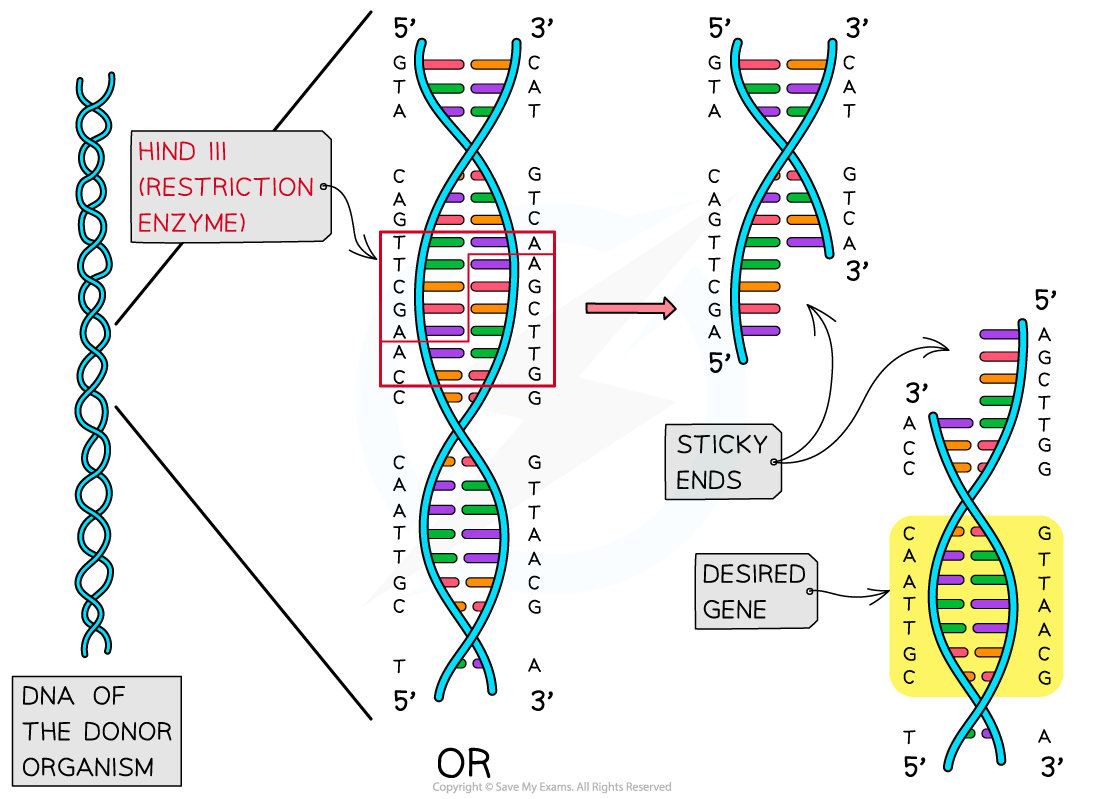
There are many different restriction endonucleases because each one binds to a specific restriction site (specific sequences of bases) on DNA, eg. HindIII will always bind to the base sequence AAGCTT
-
The restriction endonucleases are named according to the bacteria they are sourced from and which numbered enzyme it is from that source (eg. HindIII comes from Haemophilus influenzae and it is the third enzyme from that bacteria)
-
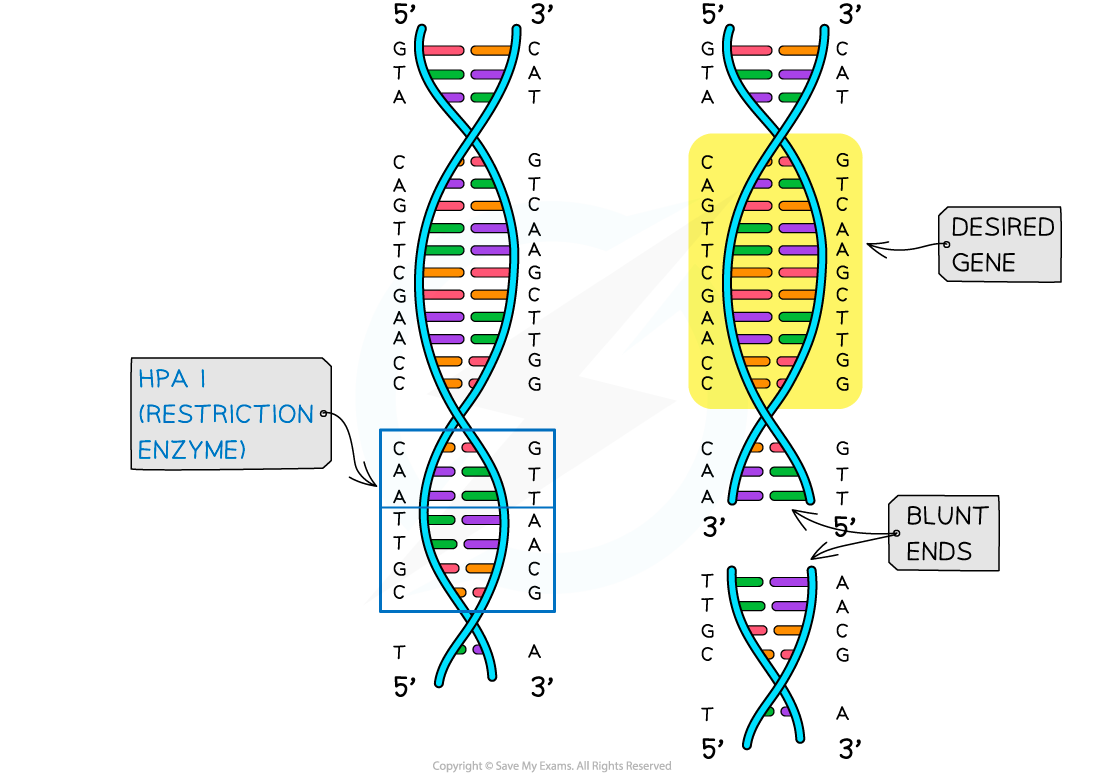
Restriction endonucleases will separate the two strands of DNA at the specific base sequence by ‘cutting’ the sugar-phosphate backbone in an uneven way to give sticky ends or straight across to give blunt ends
-
Sticky ends result in one strand of the DNA fragment being longer than the other strand
-
The sticky ends make it easier to insert the desired gene into another organism’s DNA as they can easily form hydrogen bonds with the complementary base sequences on other pieces of DNA that have been cut with the same restriction enzyme
-
When using genes isolated by restriction endonucleases that give blunt ends, nucleotides can be added to create sticky ends
mRNA and reverse transcriptase
-
Another method to isolate the desired gene is to use the mRNA that was transcribed for that gene
-
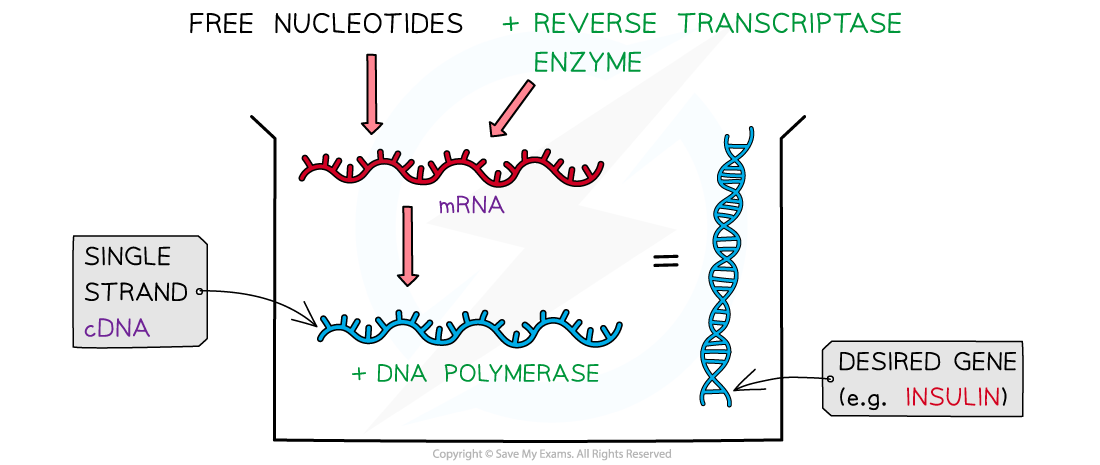
Once isolated, the mRNA is then combined with a reverse transcriptase enzyme and nucleotides to create a single strand of complementary DNA (cDNA)
-
Reverse transcriptase enzymes are sourced from retroviruses and they catalyse the reaction that reverses transcription
-
The mRNA is used as a template to make the cDNA
-
-
DNA polymerase is then used to convert the single strand of cDNA into a double-stranded DNA molecule that contains the desired code for the gene
-
This technique for isolating the desired gene is considered advantageous as it is easier for scientists to find the gene because specialised cells will make very specific types of mRNA (eg. β-cells of the pancreas produce many insulin mRNAs) and the mRNA (therefore the cDNA) does not contain introns
Artificial synthesis
-
As scientists are becoming more familiar with the base sequences for our proteins (proteome) it is possible to synthesise genes artificially
-
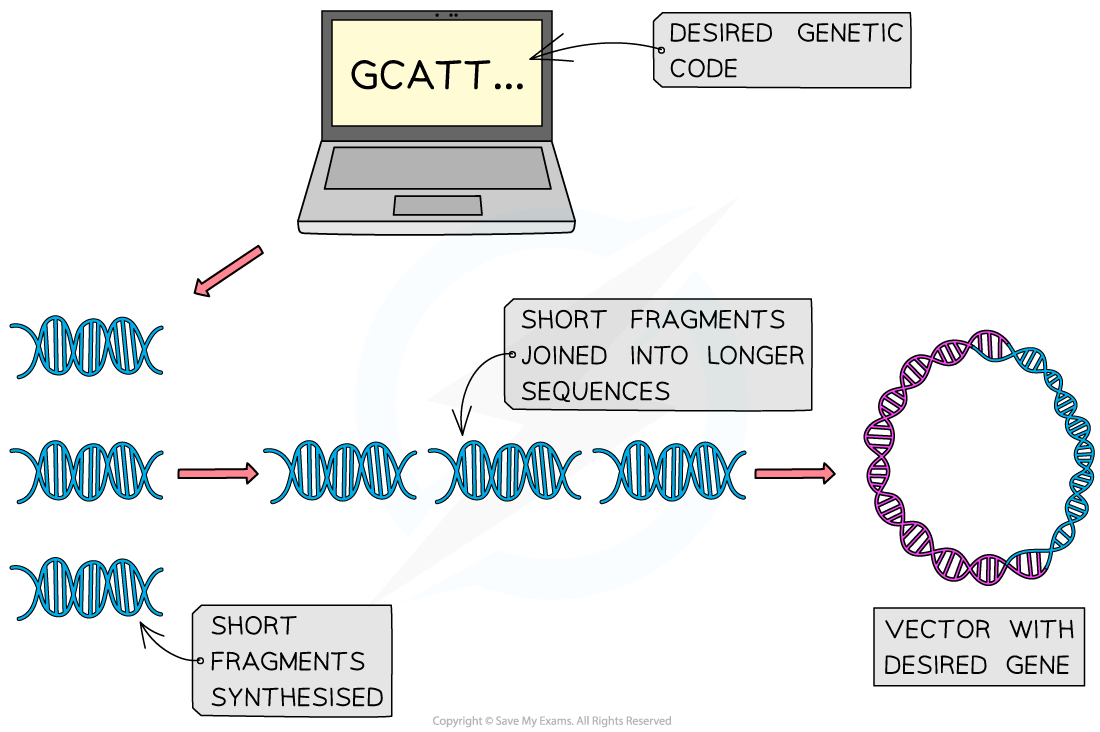
With the knowledge of the genetic code (that is, which amino acids are required), scientists use computers to generate the nucleotide sequence (rather than an mRNA template) to produce the gene
-
Short fragments of DNA are first produced that are joined to make longer sequences of nucleotides and then inserted into vectors (eg. plasmids)
-
This method is being used to create novel genes used to make vaccines and even to synthesise new bacterial genomes
-
This method has the advantage that a synthesised gene does not have to be cut out of an existing genome and will not contain introns or other unnecessary lengths of non-coding DNA
Examiner Tips and Tricks
In your answer it is important to include the names of the enzymes (restriction endonuclease, reverse transcriptase, DNA polymerase) and the product (cDNA).