
Biology_A-level_Cie
-
1-1-the-microscope-in-cell-studies5 主题
-
1-2-cells-as-the-basic-units-of-living-organisms5 主题
-
2-1-testing-for-biological-molecules3 主题
-
2-2-carbohydrates-and-lipids8 主题
-
2-3-proteins6 主题
-
2-4-water2 主题
-
3-1-mode-of-action-of-enzymes5 主题
-
3-2-factors-that-affect-enzyme-action8 主题
-
4-1-fluid-mosaic-membranes4 主题
-
4-2-movement-into-and-out-of-cells12 主题
-
diffusion
-
osmosis
-
active-transport
-
endocytosis-and-exocytosis
-
investigating-transport-processes-in-plants
-
investigating-diffusion
-
surface-area-to-volume-ratios
-
investigating-surface-area
-
estimating-water-potential-in-plants
-
osmosis-in-plant-cells
-
osmosis-in-animals
-
comparing-osmosis-in-plants-and-animals
-
diffusion
-
5-1-replication-and-division-of-nuclei-and-cells6 主题
-
5-2-chromosome-behaviour-in-mitosis2 主题
-
6-1-structure-of-nucleic-acids-and-replication-of-dna4 主题
-
6-2-protein-synthesis5 主题
-
7-1-structure-of-transport-tissues4 主题
-
7-2-transport-mechanisms7 主题
-
8-1-the-circulatory-system7 主题
-
8-2-transport-of-oxygen-and-carbon-dioxide5 主题
-
8-3-the-heart4 主题
-
9-1-the-gas-exchange-system6 主题
-
10-1-infectious-diseases3 主题
-
10-2-antibiotics3 主题
-
11-1-the-immune-system4 主题
-
11-2-antibodies-and-vaccination6 主题
-
12-1-energy5 主题
-
12-2-respiration11 主题
-
aerobic-respiration-the-krebs-cycle
-
aerobic-respiration-role-of-nad-and-fad
-
aerobic-respiration-oxidative-phosphorylation
-
anaerobic-respiration
-
energy-yield-aerobic-and-anaerobic-respiration
-
anaerobic-adaptation-of-rice
-
aerobic-respiration-effect-of-temperature-and-substrate-concentration
-
structure-and-function-of-mitochondria
-
the-four-stages-in-aerobic-respiration
-
aerobic-respiration-glycolysis
-
aerobic-respiration-the-link-reaction
-
aerobic-respiration-the-krebs-cycle
-
13-1-photosynthesis-as-an-energy-transfer-process8 主题
-
13-2-investigation-of-limiting-factors2 主题
-
14-1-homeostasis-in-mammals8 主题
-
14-2-homeostasis-in-plants3 主题
-
15-1-control-and-coordination-in-mammals12 主题
-
the-endocrine-system
-
the-nervous-system
-
neurones
-
sensory-receptor-cells
-
sequence-of-events-resulting-in-an-action-potential
-
transmission-of-nerve-impulses
-
speed-of-conduction-of-impulses
-
the-refractory-period
-
cholinergic-synapses
-
stimulating-contraction-in-striated-muscle
-
ultrastructure-of-striated-muscle
-
sliding-filament-model-of-muscular-contraction
-
the-endocrine-system
-
15-2-control-and-coordination-in-plants3 主题
-
16-1-passage-of-information-from-parents-to-offspring5 主题
-
16-2-the-roles-of-genes-in-determining-the-phenotype7 主题
-
16-3-gene-control3 主题
-
17-1-variation4 主题
-
17-2-natural-and-artificial-selection7 主题
-
17-3-evolution2 主题
-
18-1-classification5 主题
-
18-2-biodiversity7 主题
-
18-3-conservation6 主题
-
19-1-principles-of-genetic-technology11 主题
-
19-2-genetic-technology-applied-to-medicine4 主题
-
19-3-genetically-modified-organisms-in-agriculture2 主题
-
1-1-the-microscope-in-cell-studies
-
1-2-cells-as-the-basic-units-of-living-organisms
-
2-1-testing-for-biological-molecules
-
2-2-carbohydrates-and-lipids
-
2-3-proteins
-
2-4-water
-
3-1-mode-of-action-of-enzymes
-
3-2-factors-that-affect-enzyme-action
-
4-1-fluid-mosaic-membranes
-
4-2-movement-into-and-out-of-cells
-
5-1-replication-and-division-of-nuclei-and-cells
-
5-2-chromosome-behaviour-in-mitosis
-
6-1-structure-of-nucleic-acids-and-replication-of-dna
-
6-2-protein-synthesis
-
7-1-structure-of-transport-tissues
-
7-2-transport-mechanisms
-
8-1-the-circulatory-system
-
8-2-transport-of-oxygen-and-carbon-dioxide
-
8-3-the-heart
-
9-1-the-gas-exchange-system
-
10-1-infectious-diseases
-
10-2-antibiotics
-
11-1-the-immune-system
-
11-2-antibodies-and-vaccination
Kingdoms
-
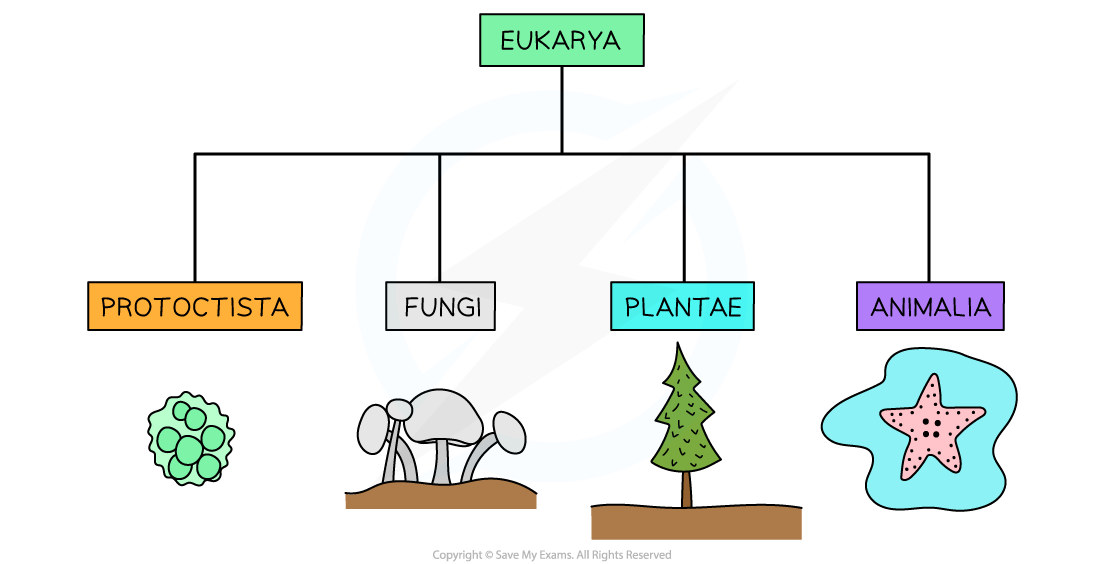
The domain Eukarya can be divided into 4 kingdoms:
-
Protoctista (protoctists)
-
Fungi
-
Plantae (plants)
-
Animalia (animals)
-
-
Organisms from each of the four kingdoms have distinct characteristics and features
-
Although they share similarities:
-
They have cells with membrane-bound nuclei separating genetic material from the cytoplasm
-
They have compartmentalisation within their cells as a result of the presence of other organelles
-
Kingdom Protoctista
-
All Protoctista are eukaryotic, and this broad group of cellular life encompasses all eukaryotic cells that do not belong to the other three eukaryotic kingdoms
-
Members of this kingdom show great diversity in all aspects of life including structure, life cycle, feeding and trophic levels and well as modes of locomotion
-
Protoctists can exist as single-celled organisms or as a group of similar cells
-
A group of Protoctista known as protozoa possess cells similar to animal cells
-
Their cells have no cell wall
-
-
Another group of Protoctista known as algae possess cells similar to plant cells
-
Their cells have cellulose cell walls and chloroplasts
-
Kingdom Fungi
-
The oldest organism in the world is thought to be a fungus aged somewhere between 1500 – 10,000 years old
-
All fungi are eukaryotic cells
-
The cells of fungi:
-
Possess non-cellulose cell walls (often made of the polysaccharides chitin and glucans)
-
Don’t have cilia
-
-
Fungi are heterotrophs:
-
They use organic compounds made by other organisms as their source of energy and molecules for metabolism
-
They obtain this energy and carbon by digesting dead/decaying matter extracellularly or from being parasites on living organisms
-
-
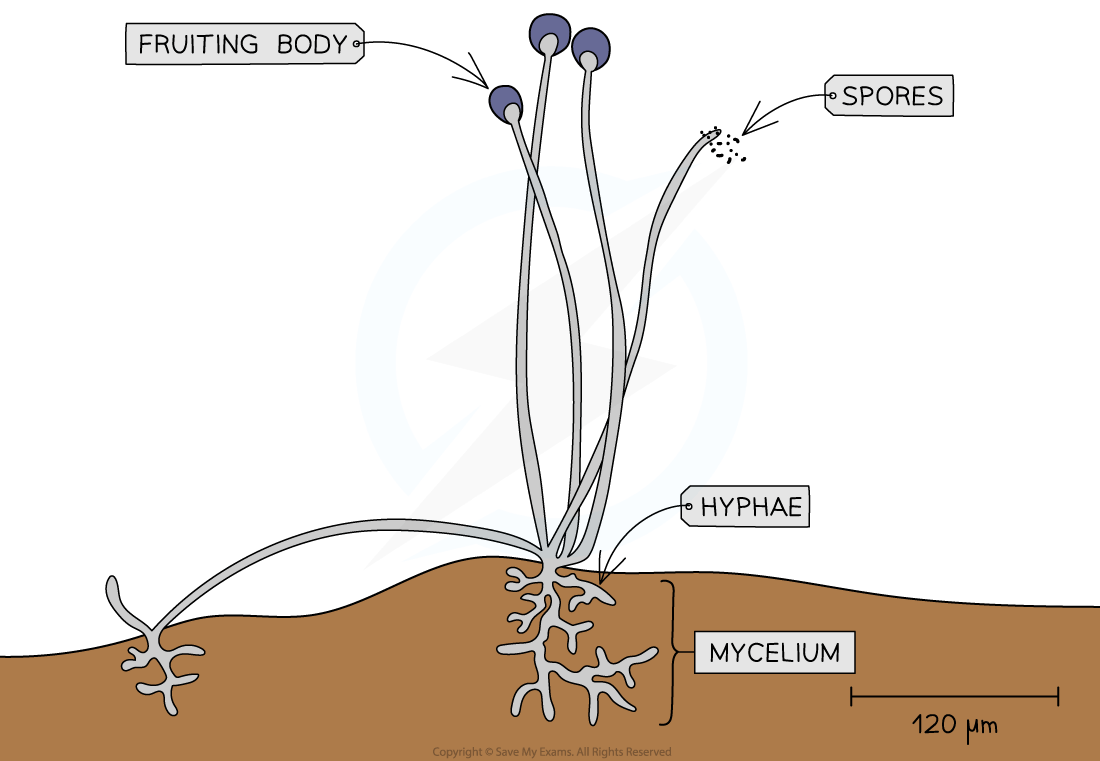
Fungi reproduce using spores that disperse onto the ground nearby
-
Fungi have a simple body form:
-
They can be unicellular (like the common baker’s yeast Saccharomyces cerevisiae
-
Some consist of long threads called hyphae that grow from the main fungus body (mycelium)
-
Larger fungi possess fruiting bodies that release large numbers of spores
-
Kingdom Plantae
-
Plants are multicellular eukaryotic organisms
-
Plant cells:
-
All have cell walls composed of cellulose
-
Possess large (and usually permanent) vacuoles that provide structural support
-
Are able to differentiate into specialised cells to form tissues and organs
-
Possess chloroplasts that enable photosynthesis (not all plant cells have chloroplasts)
-
Can sometimes have flagella
-
-
They are autotrophs
-
This means they can synthesise their organic compounds and molecules for energy use and building biomass from inorganic compounds
-
-
Plants have complex body forms
-
They have branching systems above and below the ground
-
Kingdom Animalia
-
Animals are also multicellular eukaryotic organisms
-
Animal cells:
-
Are able to differentiate into many different specialised cell types that can form tissues and organs
-
Have small temporary vacuoles (for example, lysosomes)
-
Have no cell walls
-
Sometimes have cilia
-
-
They are heterotrophs
-
They have a wide range of feeding mechanisms
-
-
They have a wide range of body forms:
-
Communication within their complex body forms takes place through a nervous system and chemical signalling
-