
Biology_A-level_Cie
-
1-1-the-microscope-in-cell-studies5 主题
-
1-2-cells-as-the-basic-units-of-living-organisms5 主题
-
2-1-testing-for-biological-molecules3 主题
-
2-2-carbohydrates-and-lipids8 主题
-
2-3-proteins6 主题
-
2-4-water2 主题
-
3-1-mode-of-action-of-enzymes5 主题
-
3-2-factors-that-affect-enzyme-action8 主题
-
4-1-fluid-mosaic-membranes4 主题
-
4-2-movement-into-and-out-of-cells12 主题
-
diffusion
-
osmosis
-
active-transport
-
endocytosis-and-exocytosis
-
investigating-transport-processes-in-plants
-
investigating-diffusion
-
surface-area-to-volume-ratios
-
investigating-surface-area
-
estimating-water-potential-in-plants
-
osmosis-in-plant-cells
-
osmosis-in-animals
-
comparing-osmosis-in-plants-and-animals
-
diffusion
-
5-1-replication-and-division-of-nuclei-and-cells6 主题
-
5-2-chromosome-behaviour-in-mitosis2 主题
-
6-1-structure-of-nucleic-acids-and-replication-of-dna4 主题
-
6-2-protein-synthesis5 主题
-
7-1-structure-of-transport-tissues4 主题
-
7-2-transport-mechanisms7 主题
-
8-1-the-circulatory-system7 主题
-
8-2-transport-of-oxygen-and-carbon-dioxide5 主题
-
8-3-the-heart4 主题
-
9-1-the-gas-exchange-system6 主题
-
10-1-infectious-diseases3 主题
-
10-2-antibiotics3 主题
-
11-1-the-immune-system4 主题
-
11-2-antibodies-and-vaccination6 主题
-
12-1-energy5 主题
-
12-2-respiration11 主题
-
aerobic-respiration-the-krebs-cycle
-
aerobic-respiration-role-of-nad-and-fad
-
aerobic-respiration-oxidative-phosphorylation
-
anaerobic-respiration
-
energy-yield-aerobic-and-anaerobic-respiration
-
anaerobic-adaptation-of-rice
-
aerobic-respiration-effect-of-temperature-and-substrate-concentration
-
structure-and-function-of-mitochondria
-
the-four-stages-in-aerobic-respiration
-
aerobic-respiration-glycolysis
-
aerobic-respiration-the-link-reaction
-
aerobic-respiration-the-krebs-cycle
-
13-1-photosynthesis-as-an-energy-transfer-process8 主题
-
13-2-investigation-of-limiting-factors2 主题
-
14-1-homeostasis-in-mammals8 主题
-
14-2-homeostasis-in-plants3 主题
-
15-1-control-and-coordination-in-mammals12 主题
-
the-endocrine-system
-
the-nervous-system
-
neurones
-
sensory-receptor-cells
-
sequence-of-events-resulting-in-an-action-potential
-
transmission-of-nerve-impulses
-
speed-of-conduction-of-impulses
-
the-refractory-period
-
cholinergic-synapses
-
stimulating-contraction-in-striated-muscle
-
ultrastructure-of-striated-muscle
-
sliding-filament-model-of-muscular-contraction
-
the-endocrine-system
-
15-2-control-and-coordination-in-plants3 主题
-
16-1-passage-of-information-from-parents-to-offspring5 主题
-
16-2-the-roles-of-genes-in-determining-the-phenotype7 主题
-
16-3-gene-control3 主题
-
17-1-variation4 主题
-
17-2-natural-and-artificial-selection7 主题
-
17-3-evolution2 主题
-
18-1-classification5 主题
-
18-2-biodiversity7 主题
-
18-3-conservation6 主题
-
19-1-principles-of-genetic-technology11 主题
-
19-2-genetic-technology-applied-to-medicine4 主题
-
19-3-genetically-modified-organisms-in-agriculture2 主题
-
1-1-the-microscope-in-cell-studies
-
1-2-cells-as-the-basic-units-of-living-organisms
-
2-1-testing-for-biological-molecules
-
2-2-carbohydrates-and-lipids
-
2-3-proteins
-
2-4-water
-
3-1-mode-of-action-of-enzymes
-
3-2-factors-that-affect-enzyme-action
-
4-1-fluid-mosaic-membranes
-
4-2-movement-into-and-out-of-cells
-
5-1-replication-and-division-of-nuclei-and-cells
-
5-2-chromosome-behaviour-in-mitosis
-
6-1-structure-of-nucleic-acids-and-replication-of-dna
-
6-2-protein-synthesis
-
7-1-structure-of-transport-tissues
-
7-2-transport-mechanisms
-
8-1-the-circulatory-system
-
8-2-transport-of-oxygen-and-carbon-dioxide
-
8-3-the-heart
-
9-1-the-gas-exchange-system
-
10-1-infectious-diseases
-
10-2-antibiotics
-
11-1-the-immune-system
-
11-2-antibodies-and-vaccination
allopatric-and-sympatric-speciation
Allopatric & sympatric speciation
-
Evolution causes speciation: the formation of new species from pre-existing species over time, as a result of changes to gene pools from generation to generation
-
Genetic isolation between the new population and the pre-existing species population is necessary for speciation
-
There are two different situations when speciation can take place:
-
Two groups within a species are separated by a geographic barrier
-
Two groups of species are reproductively isolated but still living in the same area (experiencing similar environmental selection pressures)
-
Allopatric speciation
-
Allopatric speciation occurs as a result of geographical isolation
-
It is the most common type of speciation
-
A species population splits into one or more groups which then become separated from each other by geographical barriers
-
The barrier could be natural like a body of water, or a mountain range
-
It can also be man-made (like a motorway)
-
-
This separation creates two populations of the same species who are isolated from each other, and as a result, no genetic exchange can occur between them
-
If there is sufficient selection pressure or genetic drift acting to change the gene pools within both populations then eventually these populations will diverge and form separate species
-
The changes in the alleles/genes of each population will affect the phenotypes present in both populations
-
Over time, the two populations may begin to differ physiologically, behaviourally and morphologically (structurally)
-
Example of allopatric speciation in trees
-
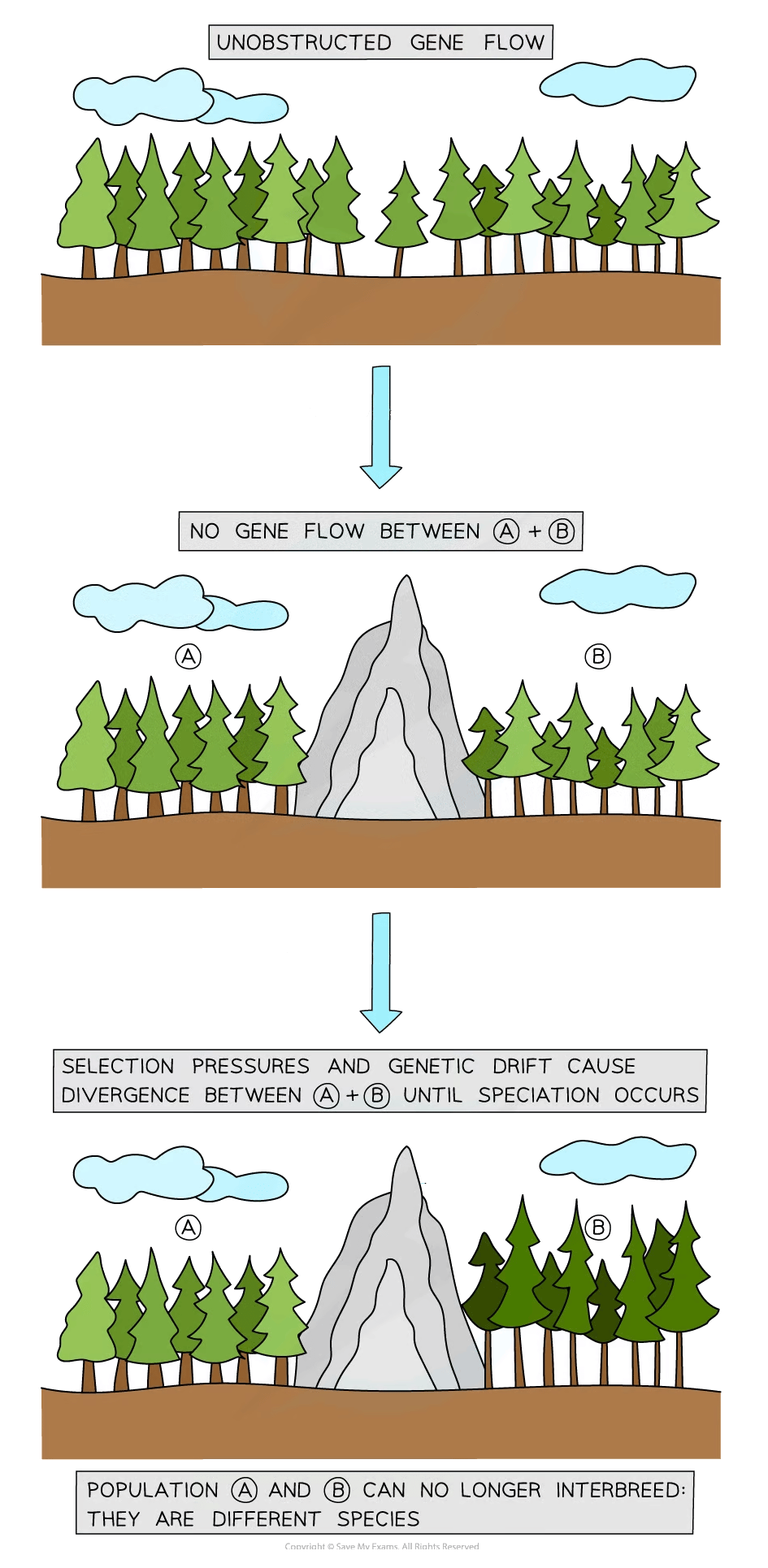
Imagine there is a population of trees that are all one species
-
A new mountain range forms that divides the population into two
-
The natural barrier prevents the two groups from interbreeding, so there is no gene flow between them
-
The two populations experience different selection pressures and genetic drift
-
Over thousands of years the divided populations form two distinct species that can no longer interbreed
Sympatric speciation
-
Sympatric speciation takes place with no geographical barrier
-
A group of the same species could be living in the same place but in order for speciation to take place there must exist two populations within that group and no gene flow occurs between them
-
Something has to happen that splits or separates the population:
-
Ecological separation: Populations are separated because they live in different environments within the same area
-
For example, soil pH can differ greatly in different areas
-
Soil pH has a major effect on plant growth and flowering
-
-
Behavioural separation: Populations are separated because they have different behaviours
-
For example differences in feeding, communication or social behaviour
-
-
Example of sympatric speciation in fish
-
A species of fish lives in a lake
-
Some individuals within the population feed on the bottom while others remain higher up in the open water
-
The different feeding behaviours separate the population into different environments
-
Behavioural separation leads to ecological separation
-
-
The separated groups experience different selection pressures
-
Long jaws are advantageous for bottom-feeding whereas shorter jaws are advantageous for mid-water feeding
-
-
Over time natural selection causes the populations to diverge and evolve different courtship displays
-
They can no longer interbreed; they are separate species
Examiner Tips and Tricks
When looking at cases of sympatric speciation try not to confuse the factors that originally caused a separation between the populations vs the factors that then prevent them from breeding after genetic isolation. For the example of the fish: the difference in feeding behaviour is what originally causes separation but it is a difference in courtship displays (which is caused by genetic isolation) that prevents them from breeding together.
Also, do not forget that speciation is reliant on mutation! Without mutation, there are no new alleles or genes for selection to act on. The change in genetic material by mutation is important as it is what produces the differences in physiology, behaviour and morphology between species.