
Biology_A-level_Cie
-
1-1-the-microscope-in-cell-studies5 主题
-
1-2-cells-as-the-basic-units-of-living-organisms5 主题
-
2-1-testing-for-biological-molecules3 主题
-
2-2-carbohydrates-and-lipids8 主题
-
2-3-proteins6 主题
-
2-4-water2 主题
-
3-1-mode-of-action-of-enzymes5 主题
-
3-2-factors-that-affect-enzyme-action8 主题
-
4-1-fluid-mosaic-membranes4 主题
-
4-2-movement-into-and-out-of-cells12 主题
-
diffusion
-
osmosis
-
active-transport
-
endocytosis-and-exocytosis
-
investigating-transport-processes-in-plants
-
investigating-diffusion
-
surface-area-to-volume-ratios
-
investigating-surface-area
-
estimating-water-potential-in-plants
-
osmosis-in-plant-cells
-
osmosis-in-animals
-
comparing-osmosis-in-plants-and-animals
-
diffusion
-
5-1-replication-and-division-of-nuclei-and-cells6 主题
-
5-2-chromosome-behaviour-in-mitosis2 主题
-
6-1-structure-of-nucleic-acids-and-replication-of-dna4 主题
-
6-2-protein-synthesis5 主题
-
7-1-structure-of-transport-tissues4 主题
-
7-2-transport-mechanisms7 主题
-
8-1-the-circulatory-system7 主题
-
8-2-transport-of-oxygen-and-carbon-dioxide5 主题
-
8-3-the-heart4 主题
-
9-1-the-gas-exchange-system6 主题
-
10-1-infectious-diseases3 主题
-
10-2-antibiotics3 主题
-
11-1-the-immune-system4 主题
-
11-2-antibodies-and-vaccination6 主题
-
12-1-energy5 主题
-
12-2-respiration11 主题
-
aerobic-respiration-the-krebs-cycle
-
aerobic-respiration-role-of-nad-and-fad
-
aerobic-respiration-oxidative-phosphorylation
-
anaerobic-respiration
-
energy-yield-aerobic-and-anaerobic-respiration
-
anaerobic-adaptation-of-rice
-
aerobic-respiration-effect-of-temperature-and-substrate-concentration
-
structure-and-function-of-mitochondria
-
the-four-stages-in-aerobic-respiration
-
aerobic-respiration-glycolysis
-
aerobic-respiration-the-link-reaction
-
aerobic-respiration-the-krebs-cycle
-
13-1-photosynthesis-as-an-energy-transfer-process8 主题
-
13-2-investigation-of-limiting-factors2 主题
-
14-1-homeostasis-in-mammals8 主题
-
14-2-homeostasis-in-plants3 主题
-
15-1-control-and-coordination-in-mammals12 主题
-
the-endocrine-system
-
the-nervous-system
-
neurones
-
sensory-receptor-cells
-
sequence-of-events-resulting-in-an-action-potential
-
transmission-of-nerve-impulses
-
speed-of-conduction-of-impulses
-
the-refractory-period
-
cholinergic-synapses
-
stimulating-contraction-in-striated-muscle
-
ultrastructure-of-striated-muscle
-
sliding-filament-model-of-muscular-contraction
-
the-endocrine-system
-
15-2-control-and-coordination-in-plants3 主题
-
16-1-passage-of-information-from-parents-to-offspring5 主题
-
16-2-the-roles-of-genes-in-determining-the-phenotype7 主题
-
16-3-gene-control3 主题
-
17-1-variation4 主题
-
17-2-natural-and-artificial-selection7 主题
-
17-3-evolution2 主题
-
18-1-classification5 主题
-
18-2-biodiversity7 主题
-
18-3-conservation6 主题
-
19-1-principles-of-genetic-technology11 主题
-
19-2-genetic-technology-applied-to-medicine4 主题
-
19-3-genetically-modified-organisms-in-agriculture2 主题
-
1-1-the-microscope-in-cell-studies
-
1-2-cells-as-the-basic-units-of-living-organisms
-
2-1-testing-for-biological-molecules
-
2-2-carbohydrates-and-lipids
-
2-3-proteins
-
2-4-water
-
3-1-mode-of-action-of-enzymes
-
3-2-factors-that-affect-enzyme-action
-
4-1-fluid-mosaic-membranes
-
4-2-movement-into-and-out-of-cells
-
5-1-replication-and-division-of-nuclei-and-cells
-
5-2-chromosome-behaviour-in-mitosis
-
6-1-structure-of-nucleic-acids-and-replication-of-dna
-
6-2-protein-synthesis
-
7-1-structure-of-transport-tissues
-
7-2-transport-mechanisms
-
8-1-the-circulatory-system
-
8-2-transport-of-oxygen-and-carbon-dioxide
-
8-3-the-heart
-
9-1-the-gas-exchange-system
-
10-1-infectious-diseases
-
10-2-antibiotics
-
11-1-the-immune-system
-
11-2-antibodies-and-vaccination
key-terms-in-genetics
Key terms in genetics
Genes and alleles
-
The DNA contained within chromosomes is essential for cell survival
-
Every chromosome consists of a long DNA molecule which codes for several different proteins
-
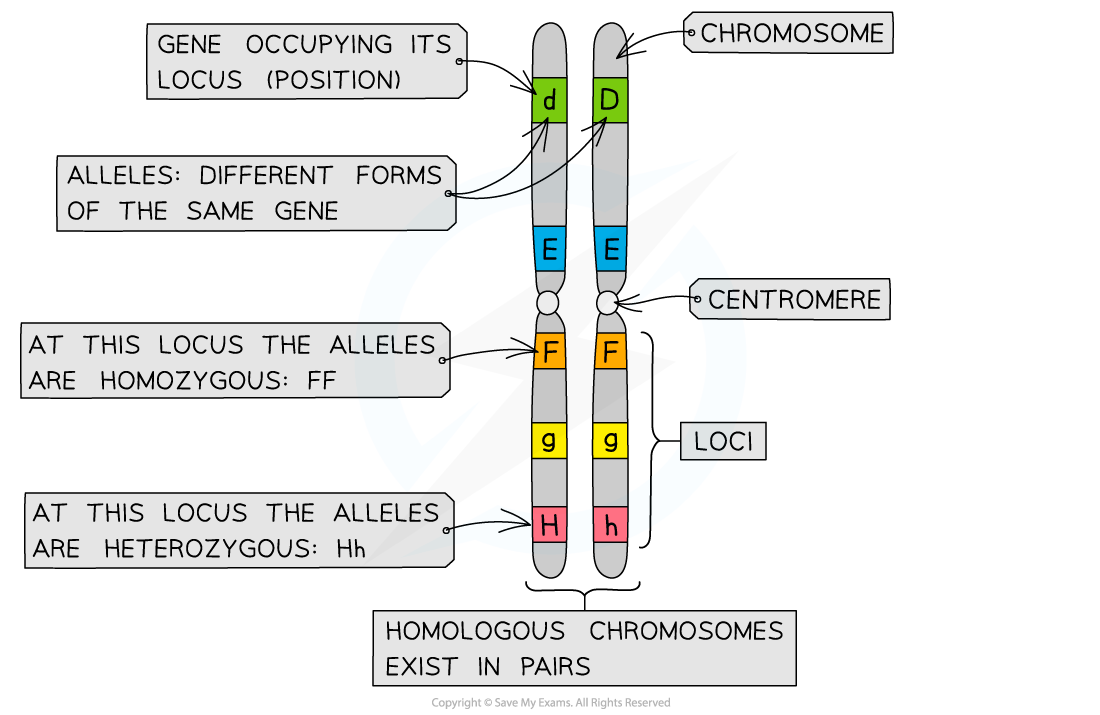
A length of DNA that codes for a single polypeptide or protein is called a gene
-
The position of a gene on a chromosome is its locus (plural: loci)
-
Each gene can exist in two or more different forms called alleles
-
Different alleles of a gene have slightly different nucleotide sequences but they still occupy the same position (locus) on the chromosome
Example of alleles
-
One of the genes for coat colour in horses is Agouti
-
This gene for coat colour is found on the same position on the same chromosome for all horses
-
Hypothetically there are two different alleles of that gene found in horses: A and a
-
Each allele can produce a different coat colour:
-
Allele A → black coat
-
Allele a → chestnut coat
-
Genotype and phenotype
-
The chromosomes of eukaryotic cells occur in homologous pairs (there are two copies of each chromosome)
-
As a result cells have two copies of every gene
-
As there are two copies of a gene present in an individual that means there can be different allele combinations within an individual
-
The genotype of an organism refers to the alleles of a gene possessed by that individual. The different alleles can be represented by letters
-
When the two allele copies are identical in an individual they are said to be homozygous
-
When the two allele copies are different in an individual they are said to be heterozygous
-
The genotype of an individual affects their phenotype
-
A phenotype is the observable characteristics of an organism
Example of genotype and phenotype
-
Every horse has two copies of the coat colour gene in all of their cells
-
A horse that has two black coat alleles A has the genotype AA and is homozygous
-
The phenotype of this horse would be a black coat
-
-
In contrast a horse that has one black coat allele A and one chestnut coat allele a would have the genotype Aa and is heterozygous
-
The phenotype of this horse would also be a black coat
-
-
A horse that has two coat alleles a has the genotype aa and is homozygous
-
The phenotype of this horse would be chestnut
-
Dominance
-
Not all alleles affect the phenotype in the same way
-
Some alleles are dominant and represented by the capital letter:
-
They are always expressed in the phenotype
-
This means they are expressed in both heterozygous and homozygous individuals
-
-
Others are recessive and represented by the lower case letter
-
They are only expressed in the phenotype if no dominant allele is present
-
This means that it is only expressed when present in a homozygous individual
-
Example of dominance
-
If for horses the allele A for a black coat is dominant and the allele a for a chestnut coat is recessive the following genotypes and phenotypes occur:
-
Genotype AA → black coat
-
Genotype Aa → black coat
-
Genotype aa → chestnut coat
-
Codominance
-
Sometimes both alleles can be expressed in the phenotype at the same time
-
This is known as codominance
-
When an individual is heterozygous they will express both alleles in their phenotype
-
When writing the genotype for codominance the gene is symbolised as the capital letter and the alleles are represented by different superscript letters, for example IAIA
Example of codominance
-
Blood Groups
-
A good example of codominance can be seen in human blood types
-
The gene for blood types is represented in the genotype by I and the three alleles for human blood types are represented by A, B and O
-
Allele for blood type O is recessive to both group A and group B alleles
-
Allele A results in blood type A (IAIA or IAIO) and allele B results in blood type B (IBIB or IBIO)
-
If both allele A and allele B are present in a heterozygous individual they will have blood type AB (IAIB)
-
-
Feather Colour

F1, F2 and test crosses
-
When a homozygous dominant individual is crossed with a homozygous recessive individual the offspring are called the F1 generation
-
All of the F1 generation are heterozygous
-
-
If two individuals from the F1 generation are then crossed, the offspring they produce are called the F2 generation
-
A test cross can be used to try and deduce the genotype of an unknown individual that is expressing a dominant phenotype
-
The individual in question is crossed with an individual that is expressing the recessive phenotype
-
The resulting phenotypes of the offspring provide sufficient information to suggest the genotype of the unknown individual
-
If there are any offspring expressing the recessive phenotype then the unknown individual must have a heterozygous genotype
-
Linkage
-
There are two types of linkage in genetics: sex linkage and autosomal linkage
-
Sex linkage:
-
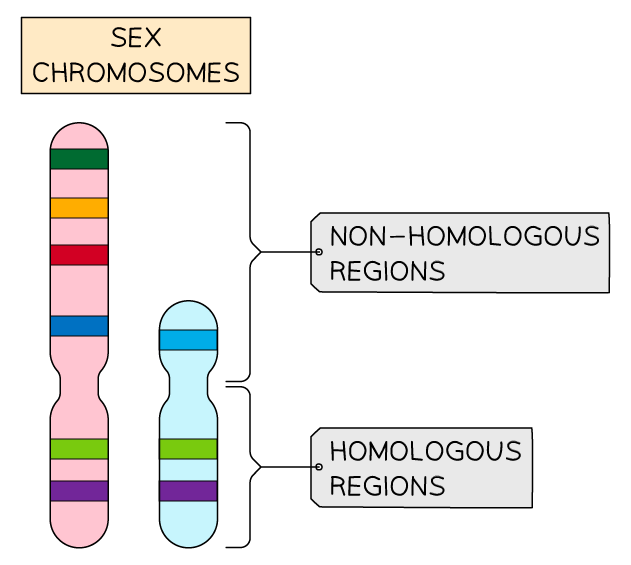
There are two sex chromosomes: X and Y
-
Women have two copies of the X chromosome (XX) whereas men have one X chromosome and one shorter Y chromosome (XY)
-
Some genes are found on a region of a sex chromosome X that is not present on the sex chromosome Y
-
This is called the non-homologous region
-
-
As the inheritance of these genes is dependent on the sex of the individual they are called sex-linked genes
-
Most often sex-linked genes are found on the longer X chromosome
-
Haemophilia is well known example of a sex-linked disease
-
-
Sex-linked genes are represented in the genotype by writing the alleles as superscript next to the sex chromosome.
-
For example a particular gene that is found only on the X chromosome has two alleles G and g. The genotype of a heterozygous female would be written as XGXg. A males genotype would be written as XGY
-
-
-
Autosomal linkage:
-
This occurs on the autosomes
-
Two or more genes on the same chromosome do not assort independently during meiosis
-
These genes are linked and they stay together in the original parental combination
-
Examiner Tips and Tricks
When referring to the different alleles be careful about your notation:
-
When describing a dominant allele use capitals (for example allele B )
-
When describing a recessive allele use lower case ( for example allele b ).
-
Be careful when choosing the letters to represent the alleles when writing the genotype. Use letters that are easy to distinguish between the capital and the lower case (e.g., B and b).