
Biology_A-level_Cie
-
1-1-the-microscope-in-cell-studies5 主题
-
1-2-cells-as-the-basic-units-of-living-organisms5 主题
-
2-1-testing-for-biological-molecules3 主题
-
2-2-carbohydrates-and-lipids8 主题
-
2-3-proteins6 主题
-
2-4-water2 主题
-
3-1-mode-of-action-of-enzymes5 主题
-
3-2-factors-that-affect-enzyme-action8 主题
-
4-1-fluid-mosaic-membranes4 主题
-
4-2-movement-into-and-out-of-cells12 主题
-
diffusion
-
osmosis
-
active-transport
-
endocytosis-and-exocytosis
-
investigating-transport-processes-in-plants
-
investigating-diffusion
-
surface-area-to-volume-ratios
-
investigating-surface-area
-
estimating-water-potential-in-plants
-
osmosis-in-plant-cells
-
osmosis-in-animals
-
comparing-osmosis-in-plants-and-animals
-
diffusion
-
5-1-replication-and-division-of-nuclei-and-cells6 主题
-
5-2-chromosome-behaviour-in-mitosis2 主题
-
6-1-structure-of-nucleic-acids-and-replication-of-dna4 主题
-
6-2-protein-synthesis5 主题
-
7-1-structure-of-transport-tissues4 主题
-
7-2-transport-mechanisms7 主题
-
8-1-the-circulatory-system7 主题
-
8-2-transport-of-oxygen-and-carbon-dioxide5 主题
-
8-3-the-heart4 主题
-
9-1-the-gas-exchange-system6 主题
-
10-1-infectious-diseases3 主题
-
10-2-antibiotics3 主题
-
11-1-the-immune-system4 主题
-
11-2-antibodies-and-vaccination6 主题
-
12-1-energy5 主题
-
12-2-respiration11 主题
-
aerobic-respiration-the-krebs-cycle
-
aerobic-respiration-role-of-nad-and-fad
-
aerobic-respiration-oxidative-phosphorylation
-
anaerobic-respiration
-
energy-yield-aerobic-and-anaerobic-respiration
-
anaerobic-adaptation-of-rice
-
aerobic-respiration-effect-of-temperature-and-substrate-concentration
-
structure-and-function-of-mitochondria
-
the-four-stages-in-aerobic-respiration
-
aerobic-respiration-glycolysis
-
aerobic-respiration-the-link-reaction
-
aerobic-respiration-the-krebs-cycle
-
13-1-photosynthesis-as-an-energy-transfer-process8 主题
-
13-2-investigation-of-limiting-factors2 主题
-
14-1-homeostasis-in-mammals8 主题
-
14-2-homeostasis-in-plants3 主题
-
15-1-control-and-coordination-in-mammals12 主题
-
the-endocrine-system
-
the-nervous-system
-
neurones
-
sensory-receptor-cells
-
sequence-of-events-resulting-in-an-action-potential
-
transmission-of-nerve-impulses
-
speed-of-conduction-of-impulses
-
the-refractory-period
-
cholinergic-synapses
-
stimulating-contraction-in-striated-muscle
-
ultrastructure-of-striated-muscle
-
sliding-filament-model-of-muscular-contraction
-
the-endocrine-system
-
15-2-control-and-coordination-in-plants3 主题
-
16-1-passage-of-information-from-parents-to-offspring5 主题
-
16-2-the-roles-of-genes-in-determining-the-phenotype7 主题
-
16-3-gene-control3 主题
-
17-1-variation4 主题
-
17-2-natural-and-artificial-selection7 主题
-
17-3-evolution2 主题
-
18-1-classification5 主题
-
18-2-biodiversity7 主题
-
18-3-conservation6 主题
-
19-1-principles-of-genetic-technology11 主题
-
19-2-genetic-technology-applied-to-medicine4 主题
-
19-3-genetically-modified-organisms-in-agriculture2 主题
-
1-1-the-microscope-in-cell-studies
-
1-2-cells-as-the-basic-units-of-living-organisms
-
2-1-testing-for-biological-molecules
-
2-2-carbohydrates-and-lipids
-
2-3-proteins
-
2-4-water
-
3-1-mode-of-action-of-enzymes
-
3-2-factors-that-affect-enzyme-action
-
4-1-fluid-mosaic-membranes
-
4-2-movement-into-and-out-of-cells
-
5-1-replication-and-division-of-nuclei-and-cells
-
5-2-chromosome-behaviour-in-mitosis
-
6-1-structure-of-nucleic-acids-and-replication-of-dna
-
6-2-protein-synthesis
-
7-1-structure-of-transport-tissues
-
7-2-transport-mechanisms
-
8-1-the-circulatory-system
-
8-2-transport-of-oxygen-and-carbon-dioxide
-
8-3-the-heart
-
9-1-the-gas-exchange-system
-
10-1-infectious-diseases
-
10-2-antibiotics
-
11-1-the-immune-system
-
11-2-antibodies-and-vaccination
meiosis-in-animal-and-plant-cells
Meiosis in animal & plant cells
-
Meiosis is a form of nuclear division that results in the production of haploid cells from diploid cells
-
It produces gametes in plants and animals that are used in sexual reproduction
-
It has many similarities to mitosis however it has two divisions: meiosis I and meiosis II
-
Within each division there are the following stages: prophase, metaphase, anaphase and telophase
First division of meiosis: Meiosis I
Prophase I
-
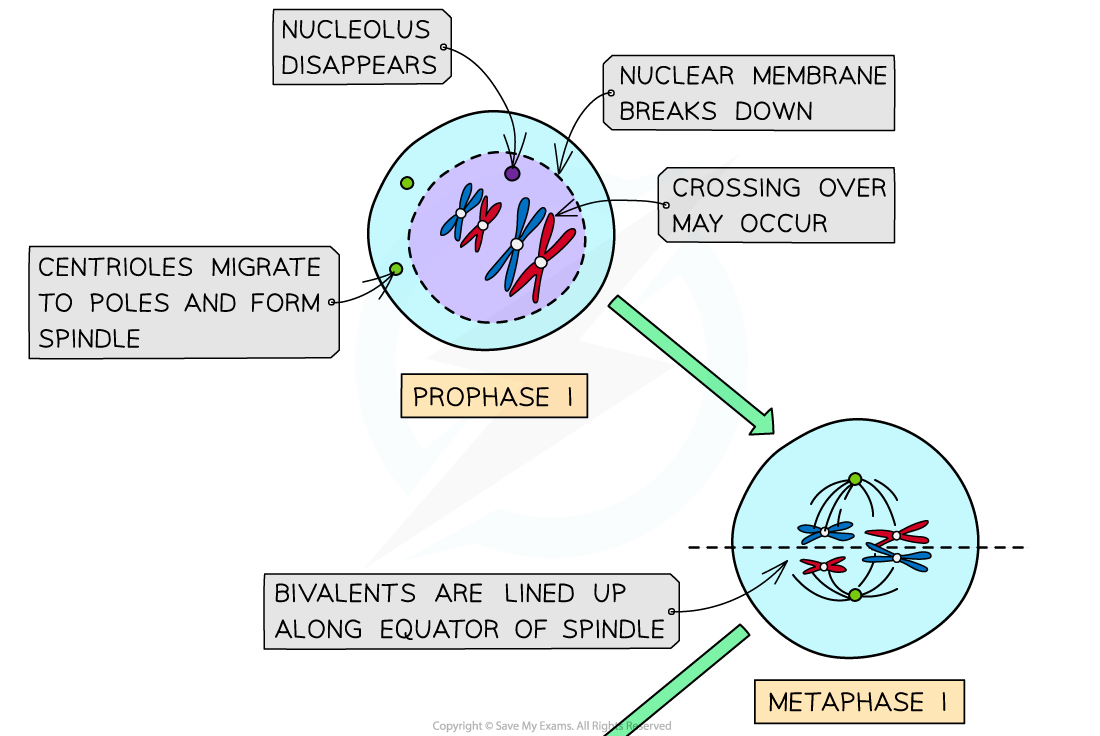
DNA condenses and becomes visible as chromosomes
-
DNA replication has already occurred so each chromosome consists of two sister chromatids joined together by a centromere
-
The chromosomes are arranged side by side in homologous pairs
-
A pair of homologous chromosomes is called a bivalent
-
-
As the homologous chromosomes are very close together the crossing over of non-sister chromatids may occur. The point at which the crossing over occurs is called the chiasma (chiasmata; plural)
-
In this stage centrioles migrate to opposite poles and the spindle is formed
-
The nuclear envelope breaks down and the nucleolus disintegrates
Metaphase I
-
The bivalents line up along the equator of the spindle, with the spindle fibres attached to the centromeres
Anaphase I
-
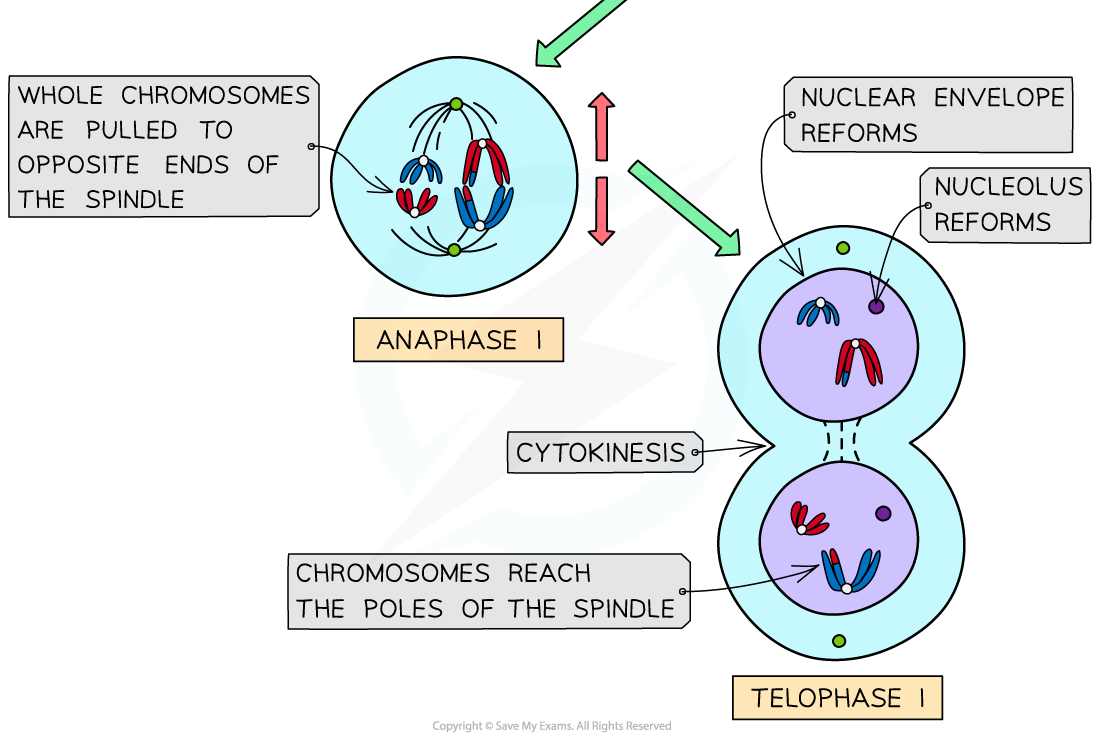
The homologous pairs of chromosomes are separated as microtubules pull whole chromosomes to opposite ends of the spindle
-
The centromeres do not divide
Telophase I
-
The chromosomes arrive at opposite poles
-
Spindle fibres start to break down
-
Nuclear envelopes form around the two groups of chromosomes and nucleoli reform
-
Some plant cells go straight into meiosis II without reformation of the nucleus in telophase I
Cytokinesis
-
This is when the division of the cytoplasm occurs
-
Cell organelles also get distributed between the two developing cells
-
In animal cells:
-
The cell surface membrane pinches inwards creating a cleavage furrow in the middle of the cell which contracts, dividing the cytoplasm in half
-
-
In plant cells:
-
Vesicles from the Golgi apparatus gather along the equator of the spindle (the cell plate). The vesicles merge with each other to form the new cell surface membrane. Layers of cellulose are laid down to form the primary and secondary walls of the cell
-
-
The end product of cytokinesis in meiosis I: two haploid cells
-
These cells are haploid as they contain half the number of centromeres
-
Second division of meiosis : Meiosis II
-
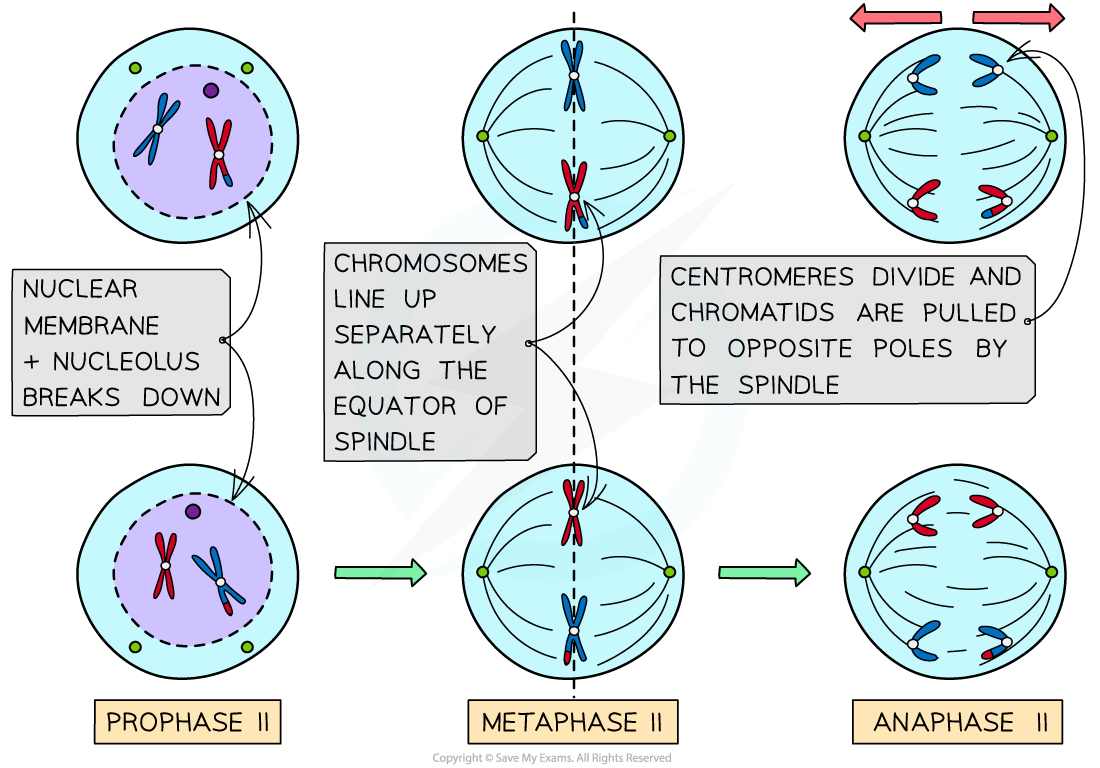
There is no interphase between meiosis I and meiosis II so the DNA is not replicated
-
The second division of meiosis is almost identical to the stages of mitosis
Prophase II
-
The nuclear envelope breaks down and chromosomes condense
-
A spindle forms at a right angle to the old one
Metaphase II
-
Chromosomes line up in a single file along the equator of the spindle
Anaphase II
-
Centromeres divide and individual chromatids are pulled to opposite poles
-
This creates four groups of chromosomes that have half the number of chromosomes compared to the original parent cell
Telophase II
-
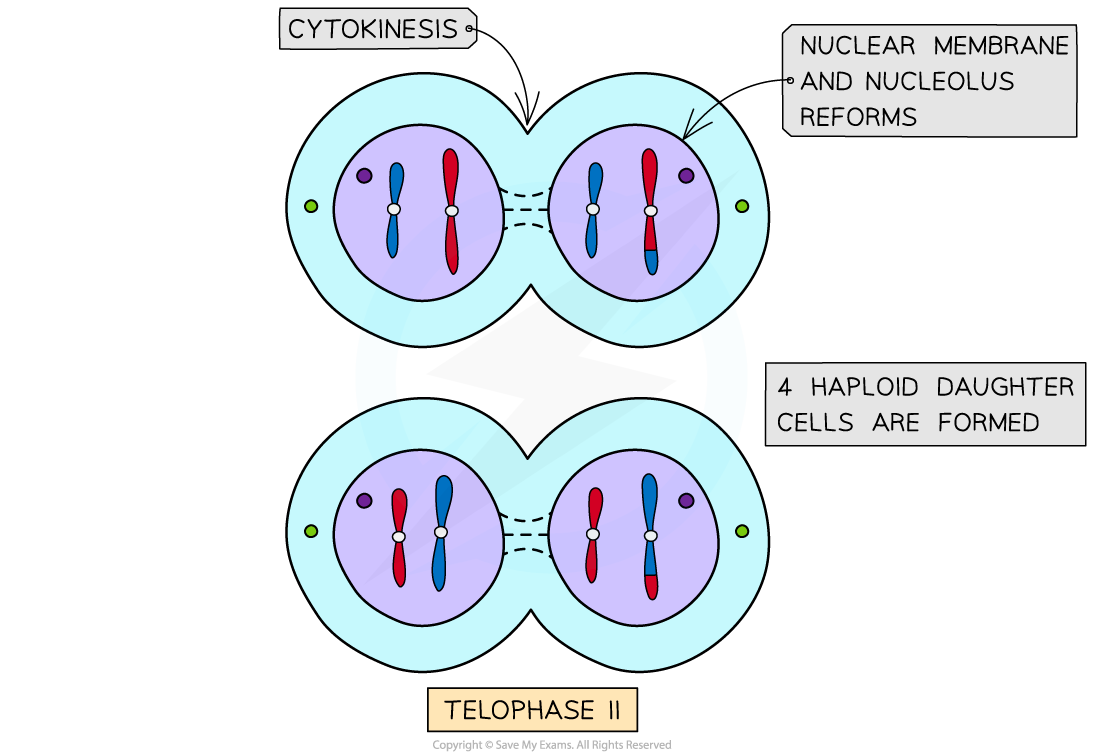
Nuclear membranes form around each group of chromosomes
Cytokinesis
-
Cytoplasm divides as new cell surface membranes are formed creating four haploid cells
-
The cells still contain the same number of centromeres as they did at the start of meiosis I but they now only have half the number of chromosomes (previously chromatids)
-
Examiner Tips and Tricks
Understanding the difference between chromosomes and chromatids can be difficult.
We count chromosomes by the number of centromeres present. So when the 46 chromosomes duplicate during interphase and the amount of DNA in the cell doubles there are still only 46 chromosomes present because there are still only 46 centromeres present. However, there are now 92 chromatids, which are strands of replicated chromosomes.