
Biology_A-level_Cie
-
1-1-the-microscope-in-cell-studies5 主题
-
1-2-cells-as-the-basic-units-of-living-organisms5 主题
-
2-1-testing-for-biological-molecules3 主题
-
2-2-carbohydrates-and-lipids8 主题
-
2-3-proteins6 主题
-
2-4-water2 主题
-
3-1-mode-of-action-of-enzymes5 主题
-
3-2-factors-that-affect-enzyme-action8 主题
-
4-1-fluid-mosaic-membranes4 主题
-
4-2-movement-into-and-out-of-cells12 主题
-
diffusion
-
osmosis
-
active-transport
-
endocytosis-and-exocytosis
-
investigating-transport-processes-in-plants
-
investigating-diffusion
-
surface-area-to-volume-ratios
-
investigating-surface-area
-
estimating-water-potential-in-plants
-
osmosis-in-plant-cells
-
osmosis-in-animals
-
comparing-osmosis-in-plants-and-animals
-
diffusion
-
5-1-replication-and-division-of-nuclei-and-cells6 主题
-
5-2-chromosome-behaviour-in-mitosis2 主题
-
6-1-structure-of-nucleic-acids-and-replication-of-dna4 主题
-
6-2-protein-synthesis5 主题
-
7-1-structure-of-transport-tissues4 主题
-
7-2-transport-mechanisms7 主题
-
8-1-the-circulatory-system7 主题
-
8-2-transport-of-oxygen-and-carbon-dioxide5 主题
-
8-3-the-heart4 主题
-
9-1-the-gas-exchange-system6 主题
-
10-1-infectious-diseases3 主题
-
10-2-antibiotics3 主题
-
11-1-the-immune-system4 主题
-
11-2-antibodies-and-vaccination6 主题
-
12-1-energy5 主题
-
12-2-respiration11 主题
-
aerobic-respiration-the-krebs-cycle
-
aerobic-respiration-role-of-nad-and-fad
-
aerobic-respiration-oxidative-phosphorylation
-
anaerobic-respiration
-
energy-yield-aerobic-and-anaerobic-respiration
-
anaerobic-adaptation-of-rice
-
aerobic-respiration-effect-of-temperature-and-substrate-concentration
-
structure-and-function-of-mitochondria
-
the-four-stages-in-aerobic-respiration
-
aerobic-respiration-glycolysis
-
aerobic-respiration-the-link-reaction
-
aerobic-respiration-the-krebs-cycle
-
13-1-photosynthesis-as-an-energy-transfer-process8 主题
-
13-2-investigation-of-limiting-factors2 主题
-
14-1-homeostasis-in-mammals8 主题
-
14-2-homeostasis-in-plants3 主题
-
15-1-control-and-coordination-in-mammals12 主题
-
the-endocrine-system
-
the-nervous-system
-
neurones
-
sensory-receptor-cells
-
sequence-of-events-resulting-in-an-action-potential
-
transmission-of-nerve-impulses
-
speed-of-conduction-of-impulses
-
the-refractory-period
-
cholinergic-synapses
-
stimulating-contraction-in-striated-muscle
-
ultrastructure-of-striated-muscle
-
sliding-filament-model-of-muscular-contraction
-
the-endocrine-system
-
15-2-control-and-coordination-in-plants3 主题
-
16-1-passage-of-information-from-parents-to-offspring5 主题
-
16-2-the-roles-of-genes-in-determining-the-phenotype7 主题
-
16-3-gene-control3 主题
-
17-1-variation4 主题
-
17-2-natural-and-artificial-selection7 主题
-
17-3-evolution2 主题
-
18-1-classification5 主题
-
18-2-biodiversity7 主题
-
18-3-conservation6 主题
-
19-1-principles-of-genetic-technology11 主题
-
19-2-genetic-technology-applied-to-medicine4 主题
-
19-3-genetically-modified-organisms-in-agriculture2 主题
-
1-1-the-microscope-in-cell-studies
-
1-2-cells-as-the-basic-units-of-living-organisms
-
2-1-testing-for-biological-molecules
-
2-2-carbohydrates-and-lipids
-
2-3-proteins
-
2-4-water
-
3-1-mode-of-action-of-enzymes
-
3-2-factors-that-affect-enzyme-action
-
4-1-fluid-mosaic-membranes
-
4-2-movement-into-and-out-of-cells
-
5-1-replication-and-division-of-nuclei-and-cells
-
5-2-chromosome-behaviour-in-mitosis
-
6-1-structure-of-nucleic-acids-and-replication-of-dna
-
6-2-protein-synthesis
-
7-1-structure-of-transport-tissues
-
7-2-transport-mechanisms
-
8-1-the-circulatory-system
-
8-2-transport-of-oxygen-and-carbon-dioxide
-
8-3-the-heart
-
9-1-the-gas-exchange-system
-
10-1-infectious-diseases
-
10-2-antibiotics
-
11-1-the-immune-system
-
11-2-antibodies-and-vaccination
sequence-of-events-resulting-in-an-action-potential
Sequence of events resulting in an action potential
-
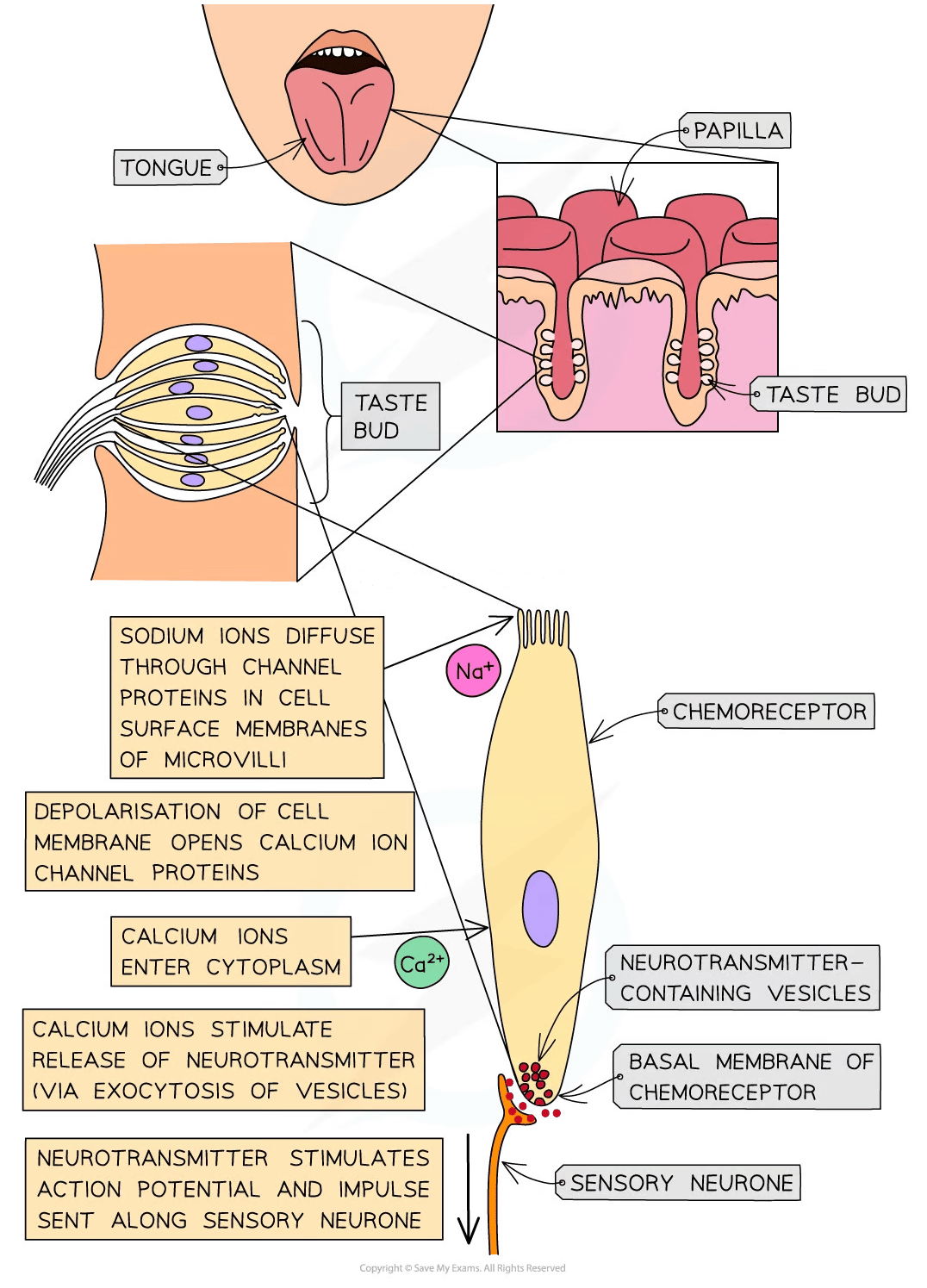
The surface of the tongue is covered in many small bumps known as papillae
-
The surface of each papilla is covered in many taste buds
-
Each taste bud contains many receptor cells known as chemoreceptors
-
These chemoreceptors are sensitive to chemicals in food and drinks
-
-
Each chemoreceptor is covered with receptor proteins
-
Different receptor proteins detect different chemicals
-
An example of the sequence of events that results in an action potential in a sensory neurone
-
Chemoreceptors in the taste buds that detect salt (sodium chloride) respond directly to sodium ions
-
If salt is present in the food (dissolved in saliva) being eaten:
-
Sodium ions diffuse through highly selective channel proteins in the cell surface membranes of the microvilli of the chemoreceptor cells
-
This leads to the depolarisation of the chemoreceptor cell membrane
-
The increase in positive charge inside the cell is known as the receptor potential
-
If there is sufficient stimulation by sodium ions and sufficient depolarisation of the membrane, the receptor potential becomes large enough to stimulate voltage-gated calcium ion channel proteins to open
-
As a result, calcium ions enter the cytoplasm of the chemoreceptor cell and stimulate exocytosis of vesicles containing neurotransmitters from the basal membrane of the chemoreceptor
-
The neurotransmitter stimulates an action potential in the sensory neurone
-
The sensory neurone then transmits an impulse to the brain
-
-
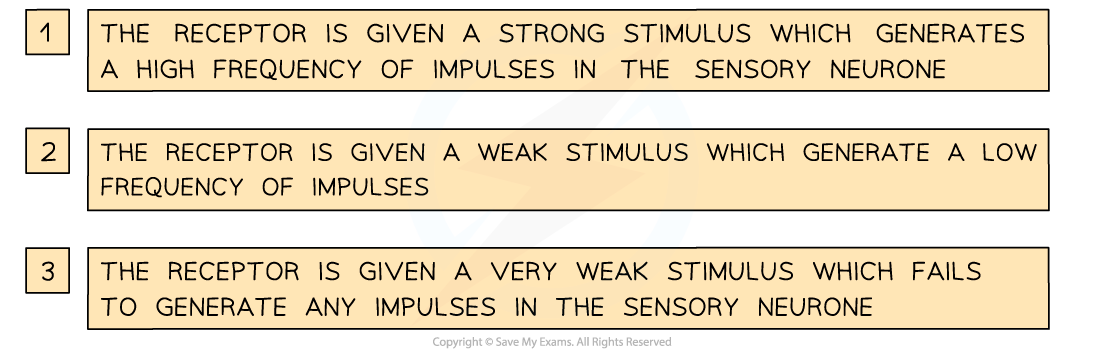
When receptors (such as chemoreceptors) are stimulated, they are depolarised
-
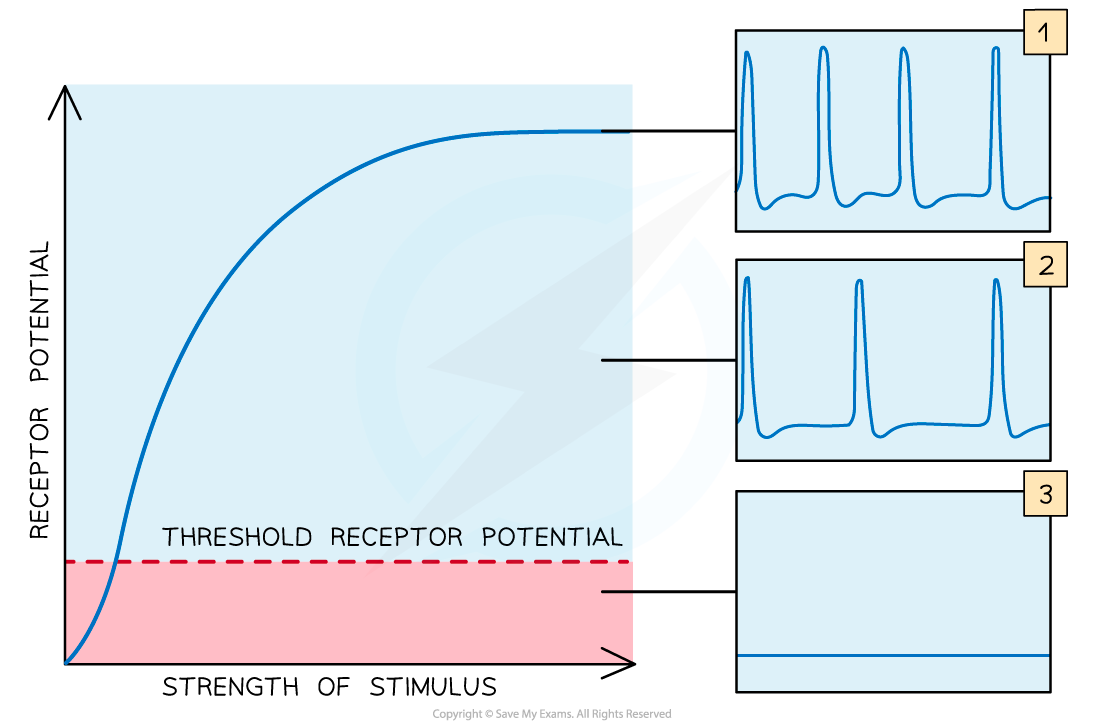
If the stimulus is very weak or below a certain threshold, the receptor cells won’t be sufficiently depolarised and the sensory neurone will not be activated to send impulses
-
If the stimulus is strong enough to increase the receptor potential above the threshold potential then the receptor will stimulate the sensory neurone to send impulses
-
This is an example of the all-or-nothing principle
-
An impulse is only transmitted if the initial stimulus is sufficient to increase the membrane potential above a threshold potential
-
-
Rather than staying constant, threshold levels in receptors often increase with continued stimulation, so that a greater stimulus is required before impulses are sent along sensory neurones
Examiner Tips and Tricks
Some receptors, like the chemoreceptors described above, are specialised cells that detect a specific type of stimulus and affect the sensory neurone’s electrical activity. Other receptors are just the ends of the sensory neurones (for example, many types of touch receptors).