Biology_A-level_Cie
-
1-1-the-microscope-in-cell-studies5 主题
-
1-2-cells-as-the-basic-units-of-living-organisms5 主题
-
2-1-testing-for-biological-molecules3 主题
-
2-2-carbohydrates-and-lipids8 主题
-
2-3-proteins6 主题
-
2-4-water2 主题
-
3-1-mode-of-action-of-enzymes5 主题
-
3-2-factors-that-affect-enzyme-action8 主题
-
4-1-fluid-mosaic-membranes4 主题
-
4-2-movement-into-and-out-of-cells12 主题
-
diffusion
-
osmosis
-
active-transport
-
endocytosis-and-exocytosis
-
investigating-transport-processes-in-plants
-
investigating-diffusion
-
surface-area-to-volume-ratios
-
investigating-surface-area
-
estimating-water-potential-in-plants
-
osmosis-in-plant-cells
-
osmosis-in-animals
-
comparing-osmosis-in-plants-and-animals
-
diffusion
-
5-1-replication-and-division-of-nuclei-and-cells6 主题
-
5-2-chromosome-behaviour-in-mitosis2 主题
-
6-1-structure-of-nucleic-acids-and-replication-of-dna4 主题
-
6-2-protein-synthesis5 主题
-
7-1-structure-of-transport-tissues4 主题
-
7-2-transport-mechanisms7 主题
-
8-1-the-circulatory-system7 主题
-
8-2-transport-of-oxygen-and-carbon-dioxide5 主题
-
8-3-the-heart4 主题
-
9-1-the-gas-exchange-system6 主题
-
10-1-infectious-diseases3 主题
-
10-2-antibiotics3 主题
-
11-1-the-immune-system4 主题
-
11-2-antibodies-and-vaccination6 主题
-
12-1-energy5 主题
-
12-2-respiration11 主题
-
aerobic-respiration-the-krebs-cycle
-
aerobic-respiration-role-of-nad-and-fad
-
aerobic-respiration-oxidative-phosphorylation
-
anaerobic-respiration
-
energy-yield-aerobic-and-anaerobic-respiration
-
anaerobic-adaptation-of-rice
-
aerobic-respiration-effect-of-temperature-and-substrate-concentration
-
structure-and-function-of-mitochondria
-
the-four-stages-in-aerobic-respiration
-
aerobic-respiration-glycolysis
-
aerobic-respiration-the-link-reaction
-
aerobic-respiration-the-krebs-cycle
-
13-1-photosynthesis-as-an-energy-transfer-process8 主题
-
13-2-investigation-of-limiting-factors2 主题
-
14-1-homeostasis-in-mammals8 主题
-
14-2-homeostasis-in-plants3 主题
-
15-1-control-and-coordination-in-mammals12 主题
-
the-endocrine-system
-
the-nervous-system
-
neurones
-
sensory-receptor-cells
-
sequence-of-events-resulting-in-an-action-potential
-
transmission-of-nerve-impulses
-
speed-of-conduction-of-impulses
-
the-refractory-period
-
cholinergic-synapses
-
stimulating-contraction-in-striated-muscle
-
ultrastructure-of-striated-muscle
-
sliding-filament-model-of-muscular-contraction
-
the-endocrine-system
-
15-2-control-and-coordination-in-plants3 主题
-
16-1-passage-of-information-from-parents-to-offspring5 主题
-
16-2-the-roles-of-genes-in-determining-the-phenotype7 主题
-
16-3-gene-control3 主题
-
17-1-variation4 主题
-
17-2-natural-and-artificial-selection7 主题
-
17-3-evolution2 主题
-
18-1-classification5 主题
-
18-2-biodiversity7 主题
-
18-3-conservation6 主题
-
19-1-principles-of-genetic-technology11 主题
-
19-2-genetic-technology-applied-to-medicine4 主题
-
19-3-genetically-modified-organisms-in-agriculture2 主题
-
1-1-the-microscope-in-cell-studies
-
1-2-cells-as-the-basic-units-of-living-organisms
-
2-1-testing-for-biological-molecules
-
2-2-carbohydrates-and-lipids
-
2-3-proteins
-
2-4-water
-
3-1-mode-of-action-of-enzymes
-
3-2-factors-that-affect-enzyme-action
-
4-1-fluid-mosaic-membranes
-
4-2-movement-into-and-out-of-cells
-
5-1-replication-and-division-of-nuclei-and-cells
-
5-2-chromosome-behaviour-in-mitosis
-
6-1-structure-of-nucleic-acids-and-replication-of-dna
-
6-2-protein-synthesis
-
7-1-structure-of-transport-tissues
-
7-2-transport-mechanisms
-
8-1-the-circulatory-system
-
8-2-transport-of-oxygen-and-carbon-dioxide
-
8-3-the-heart
-
9-1-the-gas-exchange-system
-
10-1-infectious-diseases
-
10-2-antibiotics
-
11-1-the-immune-system
-
11-2-antibodies-and-vaccination
cholinergic-synapses
Cholinergic synapses
-
Where two neurones meet, they do not actually come into physical contact with each other
-
A very small gap, known as the synaptic cleft, separates them
-
-
The ends of the two neurones, along with the synaptic cleft, form a synapse
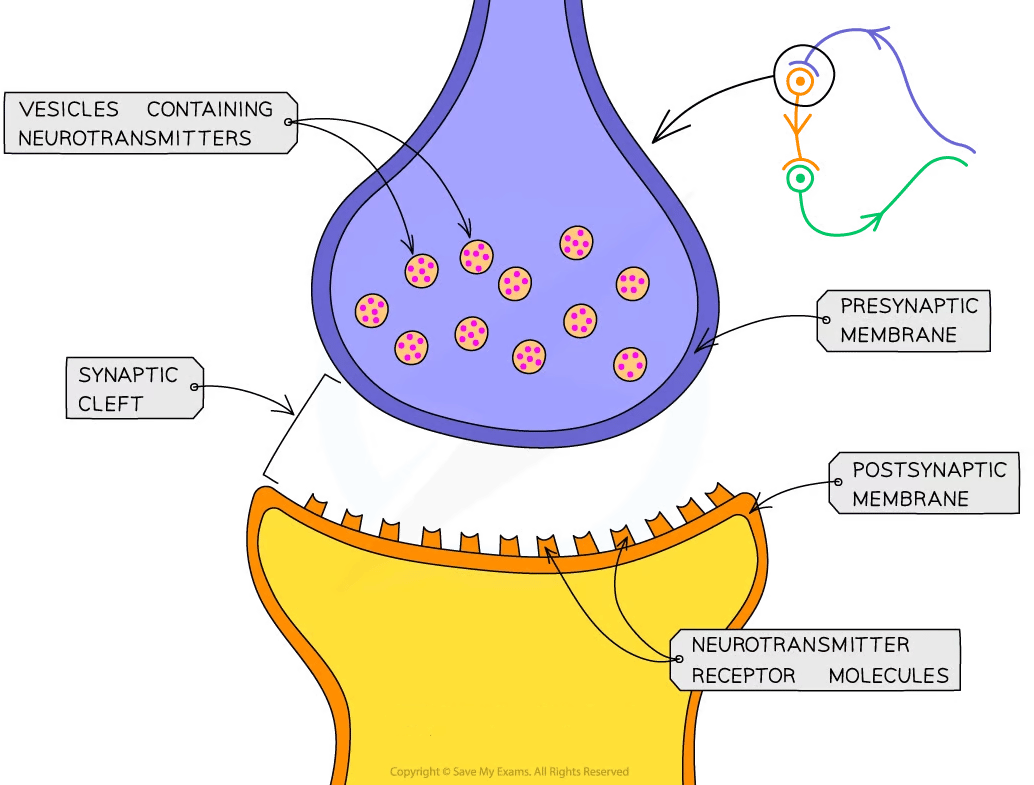
Synaptic transmission—basic mechanism
-
Electrical impulses cannot ‘jump’ across synapses
-
When an electrical impulse arrives at the end of the axon on the presynaptic neurone, chemical messengers called neurotransmitters are released from vesicles at the presynaptic membrane
-
The neurotransmitters diffuse across the synaptic cleft and bind temporarily with receptor molecules on the postsynaptic membrane
-
This stimulates the postsynaptic neurone to generate an electrical impulse that then travels down the axon of the postsynaptic neurone
-
The neurotransmitters are then destroyed or recycled to prevent continued stimulation of the second neurone, which could cause repeated impulses to be sent
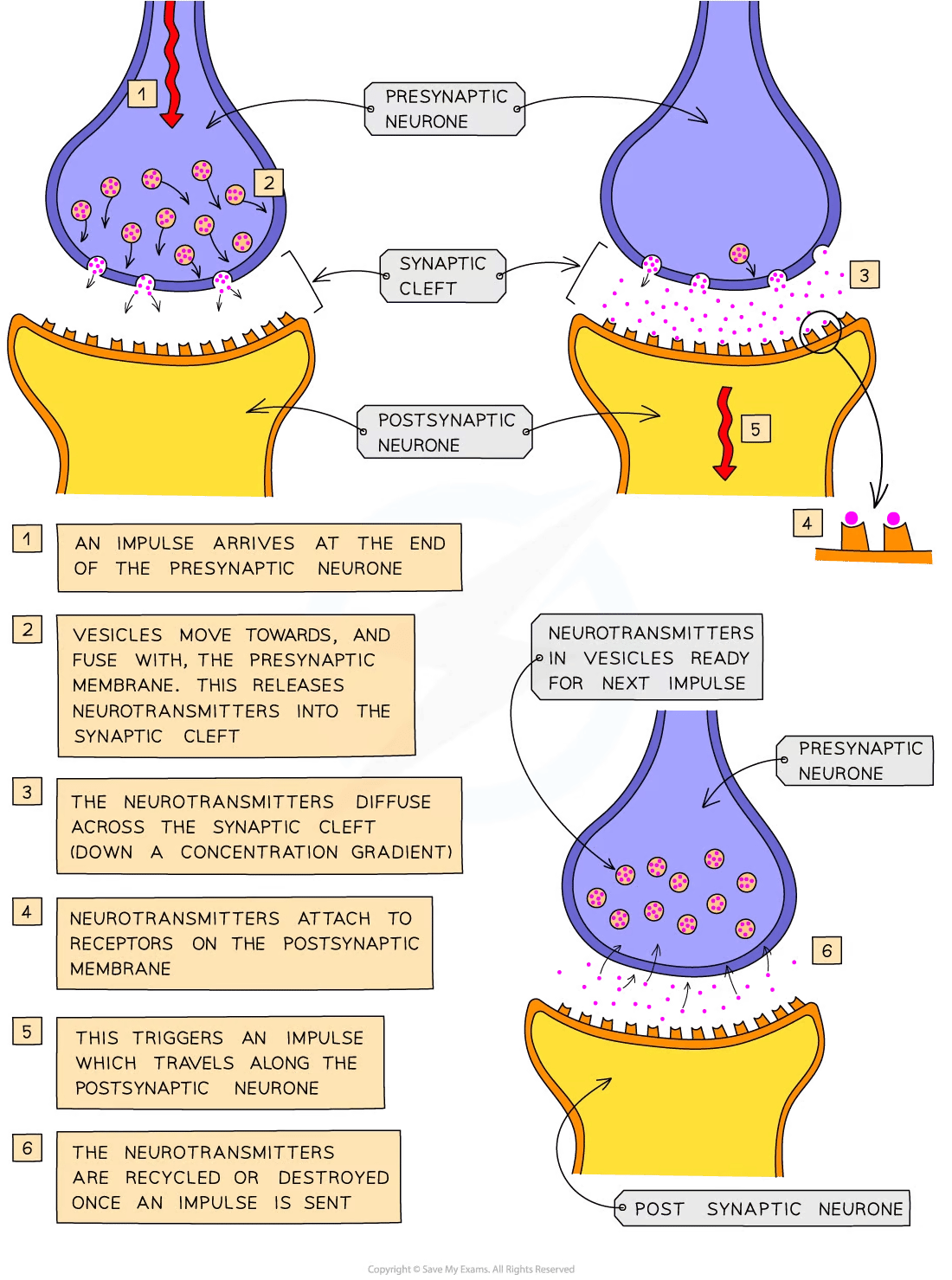
Synaptic transmission—detailed mechanism
-
There are over 40 different known neurotransmitters
-
One of the key neurotransmitters used throughout the nervous system is acetylcholine (ACh)
-
Synapses that use the neurotransmitter ACh are known as cholinergic synapses
-
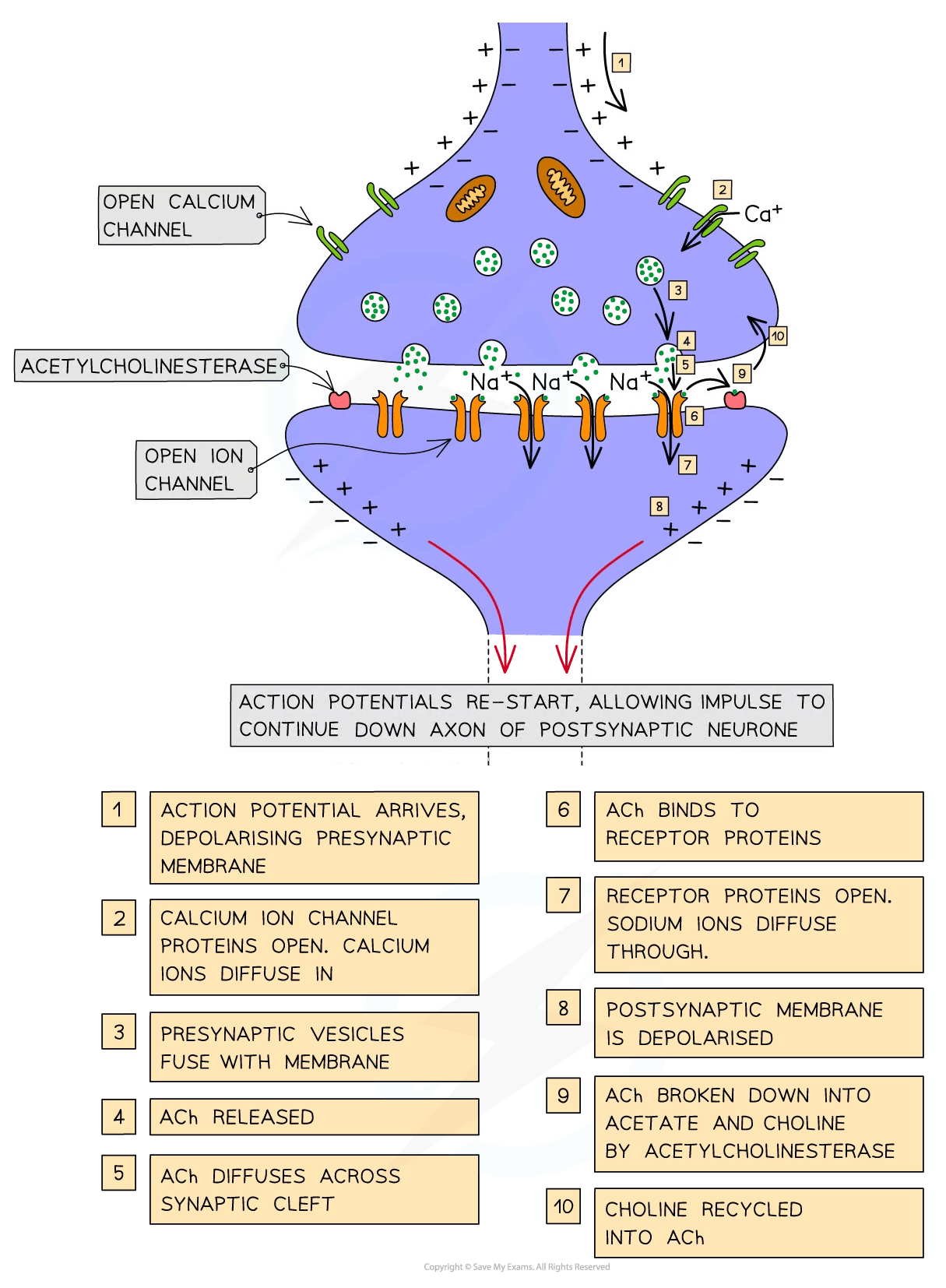
The detailed process of synaptic transmission using ACh is as follows:
-
The arrival of an action potential at the presynaptic membrane causes depolarisation of the membrane
-
This stimulates voltage-gated calcium ion channel proteins to open
-
Calcium ions diffuse down an electrochemical gradient from the tissue fluid surrounding the synapse (high concentration of calcium ions) into the cytoplasm of the presynaptic neurone (low concentration of calcium ions)
-
This stimulates ACh-containing vesicles to fuse with the presynaptic membrane, releasing ACh molecules into the synaptic cleft
-
The ACh molecules diffuse across the synaptic cleft and temporarily bind to receptor proteins in the postsynaptic membrane
-
This causes a conformational change in the receptor proteins, which then open, allowing sodium ions to diffuse down an electrochemical gradient into the cytoplasm of the postsynaptic neurone
-
The sodium ions cause depolarisation of the postsynaptic membrane, re-starting the electrical impulse (that can now continue down the axon of the postsynaptic neurone)
-
To prevent the sodium ion channels from staying permanently open and to stop permanent depolarisation of the postsynaptic membrane, the ACh molecules are broken down and recycled
-
The enzyme acetylcholinesterase catalyses the hydrolysis of the ACh molecules into acetate and choline
-
The choline is absorbed back into the presynaptic membrane and reacts with acetyl coenzyme A to form ACh, which is then packaged into presynaptic vesicles ready to be used when another action potential arrives
-