Biology_A-level_Cie
-
1-1-the-microscope-in-cell-studies5 主题
-
1-2-cells-as-the-basic-units-of-living-organisms5 主题
-
2-1-testing-for-biological-molecules3 主题
-
2-2-carbohydrates-and-lipids8 主题
-
2-3-proteins6 主题
-
2-4-water2 主题
-
3-1-mode-of-action-of-enzymes5 主题
-
3-2-factors-that-affect-enzyme-action8 主题
-
4-1-fluid-mosaic-membranes4 主题
-
4-2-movement-into-and-out-of-cells12 主题
-
diffusion
-
osmosis
-
active-transport
-
endocytosis-and-exocytosis
-
investigating-transport-processes-in-plants
-
investigating-diffusion
-
surface-area-to-volume-ratios
-
investigating-surface-area
-
estimating-water-potential-in-plants
-
osmosis-in-plant-cells
-
osmosis-in-animals
-
comparing-osmosis-in-plants-and-animals
-
diffusion
-
5-1-replication-and-division-of-nuclei-and-cells6 主题
-
5-2-chromosome-behaviour-in-mitosis2 主题
-
6-1-structure-of-nucleic-acids-and-replication-of-dna4 主题
-
6-2-protein-synthesis5 主题
-
7-1-structure-of-transport-tissues4 主题
-
7-2-transport-mechanisms7 主题
-
8-1-the-circulatory-system7 主题
-
8-2-transport-of-oxygen-and-carbon-dioxide5 主题
-
8-3-the-heart4 主题
-
9-1-the-gas-exchange-system6 主题
-
10-1-infectious-diseases3 主题
-
10-2-antibiotics3 主题
-
11-1-the-immune-system4 主题
-
11-2-antibodies-and-vaccination6 主题
-
12-1-energy5 主题
-
12-2-respiration11 主题
-
aerobic-respiration-the-krebs-cycle
-
aerobic-respiration-role-of-nad-and-fad
-
aerobic-respiration-oxidative-phosphorylation
-
anaerobic-respiration
-
energy-yield-aerobic-and-anaerobic-respiration
-
anaerobic-adaptation-of-rice
-
aerobic-respiration-effect-of-temperature-and-substrate-concentration
-
structure-and-function-of-mitochondria
-
the-four-stages-in-aerobic-respiration
-
aerobic-respiration-glycolysis
-
aerobic-respiration-the-link-reaction
-
aerobic-respiration-the-krebs-cycle
-
13-1-photosynthesis-as-an-energy-transfer-process8 主题
-
13-2-investigation-of-limiting-factors2 主题
-
14-1-homeostasis-in-mammals8 主题
-
14-2-homeostasis-in-plants3 主题
-
15-1-control-and-coordination-in-mammals12 主题
-
the-endocrine-system
-
the-nervous-system
-
neurones
-
sensory-receptor-cells
-
sequence-of-events-resulting-in-an-action-potential
-
transmission-of-nerve-impulses
-
speed-of-conduction-of-impulses
-
the-refractory-period
-
cholinergic-synapses
-
stimulating-contraction-in-striated-muscle
-
ultrastructure-of-striated-muscle
-
sliding-filament-model-of-muscular-contraction
-
the-endocrine-system
-
15-2-control-and-coordination-in-plants3 主题
-
16-1-passage-of-information-from-parents-to-offspring5 主题
-
16-2-the-roles-of-genes-in-determining-the-phenotype7 主题
-
16-3-gene-control3 主题
-
17-1-variation4 主题
-
17-2-natural-and-artificial-selection7 主题
-
17-3-evolution2 主题
-
18-1-classification5 主题
-
18-2-biodiversity7 主题
-
18-3-conservation6 主题
-
19-1-principles-of-genetic-technology11 主题
-
19-2-genetic-technology-applied-to-medicine4 主题
-
19-3-genetically-modified-organisms-in-agriculture2 主题
-
1-1-the-microscope-in-cell-studies
-
1-2-cells-as-the-basic-units-of-living-organisms
-
2-1-testing-for-biological-molecules
-
2-2-carbohydrates-and-lipids
-
2-3-proteins
-
2-4-water
-
3-1-mode-of-action-of-enzymes
-
3-2-factors-that-affect-enzyme-action
-
4-1-fluid-mosaic-membranes
-
4-2-movement-into-and-out-of-cells
-
5-1-replication-and-division-of-nuclei-and-cells
-
5-2-chromosome-behaviour-in-mitosis
-
6-1-structure-of-nucleic-acids-and-replication-of-dna
-
6-2-protein-synthesis
-
7-1-structure-of-transport-tissues
-
7-2-transport-mechanisms
-
8-1-the-circulatory-system
-
8-2-transport-of-oxygen-and-carbon-dioxide
-
8-3-the-heart
-
9-1-the-gas-exchange-system
-
10-1-infectious-diseases
-
10-2-antibiotics
-
11-1-the-immune-system
-
11-2-antibodies-and-vaccination
the-control-of-blood-glucose
The control of blood glucose
-
If the concentration of glucose in the blood decreases below a certain level, cells may not have enough glucose for respiration and may not be able to function normally
-
If the concentration of glucose in the blood increases above a certain level, this can also disrupt the normal function of cells, potentially causing major problems
-
The control of blood glucose concentration is a key part of homeostasis
-
Blood glucose concentration is controlled by two hormones secreted by endocrine tissue in the pancreas
-
This tissue is made up of groups of cells known as the islets of Langerhans
-
The islets of Langerhans contain two cell types:
-
α cells that secrete the hormone glucagon
-
β cells that secrete the hormone insulin
-
-
These α and β cells act as the receptors and initiate the response for controlling blood glucose concentration
-
The control of blood glucose concentration by glucagon can be used to demonstrate the principles of cell signalling
Decrease in blood glucose concentration
-
If a decrease in blood glucose concentration occurs, it is detected by the α and β cells in the pancreas:
-
The α cells respond by secreting glucagon
-
The β cells respond by stopping the secretion of insulin
-
-
The decrease in blood insulin concentration reduces the use of glucose by liver and muscle cells
-
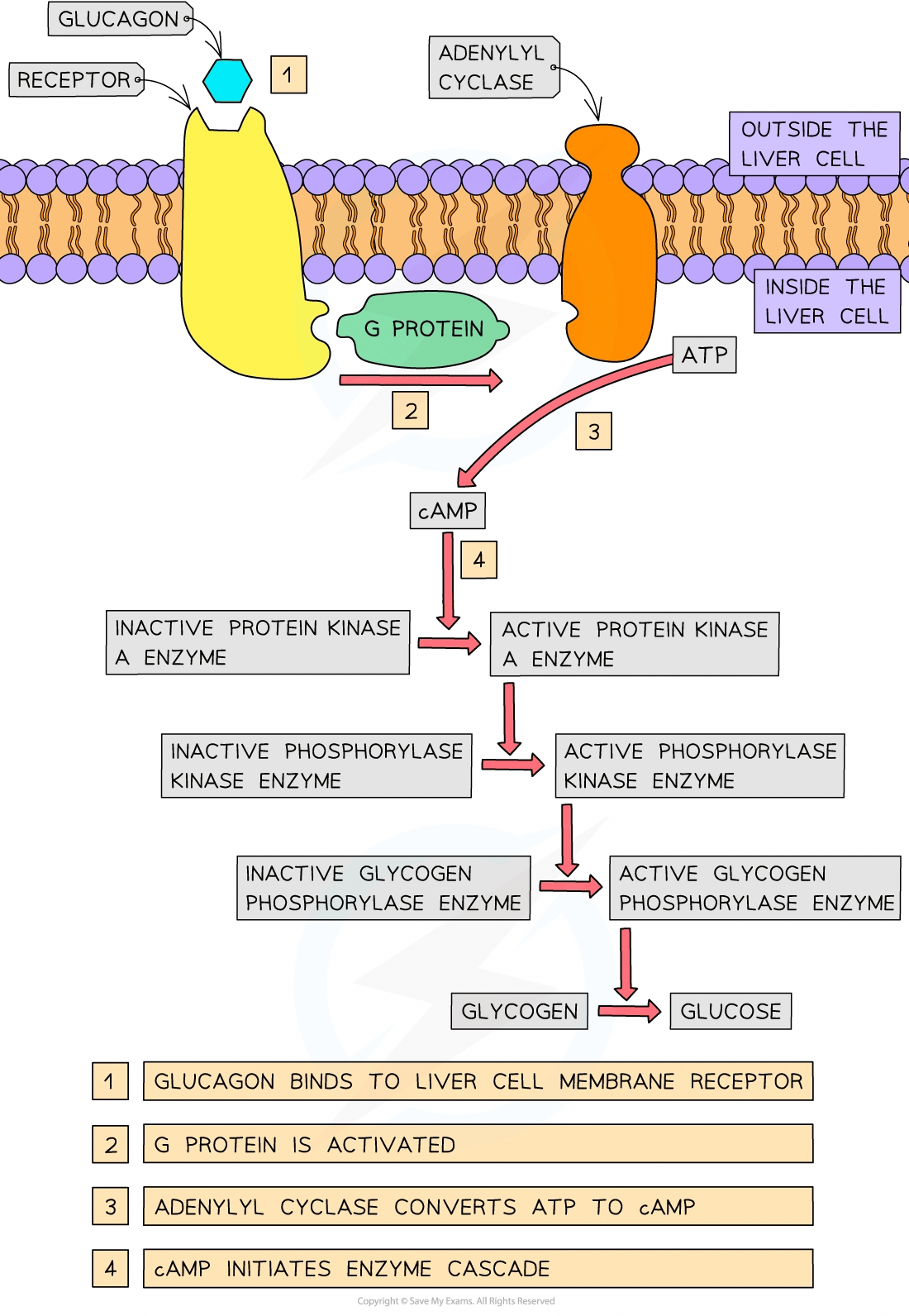
Glucagon binds to receptors in the cell surface membranes of liver cells
-
This binding causes a conformational change in the receptor protein that activates a G protein
-
This activated G protein activates the enzyme adenylyl cyclase
-
Active adenylyl cyclase catalyses the conversion of ATP to the second messenger, cyclic AMP (cAMP)
-
cAMP binds to protein kinase A enzymes, activating them
-
Active protein kinase A enzymes activate phosphorylase kinase enzymes by adding phosphate groups to them
-
Active phosphorylase kinase enzymes activate glycogen phosphorylase enzymes
-
Active glycogen phosphorylase enzymes catalyse the breakdown of glycogen to glucose
-
This process is known as glycogenolysis
-
-
The enzyme cascade described above amplifies the original signal from glucagon and results in the releasing of extra glucose by the liver to increase the blood glucose concentration back to a normal level
Increase in blood glucose concentration
-
When the blood glucose concentration increases to above the normal range it is detected by the β cells in the pancreas
-
When the concentration of glucose is high glucose molecules enter the β cells by facilitated diffusion
-
The cells respire this glucose and produce ATP
-
High concentrations of ATP causes the potassium channels in the β cells to close, producing a change in the membrane potential
-
This change in the membrane potential causes the voltage-gated calcium channels to open
-
In response to the influx of calcium ions, the β cells secrete the hormone insulin
-
Insulin-containing vesicles move towards the cell-surface membrane where they release insulin into the capillaries
-
-
Once in the bloodstream, insulin circulates around the body
-
It stimulates the uptake of glucose by muscles cells, fat cells and the liver
Action of insulin
-
Insulin increase the uptake of glucose into target cells
-
The target cells of insulin include muscle cells, fat storage cells, adipose tissue and liver cells; all of these cells have specific insulin receptors on their cell surface membranes
-
Insulin binds to specific receptors on the membranes of these target cells
-
The binding of insulin to receptors on target cells stimulates the cells to add more glucose transporter proteins to their cell surface membranes, increasing the permeability of the cells to glucose
-
These glucose transporter proteins are known as GLUT proteins
-
When blood glucose levels are low GLUT proteins are stored inside the cell in the membranes of vesicles, but when insulin binds to the surface receptors the vesicles move to the cell surface membrane and fuse with it, adding GLUT proteins to the membrane
-
-
The rate of facilitated diffusion of glucose into the target cells increases as a result of the increase in GLUT proteins
-
-
Insulin causes activation of an enzyme known as glucokinase
-
Glucokinase phosphorylates glucose, trapping it inside cells
-
-
Insulin causes activation of another enzyme; glycogen synthase
-
Glycogen synthase converts glucose into glycogen in a process known as glycogenesis
-
Examiner Tips and Tricks
Make sure you know where this response to a decrease in blood glucose concentration occurs! The enzyme cascade only occurs in liver cells, there are no glucagon receptors on muscle cells.
Negative feedback control of blood glucose
-
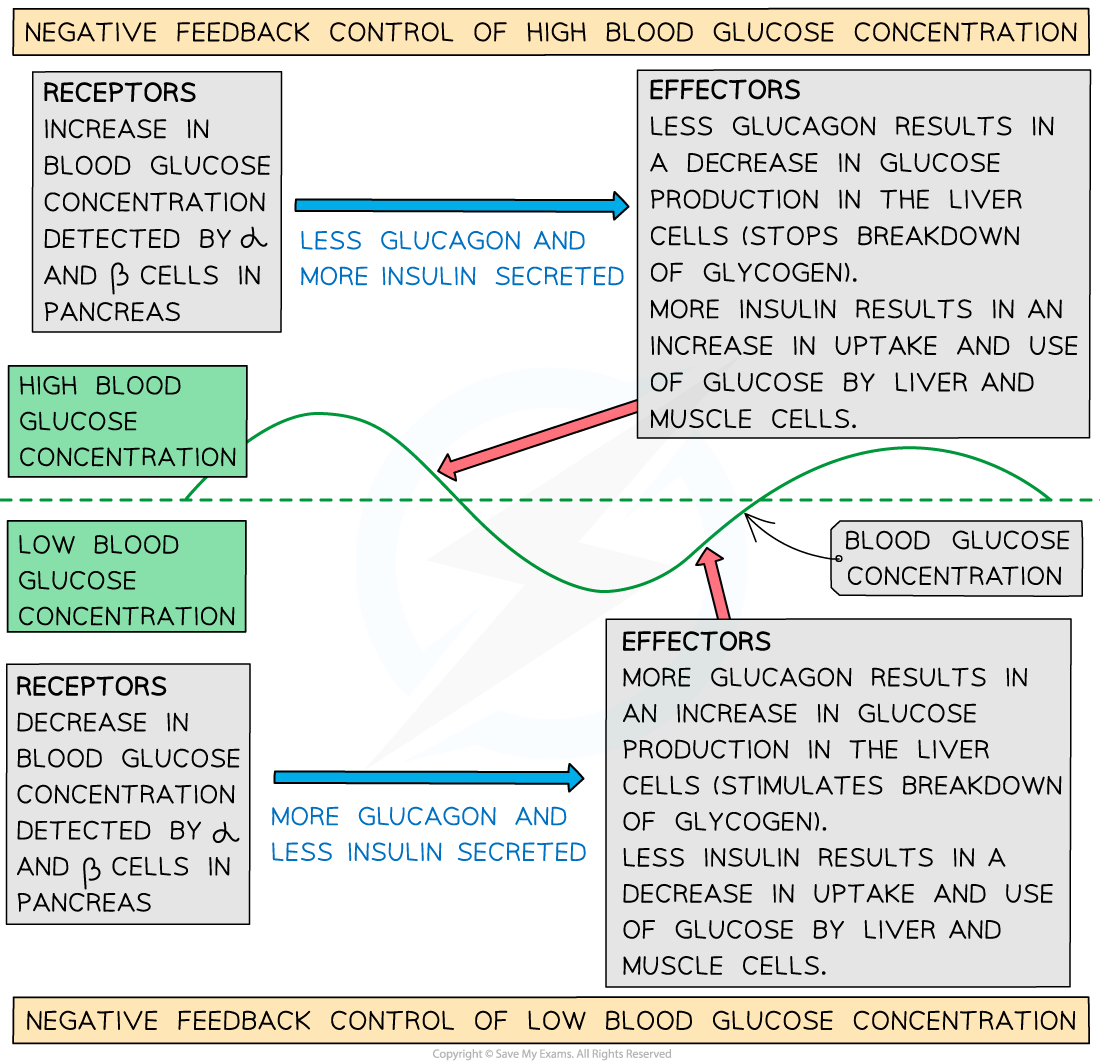
Blood glucose concentration is regulated by negative feedback control mechanisms
-
In negative feedback systems:
-
Receptors detect whether a specific level is too low or too high
-
This information is communicated through the hormonal or nervous system to effectors
-
Effectors react to counteract the change by bringing the level back to normal
-
-
In the control of blood glucose concentration:
-
α and β cells in the pancreas act as the receptors
-
They release the hormones glucagon (secreted by α cells) and insulin (secreted by β cells)
-
Liver cells act as the effectors in response to glucagon and liver, muscle and fat cells act as the effectors in response to insulin
-