
Biology_A-level_Cie
-
1-1-the-microscope-in-cell-studies5 主题
-
1-2-cells-as-the-basic-units-of-living-organisms5 主题
-
2-1-testing-for-biological-molecules3 主题
-
2-2-carbohydrates-and-lipids8 主题
-
2-3-proteins6 主题
-
2-4-water2 主题
-
3-1-mode-of-action-of-enzymes5 主题
-
3-2-factors-that-affect-enzyme-action8 主题
-
4-1-fluid-mosaic-membranes4 主题
-
4-2-movement-into-and-out-of-cells12 主题
-
diffusion
-
osmosis
-
active-transport
-
endocytosis-and-exocytosis
-
investigating-transport-processes-in-plants
-
investigating-diffusion
-
surface-area-to-volume-ratios
-
investigating-surface-area
-
estimating-water-potential-in-plants
-
osmosis-in-plant-cells
-
osmosis-in-animals
-
comparing-osmosis-in-plants-and-animals
-
diffusion
-
5-1-replication-and-division-of-nuclei-and-cells6 主题
-
5-2-chromosome-behaviour-in-mitosis2 主题
-
6-1-structure-of-nucleic-acids-and-replication-of-dna4 主题
-
6-2-protein-synthesis5 主题
-
7-1-structure-of-transport-tissues4 主题
-
7-2-transport-mechanisms7 主题
-
8-1-the-circulatory-system7 主题
-
8-2-transport-of-oxygen-and-carbon-dioxide5 主题
-
8-3-the-heart4 主题
-
9-1-the-gas-exchange-system6 主题
-
10-1-infectious-diseases3 主题
-
10-2-antibiotics3 主题
-
11-1-the-immune-system4 主题
-
11-2-antibodies-and-vaccination6 主题
-
12-1-energy5 主题
-
12-2-respiration11 主题
-
aerobic-respiration-the-krebs-cycle
-
aerobic-respiration-role-of-nad-and-fad
-
aerobic-respiration-oxidative-phosphorylation
-
anaerobic-respiration
-
energy-yield-aerobic-and-anaerobic-respiration
-
anaerobic-adaptation-of-rice
-
aerobic-respiration-effect-of-temperature-and-substrate-concentration
-
structure-and-function-of-mitochondria
-
the-four-stages-in-aerobic-respiration
-
aerobic-respiration-glycolysis
-
aerobic-respiration-the-link-reaction
-
aerobic-respiration-the-krebs-cycle
-
13-1-photosynthesis-as-an-energy-transfer-process8 主题
-
13-2-investigation-of-limiting-factors2 主题
-
14-1-homeostasis-in-mammals8 主题
-
14-2-homeostasis-in-plants3 主题
-
15-1-control-and-coordination-in-mammals12 主题
-
the-endocrine-system
-
the-nervous-system
-
neurones
-
sensory-receptor-cells
-
sequence-of-events-resulting-in-an-action-potential
-
transmission-of-nerve-impulses
-
speed-of-conduction-of-impulses
-
the-refractory-period
-
cholinergic-synapses
-
stimulating-contraction-in-striated-muscle
-
ultrastructure-of-striated-muscle
-
sliding-filament-model-of-muscular-contraction
-
the-endocrine-system
-
15-2-control-and-coordination-in-plants3 主题
-
16-1-passage-of-information-from-parents-to-offspring5 主题
-
16-2-the-roles-of-genes-in-determining-the-phenotype7 主题
-
16-3-gene-control3 主题
-
17-1-variation4 主题
-
17-2-natural-and-artificial-selection7 主题
-
17-3-evolution2 主题
-
18-1-classification5 主题
-
18-2-biodiversity7 主题
-
18-3-conservation6 主题
-
19-1-principles-of-genetic-technology11 主题
-
19-2-genetic-technology-applied-to-medicine4 主题
-
19-3-genetically-modified-organisms-in-agriculture2 主题
-
1-1-the-microscope-in-cell-studies
-
1-2-cells-as-the-basic-units-of-living-organisms
-
2-1-testing-for-biological-molecules
-
2-2-carbohydrates-and-lipids
-
2-3-proteins
-
2-4-water
-
3-1-mode-of-action-of-enzymes
-
3-2-factors-that-affect-enzyme-action
-
4-1-fluid-mosaic-membranes
-
4-2-movement-into-and-out-of-cells
-
5-1-replication-and-division-of-nuclei-and-cells
-
5-2-chromosome-behaviour-in-mitosis
-
6-1-structure-of-nucleic-acids-and-replication-of-dna
-
6-2-protein-synthesis
-
7-1-structure-of-transport-tissues
-
7-2-transport-mechanisms
-
8-1-the-circulatory-system
-
8-2-transport-of-oxygen-and-carbon-dioxide
-
8-3-the-heart
-
9-1-the-gas-exchange-system
-
10-1-infectious-diseases
-
10-2-antibiotics
-
11-1-the-immune-system
-
11-2-antibodies-and-vaccination
osmoregulation
Osmoregulation
-
The control of the water potential of body fluids is known as osmoregulation
-
Osmoregulation is a key part of homeostasis
-
-
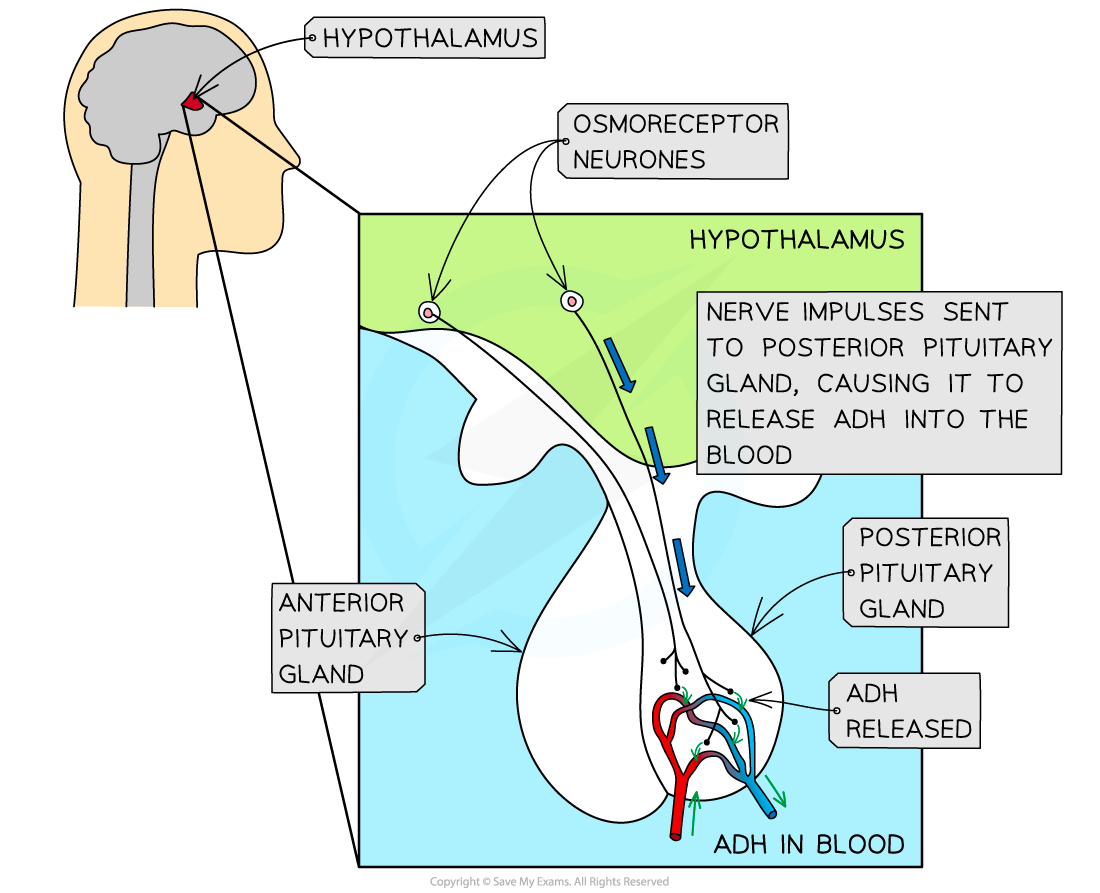
Specialised sensory neurones, known as osmoreceptors, monitor the water potential of the blood (these osmoreceptors are found in an area of the brain known as the hypothalamus)
-
If the osmoreceptors detect a decrease in the water potential of the blood, nerve impulses are sent along these sensory neurones to the posterior pituitary gland (another part of the brain just below the hypothalamus)
-
These nerve impulses stimulate the posterior pituitary gland to release antidiuretic hormone (ADH)
-
ADH molecules enter the blood and travel throughout the body
-
ADH causes the kidneys to reabsorb more water
-
This reduces the loss of water in the urine
The effect of ADH on the kidneys
-
Water is reabsorbed by osmosis from the filtrate in the nephron
-
This reabsorption occurs as the filtrate passes through structures known as collecting ducts
-
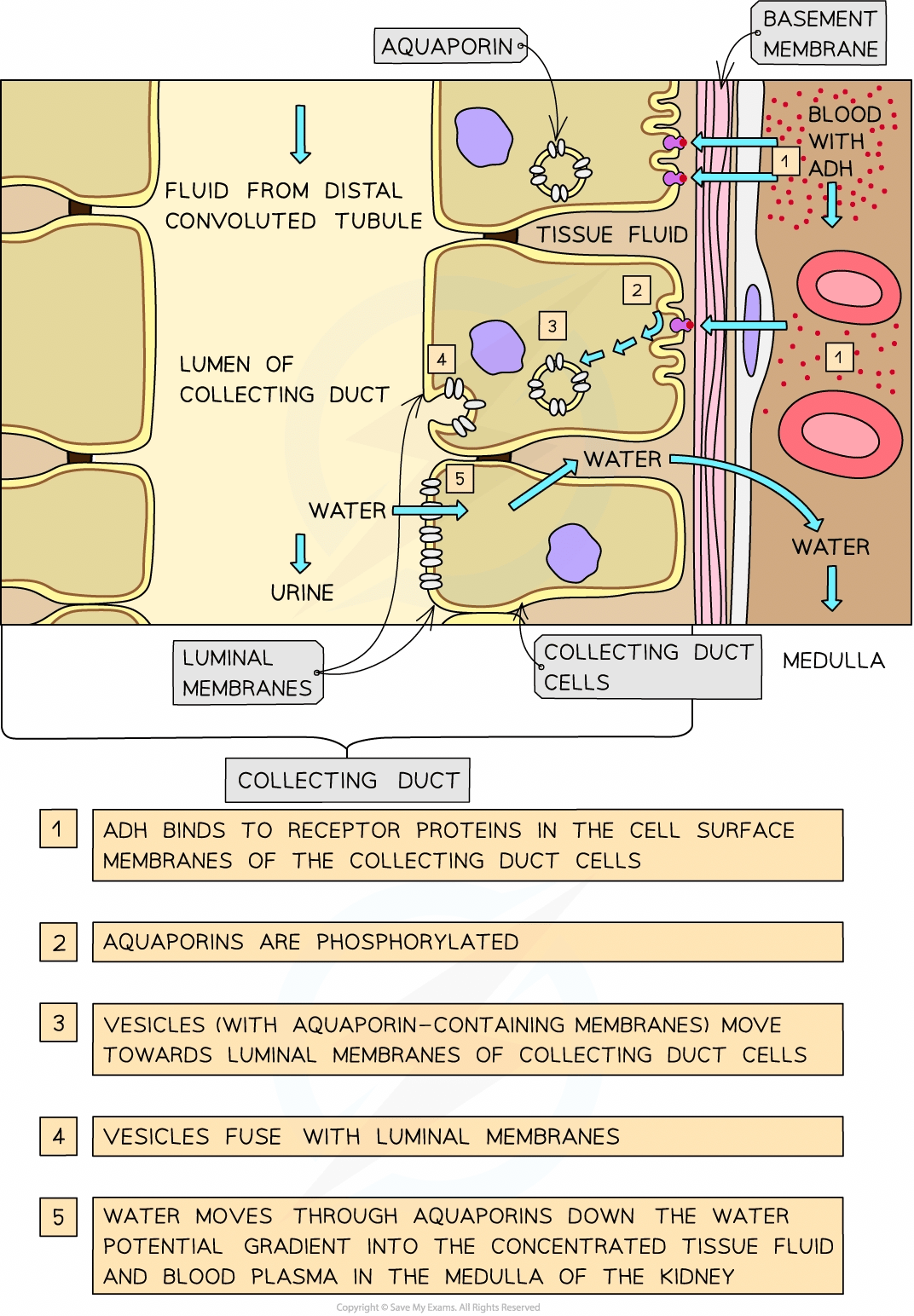
ADH causes the luminal membranes of the collecting duct cells to become more permeable to water
-
ADH does this by causing an increase in the number of aquaporins (water-permeable channels) in the luminal membranes of the collecting duct cells. This occurs in the following way:
-
Collecting duct cells contain vesicles, the membranes of which contain many aquaporins
-
ADH molecules bind to receptor proteins, activating a signalling cascade that leads to the phosphorylation of the aquaporin molecules
-
This activates the aquaporins, causing the vesicles to fuse with the luminal membranes of the collecting duct cells
-
This increases the permeability of the membrane to water
-
-
As the filtrate in the nephron travels along the collecting duct, water molecules move from the collecting duct (high water potential), through the aquaporins, and into the tissue fluid and blood plasma in the medulla (low water potential)
-
As the filtrate in the collecting duct loses water it becomes more concentrated
-
As a result, a small volume of concentrated urine is produced. This flows from the kidneys, through the ureters and into the bladder
-
Examiner Tips and Tricks
If the water potential of the blood is too high, the exact opposite happens:
-
Osmoreceptors in the hypothalamus are not stimulated
-
No nerve impulses are sent to the posterior pituitary gland
-
No ADH released
-
Aquaporins are moved out of the luminal membranes of the collecting duct cells
-
Collecting duct cells are no longer permeable to water
-
The filtrate flows along collecting duct but loses no water and is very dilute
-
A large volume of dilute urine is produced
-
This flows from the kidneys, through the ureters and into the bladder