
Biology_A-level_Cie
-
1-1-the-microscope-in-cell-studies5 主题
-
1-2-cells-as-the-basic-units-of-living-organisms5 主题
-
2-1-testing-for-biological-molecules3 主题
-
2-2-carbohydrates-and-lipids8 主题
-
2-3-proteins6 主题
-
2-4-water2 主题
-
3-1-mode-of-action-of-enzymes5 主题
-
3-2-factors-that-affect-enzyme-action8 主题
-
4-1-fluid-mosaic-membranes4 主题
-
4-2-movement-into-and-out-of-cells12 主题
-
diffusion
-
osmosis
-
active-transport
-
endocytosis-and-exocytosis
-
investigating-transport-processes-in-plants
-
investigating-diffusion
-
surface-area-to-volume-ratios
-
investigating-surface-area
-
estimating-water-potential-in-plants
-
osmosis-in-plant-cells
-
osmosis-in-animals
-
comparing-osmosis-in-plants-and-animals
-
diffusion
-
5-1-replication-and-division-of-nuclei-and-cells6 主题
-
5-2-chromosome-behaviour-in-mitosis2 主题
-
6-1-structure-of-nucleic-acids-and-replication-of-dna4 主题
-
6-2-protein-synthesis5 主题
-
7-1-structure-of-transport-tissues4 主题
-
7-2-transport-mechanisms7 主题
-
8-1-the-circulatory-system7 主题
-
8-2-transport-of-oxygen-and-carbon-dioxide5 主题
-
8-3-the-heart4 主题
-
9-1-the-gas-exchange-system6 主题
-
10-1-infectious-diseases3 主题
-
10-2-antibiotics3 主题
-
11-1-the-immune-system4 主题
-
11-2-antibodies-and-vaccination6 主题
-
12-1-energy5 主题
-
12-2-respiration11 主题
-
aerobic-respiration-the-krebs-cycle
-
aerobic-respiration-role-of-nad-and-fad
-
aerobic-respiration-oxidative-phosphorylation
-
anaerobic-respiration
-
energy-yield-aerobic-and-anaerobic-respiration
-
anaerobic-adaptation-of-rice
-
aerobic-respiration-effect-of-temperature-and-substrate-concentration
-
structure-and-function-of-mitochondria
-
the-four-stages-in-aerobic-respiration
-
aerobic-respiration-glycolysis
-
aerobic-respiration-the-link-reaction
-
aerobic-respiration-the-krebs-cycle
-
13-1-photosynthesis-as-an-energy-transfer-process8 主题
-
13-2-investigation-of-limiting-factors2 主题
-
14-1-homeostasis-in-mammals8 主题
-
14-2-homeostasis-in-plants3 主题
-
15-1-control-and-coordination-in-mammals12 主题
-
the-endocrine-system
-
the-nervous-system
-
neurones
-
sensory-receptor-cells
-
sequence-of-events-resulting-in-an-action-potential
-
transmission-of-nerve-impulses
-
speed-of-conduction-of-impulses
-
the-refractory-period
-
cholinergic-synapses
-
stimulating-contraction-in-striated-muscle
-
ultrastructure-of-striated-muscle
-
sliding-filament-model-of-muscular-contraction
-
the-endocrine-system
-
15-2-control-and-coordination-in-plants3 主题
-
16-1-passage-of-information-from-parents-to-offspring5 主题
-
16-2-the-roles-of-genes-in-determining-the-phenotype7 主题
-
16-3-gene-control3 主题
-
17-1-variation4 主题
-
17-2-natural-and-artificial-selection7 主题
-
17-3-evolution2 主题
-
18-1-classification5 主题
-
18-2-biodiversity7 主题
-
18-3-conservation6 主题
-
19-1-principles-of-genetic-technology11 主题
-
19-2-genetic-technology-applied-to-medicine4 主题
-
19-3-genetically-modified-organisms-in-agriculture2 主题
-
1-1-the-microscope-in-cell-studies
-
1-2-cells-as-the-basic-units-of-living-organisms
-
2-1-testing-for-biological-molecules
-
2-2-carbohydrates-and-lipids
-
2-3-proteins
-
2-4-water
-
3-1-mode-of-action-of-enzymes
-
3-2-factors-that-affect-enzyme-action
-
4-1-fluid-mosaic-membranes
-
4-2-movement-into-and-out-of-cells
-
5-1-replication-and-division-of-nuclei-and-cells
-
5-2-chromosome-behaviour-in-mitosis
-
6-1-structure-of-nucleic-acids-and-replication-of-dna
-
6-2-protein-synthesis
-
7-1-structure-of-transport-tissues
-
7-2-transport-mechanisms
-
8-1-the-circulatory-system
-
8-2-transport-of-oxygen-and-carbon-dioxide
-
8-3-the-heart
-
9-1-the-gas-exchange-system
-
10-1-infectious-diseases
-
10-2-antibiotics
-
11-1-the-immune-system
-
11-2-antibodies-and-vaccination
structure-and-function-of-mitochondria
Structure & function of the mitochondria
-
Mitochondria are rod-shaped organelles 0.5 – 1.0 µm in diameter
-
They are the site of aerobic respiration in eukaryotic cells
-
The function of mitochondria is to synthesise ATP
-
Synthesis of ATP in the mitochondria occurs during the last stage of respiration called oxidative phosphorylation
-
This relies on membrane proteins that make up the ‘electron transport chain’ and the ATP synthase enzyme—the details of this are covered later in the notes
-
Structure
-
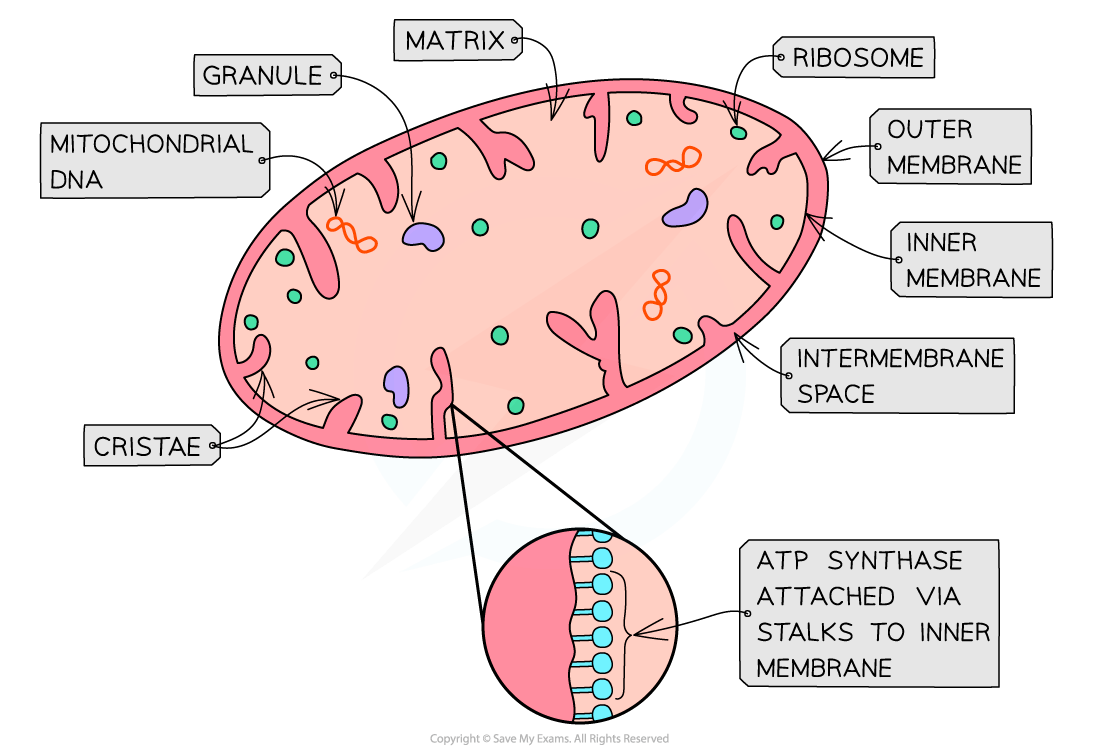
Mitochondria have two phospholipid membranes, an outer and an inner membrane
-
The outer membrane is:
-
Smooth
-
Permeable to several small molecules
-
-
The inner membrane is:
-
Folded (cristae)
-
Less permeable
-
The site of the electron transport chain (used in oxidative phosphorylation)
-
Location of ATP synthase (used in oxidative phosphorylation)
-
-
The intermembrane space:
-
Has a low pH due to the high concentration of protons
-
The concentration gradient across the inner membrane is formed during oxidative phosphorylation and is essential for ATP synthesis
-
-
The matrix:
-
Is an aqueous solution within the inner membranes of the mitochondrion
-
Contains ribosomes, enzymes and circular mitochondrial DNA necessary for mitochondria to function
-
Relationship between structure and function
-
The structure of mitochondria makes them well-adapted to their function
-
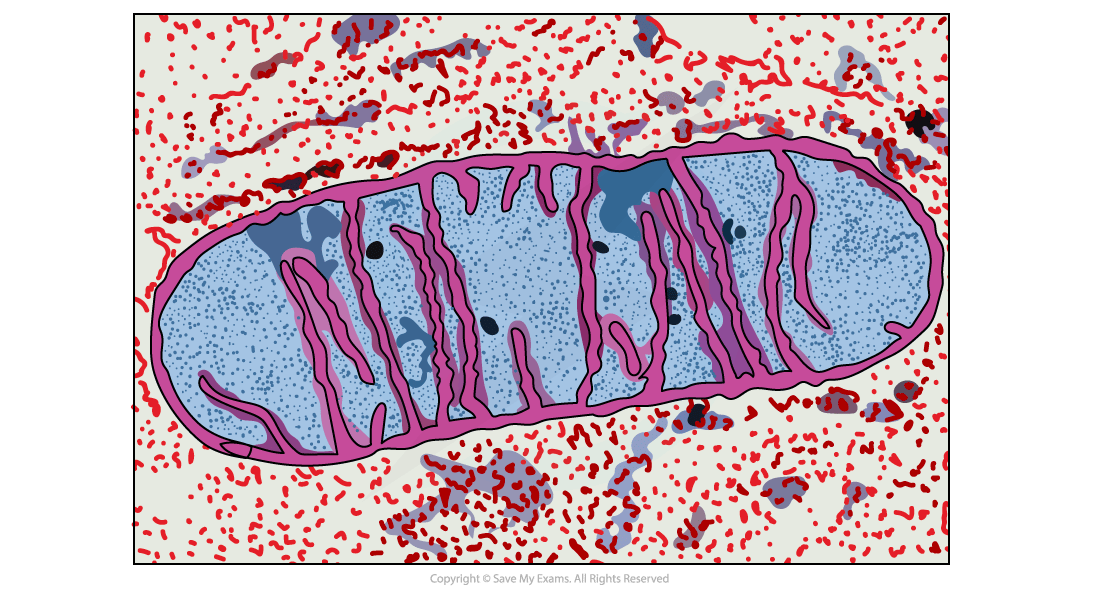
They have a large surface area due to the presence of cristae (inner folds) which enables the membrane to hold many electron transport chain proteins and ATP synthase enzymes
-
More active cell types can have larger mitochondria with longer and more tightly-packed cristae to enable the synthesis of more ATP because they have a larger surface area
-
The number of mitochondria in each cell can vary depending on cell activity
-
Muscle cells are more active and have more mitochondria per cell than fat cells due to the differing levels of metabolic activity in those cell types
-
And the resulting different levels of demand for ATP in those cells
-
Examiner Tips and Tricks
Exam questions can sometimes ask you to explain how the structure of a mitochondrion helps it carry out its function effectively. It is not enough to say that cristae increase the surface area of the inner membrane. You need to explain that an increased surface area of the inner membrane means there are more electron transport chain carriers and ATP synthase enzymes which results in more ATP being produced.
Be prepared to identify the different structures and locations in a mitochondrion from an electron micrograph.