
Biology_A-level_Cie
-
1-1-the-microscope-in-cell-studies5 主题
-
1-2-cells-as-the-basic-units-of-living-organisms5 主题
-
2-1-testing-for-biological-molecules3 主题
-
2-2-carbohydrates-and-lipids8 主题
-
2-3-proteins6 主题
-
2-4-water2 主题
-
3-1-mode-of-action-of-enzymes5 主题
-
3-2-factors-that-affect-enzyme-action8 主题
-
4-1-fluid-mosaic-membranes4 主题
-
4-2-movement-into-and-out-of-cells12 主题
-
diffusion
-
osmosis
-
active-transport
-
endocytosis-and-exocytosis
-
investigating-transport-processes-in-plants
-
investigating-diffusion
-
surface-area-to-volume-ratios
-
investigating-surface-area
-
estimating-water-potential-in-plants
-
osmosis-in-plant-cells
-
osmosis-in-animals
-
comparing-osmosis-in-plants-and-animals
-
diffusion
-
5-1-replication-and-division-of-nuclei-and-cells6 主题
-
5-2-chromosome-behaviour-in-mitosis2 主题
-
6-1-structure-of-nucleic-acids-and-replication-of-dna4 主题
-
6-2-protein-synthesis5 主题
-
7-1-structure-of-transport-tissues4 主题
-
7-2-transport-mechanisms7 主题
-
8-1-the-circulatory-system7 主题
-
8-2-transport-of-oxygen-and-carbon-dioxide5 主题
-
8-3-the-heart4 主题
-
9-1-the-gas-exchange-system6 主题
-
10-1-infectious-diseases3 主题
-
10-2-antibiotics3 主题
-
11-1-the-immune-system4 主题
-
11-2-antibodies-and-vaccination6 主题
-
12-1-energy5 主题
-
12-2-respiration11 主题
-
aerobic-respiration-the-krebs-cycle
-
aerobic-respiration-role-of-nad-and-fad
-
aerobic-respiration-oxidative-phosphorylation
-
anaerobic-respiration
-
energy-yield-aerobic-and-anaerobic-respiration
-
anaerobic-adaptation-of-rice
-
aerobic-respiration-effect-of-temperature-and-substrate-concentration
-
structure-and-function-of-mitochondria
-
the-four-stages-in-aerobic-respiration
-
aerobic-respiration-glycolysis
-
aerobic-respiration-the-link-reaction
-
aerobic-respiration-the-krebs-cycle
-
13-1-photosynthesis-as-an-energy-transfer-process8 主题
-
13-2-investigation-of-limiting-factors2 主题
-
14-1-homeostasis-in-mammals8 主题
-
14-2-homeostasis-in-plants3 主题
-
15-1-control-and-coordination-in-mammals12 主题
-
the-endocrine-system
-
the-nervous-system
-
neurones
-
sensory-receptor-cells
-
sequence-of-events-resulting-in-an-action-potential
-
transmission-of-nerve-impulses
-
speed-of-conduction-of-impulses
-
the-refractory-period
-
cholinergic-synapses
-
stimulating-contraction-in-striated-muscle
-
ultrastructure-of-striated-muscle
-
sliding-filament-model-of-muscular-contraction
-
the-endocrine-system
-
15-2-control-and-coordination-in-plants3 主题
-
16-1-passage-of-information-from-parents-to-offspring5 主题
-
16-2-the-roles-of-genes-in-determining-the-phenotype7 主题
-
16-3-gene-control3 主题
-
17-1-variation4 主题
-
17-2-natural-and-artificial-selection7 主题
-
17-3-evolution2 主题
-
18-1-classification5 主题
-
18-2-biodiversity7 主题
-
18-3-conservation6 主题
-
19-1-principles-of-genetic-technology11 主题
-
19-2-genetic-technology-applied-to-medicine4 主题
-
19-3-genetically-modified-organisms-in-agriculture2 主题
-
1-1-the-microscope-in-cell-studies
-
1-2-cells-as-the-basic-units-of-living-organisms
-
2-1-testing-for-biological-molecules
-
2-2-carbohydrates-and-lipids
-
2-3-proteins
-
2-4-water
-
3-1-mode-of-action-of-enzymes
-
3-2-factors-that-affect-enzyme-action
-
4-1-fluid-mosaic-membranes
-
4-2-movement-into-and-out-of-cells
-
5-1-replication-and-division-of-nuclei-and-cells
-
5-2-chromosome-behaviour-in-mitosis
-
6-1-structure-of-nucleic-acids-and-replication-of-dna
-
6-2-protein-synthesis
-
7-1-structure-of-transport-tissues
-
7-2-transport-mechanisms
-
8-1-the-circulatory-system
-
8-2-transport-of-oxygen-and-carbon-dioxide
-
8-3-the-heart
-
9-1-the-gas-exchange-system
-
10-1-infectious-diseases
-
10-2-antibiotics
-
11-1-the-immune-system
-
11-2-antibodies-and-vaccination
energy-values-of-respiratory-substrates
Energy values of respiratory substrates
-
Glucose is the principal respiratory substrate for aerobic respiration in most cells
-
When the supply of glucose in a cell has been used up, that cell may continue respiration using other substrates
-
These may be:
-
Other carbohydrates
-
Lipids
-
Proteins
-
-
Amino acids from proteins are only respired aerobically when all other substrates have been exhausted
-
This is because they often have essential functions elsewhere in the cell
-
Amino acids are required to make proteins which have structural (e.g. in the cytoskeleton) and functional (e.g. enzymatic) roles
-
-
When these different substrates are broken down in respiration, they release different amounts of energy
|
Respiratory substrate |
Energy value / kJ g-1 |
|---|---|
|
Carbohydrate |
15.8 |
|
Lipid |
39.4 |
|
Protein |
17.0 |
Explaining the differences in energy values
-
Lipids have the highest energy value (39.4 kJ g-1) followed by proteins (17.0 kJ g-1) and then carbohydrates (15.8 kJ g-1)
-
The differences in the energy values of substrates can be explained by their molecular composition
-
Specifically how many hydrogen atoms become available when the substrate molecules are broken down
-
-
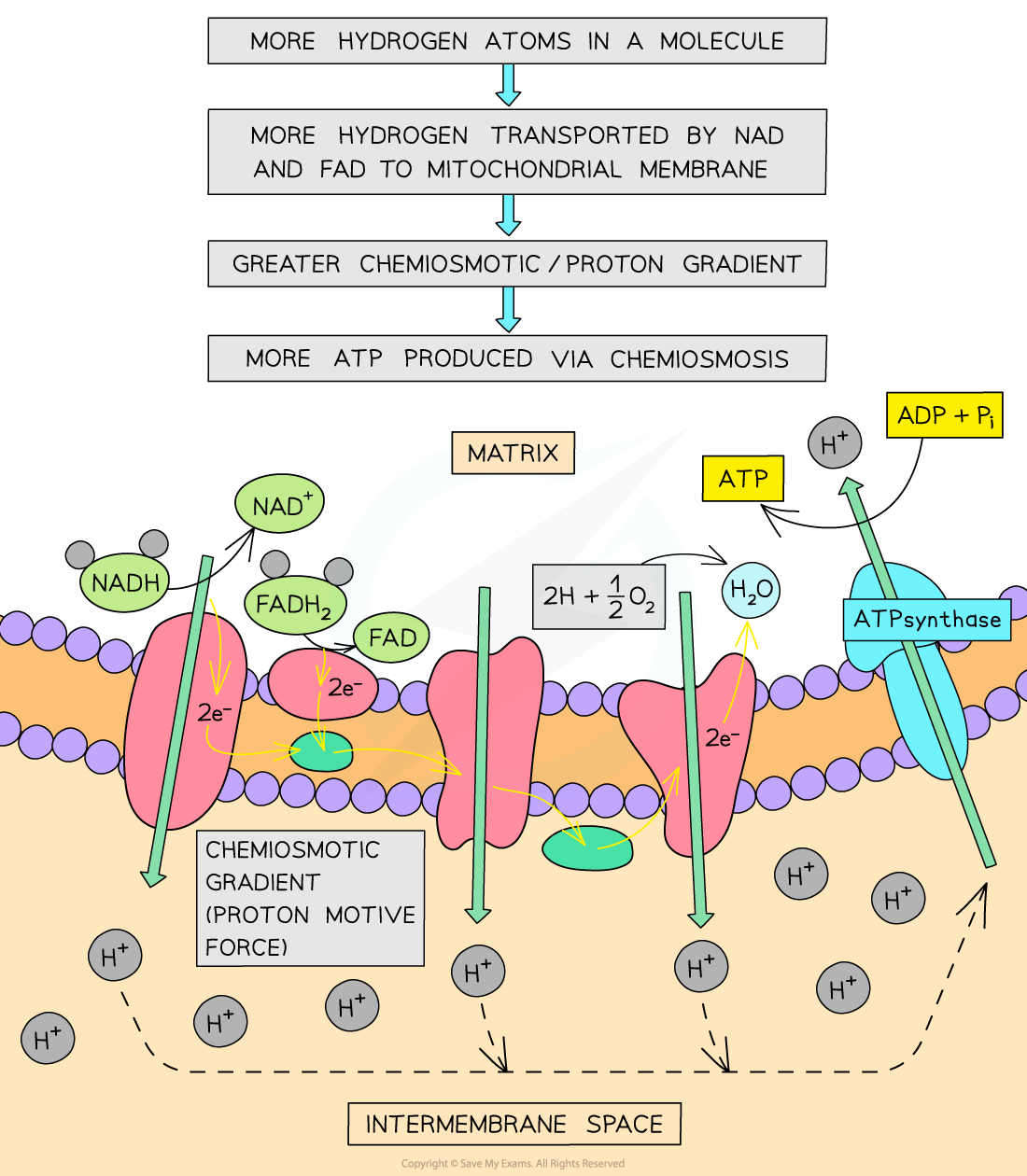
During respiration, hydrogen atoms play a vital role:
-
The substrate molecules are broken down and the hydrogen atoms become available
-
Hydrogen carrier molecules called NAD and FAD pick them up (become reduced) and transfer them to the inner mitochondrial membrane
-
Reduced NAD and FAD release the hydrogen atoms which split into protons and electrons
-
The protons are pumped across the inner mitochondrial membrane into the intermembrane space – forming a proton / chemiosmotic gradient
-
This proton gradient is used in chemiosmosis to produce ATP
-
After the protons have flowed back into the matrix of the mitochondria via ATP synthase they are oxidised to form water
-
-
This means that a molecule with a higher hydrogen content will result in a greater proton gradient across the mitochondrial membrane which allows for the formation of more ATP via chemiosmosis
-
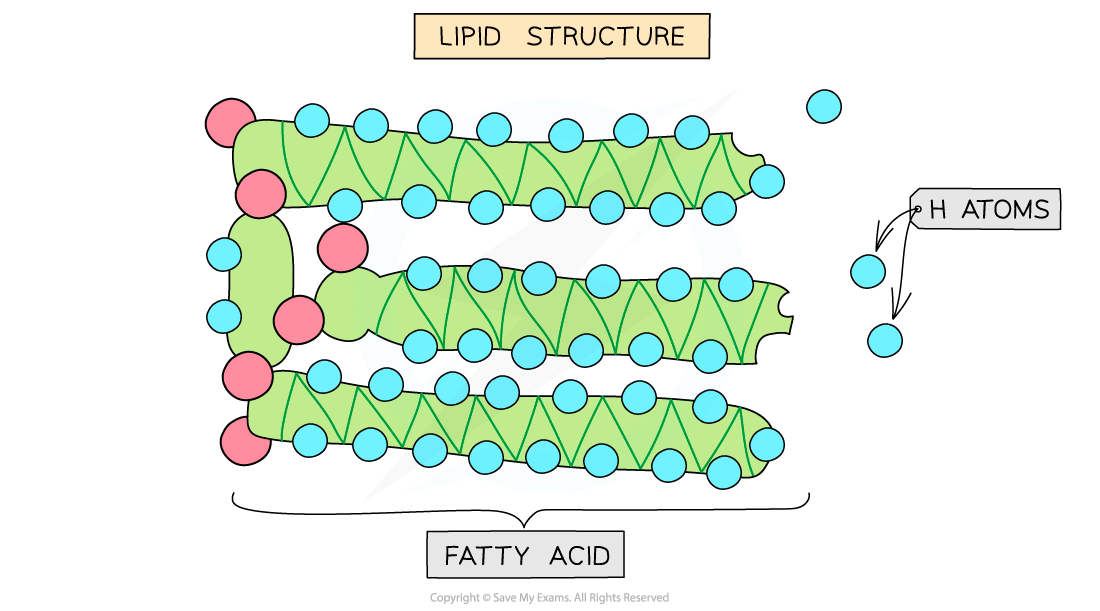
Fatty acids in lipids are made up of long hydrocarbon chains with a high proportion of hydrogen atoms
-
These hydrogen atoms are released when the lipid is broken down
Examiner Tips and Tricks
You may be expected to explain why different respiratory substrates have different energy values. Here’s an example question: Explain why carbohydrates, lipids and proteins have different relative energy values as substrates in respiration in aerobic conditions. [6 marks]
Your answer will need to relate to the differing hydrogen concentrations held within those substrates, and the consequent effect on chemiosmosis and energy release.