
Biology_A-level_Cie
-
1-1-the-microscope-in-cell-studies5 主题
-
1-2-cells-as-the-basic-units-of-living-organisms5 主题
-
2-1-testing-for-biological-molecules3 主题
-
2-2-carbohydrates-and-lipids8 主题
-
2-3-proteins6 主题
-
2-4-water2 主题
-
3-1-mode-of-action-of-enzymes5 主题
-
3-2-factors-that-affect-enzyme-action8 主题
-
4-1-fluid-mosaic-membranes4 主题
-
4-2-movement-into-and-out-of-cells12 主题
-
diffusion
-
osmosis
-
active-transport
-
endocytosis-and-exocytosis
-
investigating-transport-processes-in-plants
-
investigating-diffusion
-
surface-area-to-volume-ratios
-
investigating-surface-area
-
estimating-water-potential-in-plants
-
osmosis-in-plant-cells
-
osmosis-in-animals
-
comparing-osmosis-in-plants-and-animals
-
diffusion
-
5-1-replication-and-division-of-nuclei-and-cells6 主题
-
5-2-chromosome-behaviour-in-mitosis2 主题
-
6-1-structure-of-nucleic-acids-and-replication-of-dna4 主题
-
6-2-protein-synthesis5 主题
-
7-1-structure-of-transport-tissues4 主题
-
7-2-transport-mechanisms7 主题
-
8-1-the-circulatory-system7 主题
-
8-2-transport-of-oxygen-and-carbon-dioxide5 主题
-
8-3-the-heart4 主题
-
9-1-the-gas-exchange-system6 主题
-
10-1-infectious-diseases3 主题
-
10-2-antibiotics3 主题
-
11-1-the-immune-system4 主题
-
11-2-antibodies-and-vaccination6 主题
-
12-1-energy5 主题
-
12-2-respiration11 主题
-
aerobic-respiration-the-krebs-cycle
-
aerobic-respiration-role-of-nad-and-fad
-
aerobic-respiration-oxidative-phosphorylation
-
anaerobic-respiration
-
energy-yield-aerobic-and-anaerobic-respiration
-
anaerobic-adaptation-of-rice
-
aerobic-respiration-effect-of-temperature-and-substrate-concentration
-
structure-and-function-of-mitochondria
-
the-four-stages-in-aerobic-respiration
-
aerobic-respiration-glycolysis
-
aerobic-respiration-the-link-reaction
-
aerobic-respiration-the-krebs-cycle
-
13-1-photosynthesis-as-an-energy-transfer-process8 主题
-
13-2-investigation-of-limiting-factors2 主题
-
14-1-homeostasis-in-mammals8 主题
-
14-2-homeostasis-in-plants3 主题
-
15-1-control-and-coordination-in-mammals12 主题
-
the-endocrine-system
-
the-nervous-system
-
neurones
-
sensory-receptor-cells
-
sequence-of-events-resulting-in-an-action-potential
-
transmission-of-nerve-impulses
-
speed-of-conduction-of-impulses
-
the-refractory-period
-
cholinergic-synapses
-
stimulating-contraction-in-striated-muscle
-
ultrastructure-of-striated-muscle
-
sliding-filament-model-of-muscular-contraction
-
the-endocrine-system
-
15-2-control-and-coordination-in-plants3 主题
-
16-1-passage-of-information-from-parents-to-offspring5 主题
-
16-2-the-roles-of-genes-in-determining-the-phenotype7 主题
-
16-3-gene-control3 主题
-
17-1-variation4 主题
-
17-2-natural-and-artificial-selection7 主题
-
17-3-evolution2 主题
-
18-1-classification5 主题
-
18-2-biodiversity7 主题
-
18-3-conservation6 主题
-
19-1-principles-of-genetic-technology11 主题
-
19-2-genetic-technology-applied-to-medicine4 主题
-
19-3-genetically-modified-organisms-in-agriculture2 主题
-
1-1-the-microscope-in-cell-studies
-
1-2-cells-as-the-basic-units-of-living-organisms
-
2-1-testing-for-biological-molecules
-
2-2-carbohydrates-and-lipids
-
2-3-proteins
-
2-4-water
-
3-1-mode-of-action-of-enzymes
-
3-2-factors-that-affect-enzyme-action
-
4-1-fluid-mosaic-membranes
-
4-2-movement-into-and-out-of-cells
-
5-1-replication-and-division-of-nuclei-and-cells
-
5-2-chromosome-behaviour-in-mitosis
-
6-1-structure-of-nucleic-acids-and-replication-of-dna
-
6-2-protein-synthesis
-
7-1-structure-of-transport-tissues
-
7-2-transport-mechanisms
-
8-1-the-circulatory-system
-
8-2-transport-of-oxygen-and-carbon-dioxide
-
8-3-the-heart
-
9-1-the-gas-exchange-system
-
10-1-infectious-diseases
-
10-2-antibiotics
-
11-1-the-immune-system
-
11-2-antibodies-and-vaccination
phagocytes
Phagocytes: origin & mode of action
-
Phagocytes are white blood cells that are produced continuously in the bone marrow
-
They are stored in the bone marrow before being distributed around the body in the blood
-
They are responsible for removing dead cells and invasive microorganisms
-
They carry out what is known as a non-specific immune response
-
There are two main types of phagocyte, each with a specific mode of action. The two types are:
-
Neutrophils
-
Macrophages
-
-
Phagocytes carry out phagocytosis
Neutrophils
-
Neutrophils are short-lived cells that travel throughout the body and often leave the blood by squeezing through capillary walls to ‘patrol’ the body tissues
-
During an infection they are released in large numbers from their stores
-
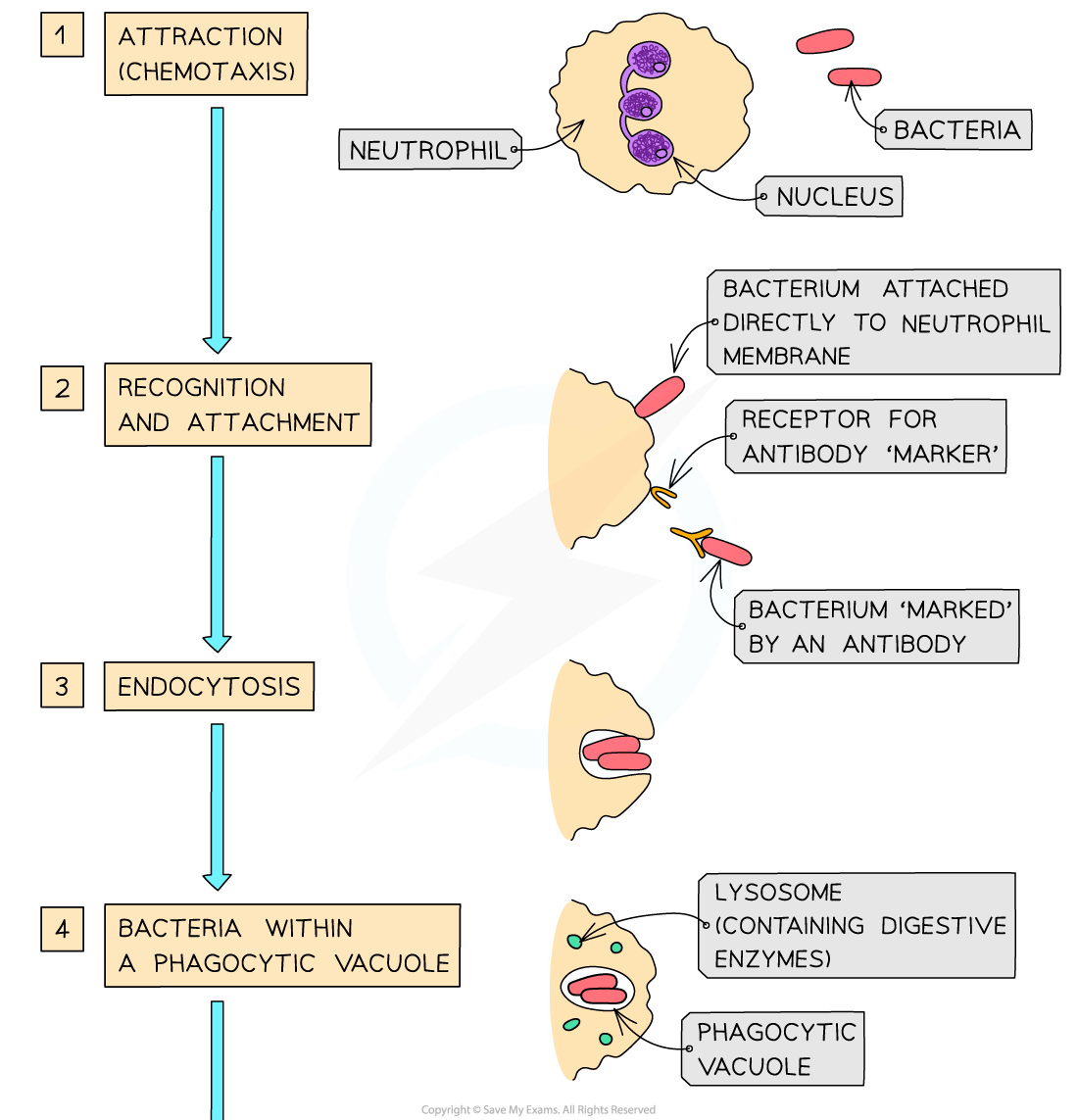
Neutrophils carry out phagocytosis as follows:
-
Chemicals released by pathogens, as well as chemicals released by the body cells under attack, e.g. histamine, attract neutrophils to the site where the pathogens are located
-
This response to chemical stimuli is known as chemotaxis
-
-
Neutrophils move towards pathogens
-
Receptor proteins on the surface of neutrophils attach to antigens on the surface of pathogens
-
Once attached to a pathogen, the cell surface membrane of a neutrophil extends out and around the pathogen, engulfing it and trapping the pathogen within a phagocytic vacuole
-
This is an example of endocytosis
-
-
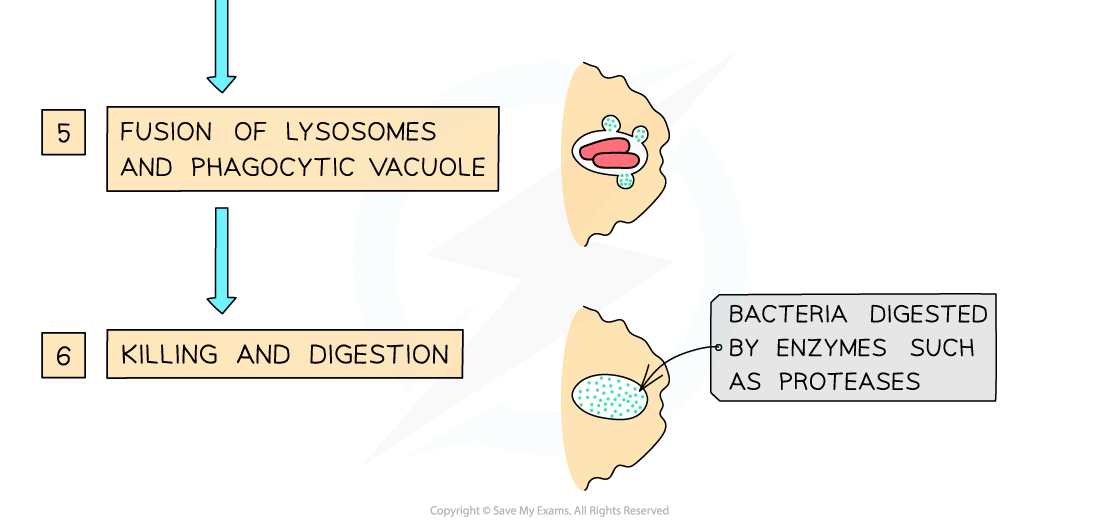
The neutrophil then secretes digestive enzymes into the vacuole
-
This occurs when the phagocytic vacuole, also known as the phagosome, fuses with a lysosome
-
The fused phagosome and lysosome are referred to as a phagolysosome
-
-
These digestive enzymes destroy the pathogen
-
-
After killing and digesting the pathogens, the neutrophils die
-
Pus is a sign of dead neutrophils
-
Macrophages
-
Macrophages are larger than neutrophils and are long-lived cells
-
Rather than remaining in the blood they move into organs
-
E.g. the lungs, liver, spleen, kidney and lymph nodes
-
-
After being produced in the bone marrow, macrophages travel in the blood as monocytes, which then develop into macrophages once they leave the blood to settle in the various organs listed above
-
Macrophages play a role in initiating a specific immune response as follows:
-
Macrophages carry out phagocytosis as described above, but they do not destroy pathogens completely during the digestion stage of the process
-
They cut the pathogens up so that they can display the antigens of the pathogens on their surface
-
Macrophages that present antigens in this way are known as antigen presenting cells
-
-
These displayed antigens can then be recognised by lymphocytes, another group of white blood cells
-
Examiner Tips and Tricks
Remember that while neutrophils and macrophages both carry out phagocytosis, only macrophages become antigen presenting cells that initiate the specific immune response